
Krishna and the Art of Bicycle Maintenance
Now Published on Amazon
The first book of the 21st Century
by Ronald E. Boutelle
*First Edition Published
one second after midnight
Jan 1, 2000
🔧 "Mr. Boutelle’s book is a valuable call to his readers. The author has given us a picture of a compassionate human being, sincerely struggling within his own life for a restoration of the original harmony between God and all His creation.” ARCHPRIEST MARK SHINN: The Russian Orthodox representative to the "Commission on Faith and Order of the National Council of Churches of Christ."
🔧 “It was with great pleasure that I received a copy of your book. To my honest surprise I found myself grasping for every available moment to finish the book. By the way, you may be pleased to note that I have already used portions of your book in some of my evening home programs.” GANAPATI DAS SWAMI: From 1976-1979 was the author’s immediate supervisor.
🔧 “Ronald Boutelle has captured the drive, mechanics and genius of Godly living. His book has sought to discover and state the method used by scholars. Those who take the time to master this method and put it into practice will be richly rewarded.” Dr. RALPH HARRIS JR. PhD: Director of a homeless shelter located in Philadelphia, Pennsylvania.
🔧 “This book gave me insights into the Holy Bible and the Bhagavad-gita that I had never had before. I am very grateful to its author.” HAYDN LARSON: Chief sculptor for the film classic, "Dune."
🔧 “Krishna and the Art of Bicycle Maintenance could very well be the best book I have ever read. It really made me think about things. A book has to be interesting for me to stay with it. The author was able to pick me up and place me right with him in certain parts of his story. I was greatly impressed by that.” ALBERT E. COSTELLO: Inspired by Charlie “Bird” Parker, Mr. Costello has played his saxophone with such music icons as Buddy Rich, Bobby Vinton, Van Morrison, The Kinks, and Rare Earth.
🔧 “Thank you for the wonderful book. It was a pleasure to read. Krishna and the Art of Bicycle Maintenance is like a little gem, for it is multifaceted in the gifts it offers. My husband and I have had many interesting conversations simply discussing certain points in it.” KELILALITA DEVI DASI: Disciple of His Divine Grace A.C. Bhaktivedanta Swami Prabhupada.
🔧 “Krishna and the Art of Bicycle Maintenance allows one to see how exposing the bare bones of one’s life and utilizing the pain and wonder in a positive, energetic way can produce a work of spirituality and beauty. He brings even an unfocused spiritual seeker closer to a true understanding of Krishna and Christ.” CATHERINE MOORE: Psychiatric nurse and emergency medical specialist.
🔧 "Jai Radhe! I just came across your books online. I was reading one of them with great interest. Do you have a hard copy you can send to me? Bravo on a job well done. Best wishes.” SATYARAJA DASA: The Founding Editor – "The Journal of Vaishnava Studies."
🔧 "Although somewhat prejudiced, I must admit I was thoroughly impressed. You were able to develop a flow and continuity throughout a rather complex subject. I thought you did a masterful job. I came away with a much clearer appreciation of Krishna Consciousness. Your book, it seems to me, should be embraced and promoted as a positive step toward a better understanding and acceptance of what really is one more religious belief that embraces, celebrates, and expands the understanding of God.” LT. COL. WINSTON BOUTELLE (1920-2011): Bought the author his first bicycle.
There is nothing quite like a good book, and I can usually tell when I have found one. Although the title may remind some readers of Zen and the Art of Motorcycle Maintenance, my book did not begin as an attempt to copy or answer that work. Instead, its title grew naturally out of the subject itself. I was thinking about bicycles, repair, the soul, and Krishna—and the connection simply appeared. This book travels down its own road. In writing Krishna and the Art of Bicycle Maintenance, my hope was modest: perhaps only to get a good solid base hit.
Even so, I know that any book worth reading should at least do well in the “interesting” category. As for that, all I can say is that I have tried, with every ounce of wit I possess, to write something you will both enjoy and benefit from.
If you have ever considered writing a book, you know that it’s an enormous task. Somewhere in the third chapter I realized that there is no such thing as an unimportant word and by the time I finished the fourth chapter, where I began to relive working in my bicycle shop, I discovered that writing a book can be an awful lot like working on a bike, but a thousand times more difficult.
Let’s pretend that each chapter represents a bicycle wheel. Since I have written a book with six chapters, I could say that I have tried to build a bicycle with six wheels. So things are already more complicated!
The name of my bicycle shop was, the Adirondack Wheel Works. Most of my work consisted of repairing broken bikes. I didn’t sell new bicycles that can, at times, require the bicycle mechanic to assemble a wheel from “scratch.” Usually when we see a bicycle wheel, it has that familiar look, complete with so many spokes, a tire, etc. But at an expensive bicycle shop, a wheel can be purchased from a wide assortment of separate components (rims, spokes, axles, hubs, etc.), thus giving the customer the opportunity to create for himself just the wheel he wants.
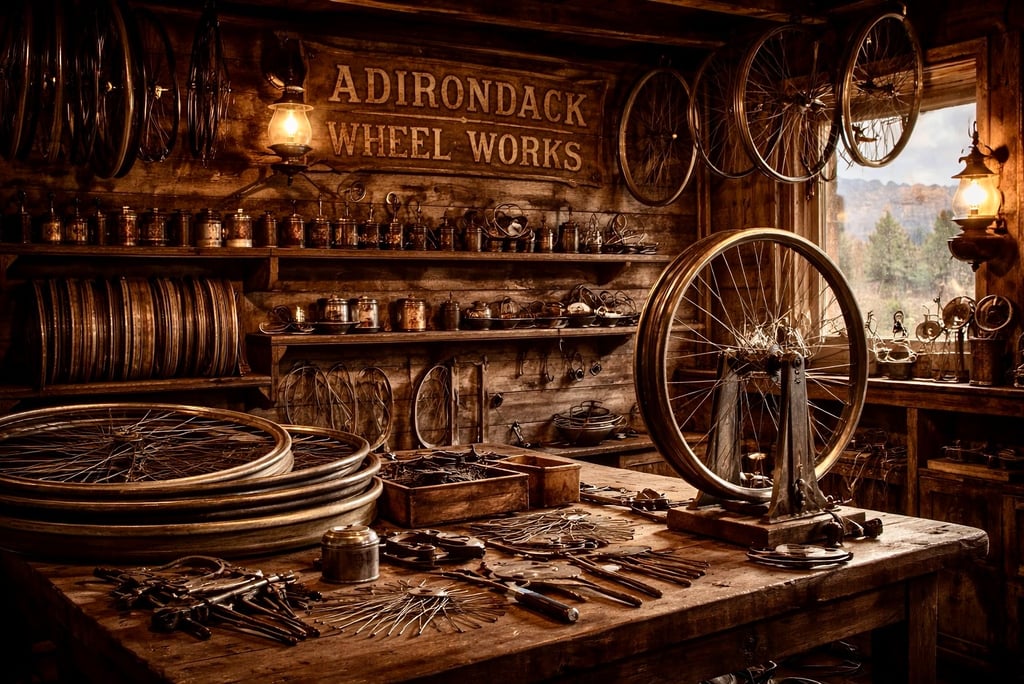
The bicycle mechanic then assembles the finished wheel from the parts picked out. He carefully threads each spoke through the bare rim and eventually they are tightened to an exact torque to create a perfectly balanced wheel when given a quick spin. My bicycle shop was never this sophisticated but once or twice I did have to replace so many broken and missing spokes that I may as well have been assembling the wheel from “scratch.” It is quite a trick.
You start by loosening all the spokes and after you get the new ones in place, using a small wrench, around the wheel you go, stopping at each spoke to tighten it.
The spokes are precisely paired across from each other to create a counterbalancing effect and as the spokes are tightened, tighter and tighter, you can sense the wheel becoming increasingly taut. Then, when you feel you have all the spokes tightened just right, you give the wheel a quick spin and look to see if it wobbles or remains true. And yes, over and over again you try, tightening and loosening, trying to get the wheel to spin without moving back and forth.
What does this have to do with writing a book? All I know is that after writing each chapter I’d “give it a spin” (proofread it), and to my constant dismay I’d find all kinds of wobbles in it. So out with the red pen, and I’d “tighten it up” here, and “loosen it up” there. Then I’d give it another spin. After about twenty attempts and thinking it was finally “true,” I’d beg one of my friends to also give it “a spin.” Without fail, back the chapters would come with more “tightening and loosening” to do. As I said, I’m not an accomplished writer.
Here is the complexity of the whole thing—a bicycle wheel only has about forty spokes, each needing to be tightened perfectly for it to spin true. But the six wheels (chapters) in this book contain literally thousands of spokes (words) and again, there is no such thing as an unimportant word, just as there is no such thing as an unimportant spoke.
When the spokes on a bicycle wheel are almost perfectly tuned, sometimes as it is spinning, only in one spot will you notice a little deflection. One misspelled word, or another mistake, creates the same thing. So the number of “wheels” on this “bike” are not only greater, they each contain thousands of “spokes” (words) that have to be just right, in so many ways. All I can say is that with the help of many “bicycle mechanics” (editors) from all over America, I have tried my very best. Furthermore, with so much time and effort having been invested to write Krishna and the Art of Bicycle Maintenance, naturally I want this book to “ride nicely.” Of course, I’m also hoping that you find it thought provoking—even a little heart provoking.
Once, being a gullible boy, I believed my teacher when she told me that Christopher Columbus discovered America in 1492. Then one day, a friend lent me his copy of Secrets of the Lost Races, by Rene Noorbergen. Here I read that while excavating an ancient tomb in China, a very old manuscripts was unearthed. However, for the Chinese scientists who initially tried to decipher it, the pages just didn’t make sense and were actually ignored for many years.
Eventually the artifact was further examined and to the amazement of everyone, the manuscript turned out to be a 4500 year old scientific journal that had been kept by a team of Chinese explorers describing their expedition to North America. They tell of picking gold nuggets off the desert floor in Nevada and watching seals play on the rocks in San Francisco Bay. Not only were they entertained by a possum that played dead for them, one of the explorers penned a beautiful description of the Grand Canyon.
The most remarkable thing about my life is how I have been led to the truth. Perhaps I should say, “dragged to the truth.” Otherwise, I think I would have been quite content living out the remainder of my life in the beautiful Adirondack mountains and working in my bicycle shop. Quite naturally, one of the things that has accompanied me on my unexpected journey has been my desire to share what I have discovered with others. And believe me, if I wasn’t certain of its immense value, I wouldn’t waste your time.
Krishna and the Art of Bicycle Maintenance will not only entertain you—it is going to challenge you. It will challenge you to consider new ideas, as well as challenge you to look again at what you already know, but under a more intense light.
More so, Krishna and the Art of Bicycle Maintenance is a religious book. Not only does it try to embrace the correct approach for a book of this nature, it should also introduce you to new insights about God that you will find quite exciting.
As you will soon discover, I quote from many Scriptures, although I predominantly refer to the Bible and various scriptures from India.
People of different faiths need to love one another, too. This has been the best part of writing my book, trying to explain how these two great religions are not so far apart as people might expect.
I can also say that by laying out my life in this book and connecting everything to God, I have found that everything has been made OK. This has, as you will read, helped me immensely.
Finally, Krishna and the Art of Bicycle Maintenance is about faith. This has been my greatest challenge because I am not a very faithful person. Not only has writing this book stimulated my own faith in God, it has given me a splendid opportunity to help others with theirs. If we can all finish this book with increased faith, then definitely my labor will have been well used.
The following acknowledgments are given with profound gratitude. I want to especially thank Mr. Steven J. Rosen who has given me permission to quote him. Mr. Rosen (Satyaraja Dasa) is also a disciple of A.C. Bhaktivedanta. He is one of the most gifted writers and religious scholars alive today. Like Isaac Asimov, Mr. Rosen makes complex topics easy to grasp, as well as fun to read. He has published many books and anyone interested in interdenominational studies and the Hare Krishna movement will benefit by reading them. Many of his books can be found on Amazon.
The Bhaktivedanta Book Trust (the publishing arm of the Hare Krishna Movement) definitely needs to be acknowledged. With permission I have quoted several pages of material from their books.
Mr. Thomas Verdi designed my book’s original cover, receiving nothing in payment but certainly earning my gratitude.
I also want to thank Ganapati Swami for providing me with ways to show my readers how Sanskrit words are pronounced.
Please note that most of the books I refer to are available on Amazon.
Although my book only contains 6 chapters, in this 2026 edition I have added dozens of beautiful pictures. In 1911, newspaper editor Author Brisbane was the first to use the popular notion that "a picture is worth a thousand words." With that in mind, reading Krishna and the Art of Bicycle Maintenance is going to be a doubly-rewarding experience for you.
Ronald E. Boutelle
(Rohini-suta dasa acbsp 77)
Canyon Lake, Texas
- Foreword -
Richard Mende
Ronald Boutelle’s first book is such a delightfully deceptive work, it might easily be overlooked in the avalanche of efforts that pass for devotional literature. The book is deceptive because the author’s childlike world view, which occupies the early pages, gives only a hint of the middle and late chapters.
In the opening chapters, for example, are anecdotes of his early life of a kind, told in an artless manner usually reserved for intimate friends. Never intended for the literary sophisticate, these stories convey to the heart of the simple reader a sense of the author’s deep compassion, even from childhood. And there are numerous supernatural incidents, such as a box of cookies materializing when Ronald simply had the intense wish for them.
But the book quickly moves onto deeper matters. Since I’ve been a vegetarian for almost a quarter century, I approached the material on this subject with a ho-hum attitude. Yet, Mr. Boutelle’s own personal experiences are intertwined with such compelling arguments that I found myself on the edge of my chair, again emotionally wrought up on this subject. And it was not only his ability to feel the suffering of other creatures. Ronald marshaled an arsenal of quotations nicely presented from works as varied as the Essene Gospel, the Dhammapada, Shrimad-Bhagavatam, Manusmriti and the Old and New Testaments, to name a few. The author has a special gift for taking familiar material and making it seem as if we had now read it for the first time. But his extensive research has produced many items that would be new to most of us.
All of this is just groundwork. The book spins effortlessly, like a well-balanced wheel to its richest and deepest themes. With rugged truthfulness and innocent candor, Boutelle moves directly to the subject matter which is of core interest to the saints of both the Eastern and Western tradition. The preliminary attitude of compassion has been firmly established. Now one moves into the deepest and most concealed mysteries known to the saints, which, however, are at the same time available to anyone for the asking. These matters are discussed in both the Christian and Vaishnava (devotees of Lord Krishna) traditions.
Religions of the world, to beginners, at least, seem so varied in their customs, Scriptures, holidays, means of worship, etc. But if one advances to the far end of any of these religions, to where the consciousness of the saints reside, there is in all of them the common practice which Mr. Boutelle discusses so lucidly.
This common denominator, of course, is constant prayer. And the most urgent and powerful form of prayer is the calling upon of the Holy Name. The author has entered into the richest of all treasures. He cites the scholarship that indicates that the names Kristos, Christ, and Krishna have common root, and that powerful results are obtained from chanting either. With a formidable array of sources which again, seem more like the presentation of an inspired, saintly lad, than that of a dusty scholar, Boutelle presents quotes from the Philokalia, the New and Old Testaments, the lives of the Christian and Vaishnava saints, and the spiritual classics of the East.
I must say that this incredibly simple, homespun style somehow seems the most apt background—perhaps the most perfect way to present these great gems of devotional passages. Out of mountains of religious literature, the author has moved unerringly to the simple truths which the saints hold so dear: compassion, prayer and constant repetition of the names of God.
I would be willing to take a virtual vow before any reader that however steeped he may be in the literature of the Holy Name, this presentation will be at once inspiring, fresh and overpowering; inflaming a devotional mood and compelling a sense of urgency for constant practice of the Holy Name.
The literary sophisticates who may pass this book by will incur loss beyond measure. Ordinary theologians, what to speak of academic teachers of religion, are left far behind. Perhaps Providence had marked this book to be directed to a single soul, humble and unpretentious. Perhaps these priceless treasures are here for a very wide audience. But I firmly believe that long after the bones of this reviewer are diminished to dust—long after today’s churches and mandirs have also tumbled and decayed, this singular, plain-spun book will be around.
Note: Richard Mende is a graduate of Stanford University and former religious editor for, The Berkeley. Richard is also the author of, “The Torch,” available on Amazon.
- Chapter One -
Could It Be God?
I remember the first time I ever saw Hare Krishna devotees. I was in Denver, Colorado when I spotted a rather odd looking group of men and women singing and dancing in front of a church.
They were brightly dressed and as I walked by one of the ladies handed me a magazine and asked for a small donation. I also remember how later that day when I had to pass by again, I purposely stayed on the other side of the street.
That was in the summer of 1969. To this day I am still amazed at the turn of events that followed and how seven years later, on a farm near Harrisburg, Pennsylvania I was initiated by the founder-acharya (a-CHAR-ya – spiritual master) of the International Society for Krishna Consciousness, His Divine Grace A.C. Bhaktivedanta Swami Prabhupada (balk-tee-vay-don-ta Swami prob-who-POD).
Shrila Prabhupada gave me the name, Rohini-suta dasa, which means “the servant of God.”
But, to begin with, I was born on April 29, 1946, in upstate New York. My little brother was born about a year later. His name was Larry.
Here is a photo of my family: My little brother Larry; my sister Ava (who is now 84); our mother; and next to her, Ronnie (as everyone called me when I was growing up). My father took this in 1951 in Alaska.


At that time my father was an Air Force pilot who had just survived twenty-five combat missions over Nazi Germany. Then in 1948 my father received orders sending us to Anchorage, Alaska, and for the next several years this rugged city would be our new home.
However, at this point in history many of the outlying suburbs around Anchorage were still surrounded by the raw Alaskan wilderness and it wasn’t an uncommon sight, at all, to see a moose or a bear wandering through someone’s back yard. The forest was literally right across the street from our house.
When I reached my fifth birthday Dad gave me my first rifle but he said he wanted to keep it safe for me in his bedroom. Even though I knew it was just a BB gun, I clearly understood the danger of pointing it at anyone. Earlier, Dad had told me that if I did, I might accidentally shoot somebody’s eye out.
A few days later, after I found the door to my parent’s bedroom unlocked, I told my little friend who followed me into the woods to be patient and that soon we could both shoot my new rifle. I didn’t think Dad would be upset—besides, he did say that the gun was mine.
Full of anticipation, in the distance I spotted a perfect target—a magnificent telephone pole.
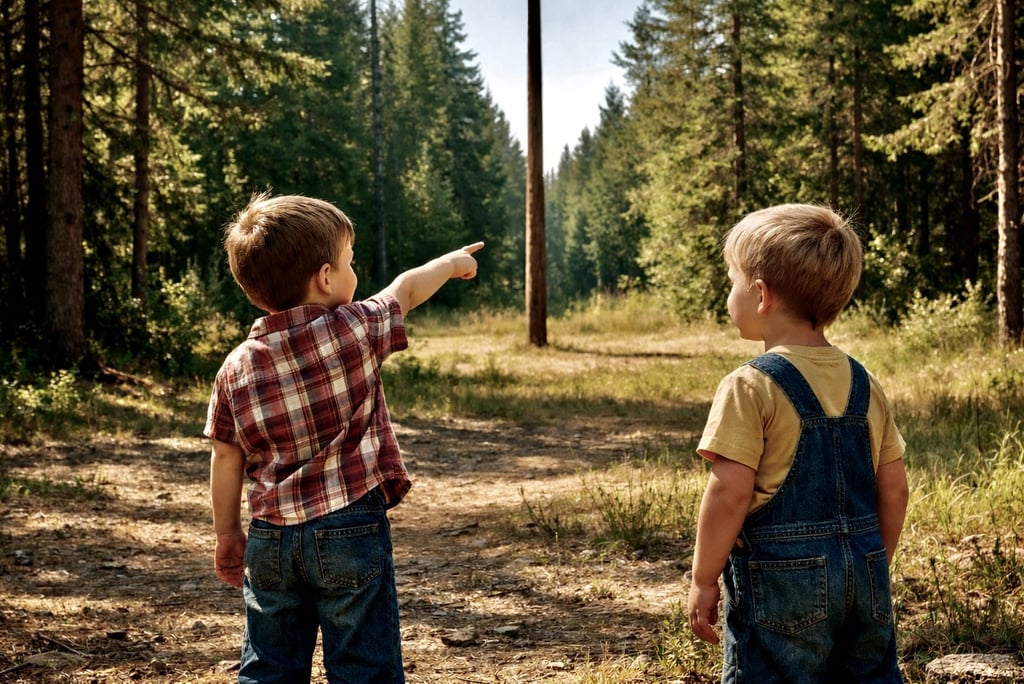
Standing with my friend about 30 feet away and making positively sure that he was safely to my side, I took careful aim and squeezed the trigger. It was a sunny day and to this day, in my mind’s memory, I can still see the copper BB fly through the air, hitting the pole dead center. I’ve always been a good shot.
Seconds later, however, something totally unexpected happened that seemed to predict the many uncanny events that would later thread themselves throughout my life. Of course, I can appreciate this now, but at the time all I could see was the BB flying through the air and hitting the pole. Suddenly, with equal accuracy, the BB bounced right back at us, hitting my little friend just below his eye. Less than an inch higher he might have been blinded.
Naturally I was very shaken, seeing my friend hurt, but the real significance was realizing the incredible odds against that BB ever having hit him in the first place. How could that have happened? We were not standing too close to the pole and I had purposefully taken all precautions.
Although I was just a frightened five-year-old boy, still I would never forget this strange accident. Even if I had been deliberately trying to bounce that BB off the telephone pole to hit a different target, I could have shot all day and never succeeded. And yet, at the precise moment I had been thinking of my friend’s eye, on my very first shot, the BB did the unthinkable. Although the word “coincidence” wouldn’t become part of my vocabulary for many years to come, I perfectly understood what it meant. Nor would this be my last coincidence.
Many years later—all grown up—during the summer of 1973 I wanted to take my wife on a trip to the beach. We were living near Lucerne Valley, California, overlooking the Mojave Desert. The small mountain cabin we were staying in was nestled under a beautiful pine tree and it was so nice to wake up to the sweet desert air and the sounds of chirping birds. We were living there helping my sister and her husband, Charles Berner, build a spiritual retreat for the Institute of Ability.
At the time things were at a lull so I thought this would be a good excuse to get away for the day, seeing how she had been raised in Colorado and had never seen the ocean. At the end of our outing, preparing to drive back to the desert, I noticed that the gas tank on my truck was about empty. Not being particularly choosy, since gas back then was about forty cents a gallon, I simply pulled into the nearest station along the highway to fill up. However, as soon as I stepped to the pavement, out of the blue a young man came running over to me and wanted to know if I was from Colorado. He must have recognized my license plates.
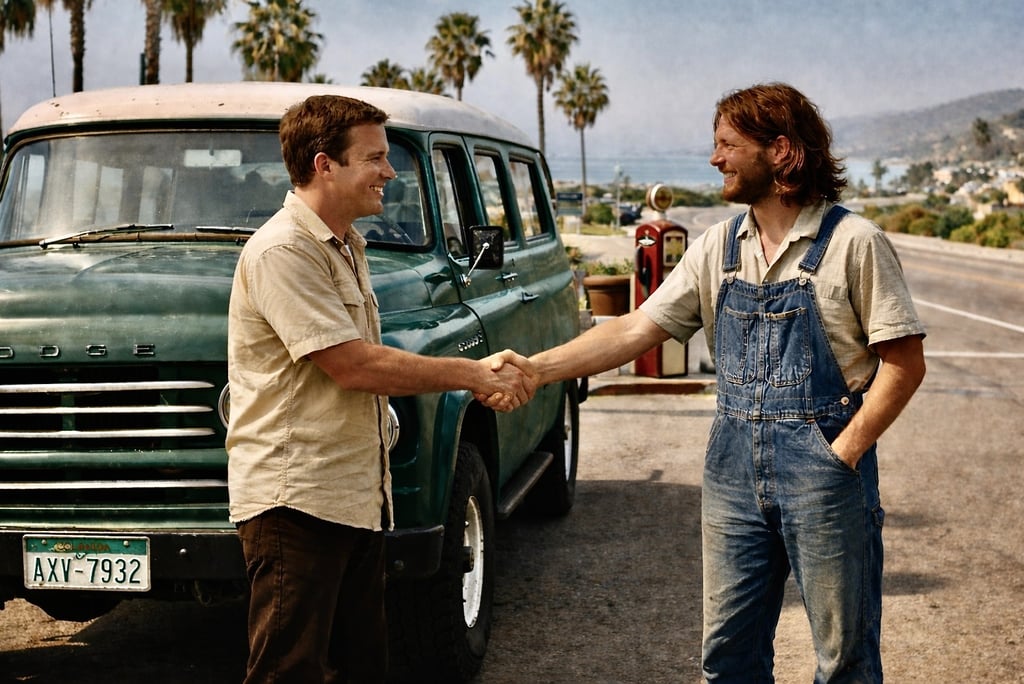
I told him yes, that we had most recently come from Paonia, Colorado, (pop. 1200) and that we were now living in the desert near Lucerne Valley.
He immediately started to grin, declaring that he, too, was from Paonia. Both of us being a little dumbfounded by this unusual coincidence, continued to talk. I told him that a few months back my wife and I had been in Paonia, visiting a good friend of ours, Pat Starr; helping her with some of her heavier chores. Even more excited, he told me that he and Pat were also good friends.
This was all very strange, meeting this wandering soul, at this particular spot, out of all the millions of people in California. The odds of us meeting at all were incalculable. In addition, if I had stopped at a different gas station or had pulled in five minutes earlier (or five minutes later), chances are we would have never met. But this wasn’t a miracle, or anything like that—or was it?
Holding onto the pump handle, I told him that while working on Pat’s farm I had repaired the leaky roof on her root cellar. The young man then proceeded to tell me that he was the person who had originally built Pat’s root cellar, years ago. After I filled my gas tank and said goodbye, I drove off, trying to explain to my wife what had just happened.
---🔧---
Three years later, after my wife and I had separated, I was living in an abandoned garage that I had converted into a bicycle shop. This was in Saratoga Springs, New York and again I came in touch with the twilight zone. I was living right inside the garage, itself, taking my showers at the YMCA, next door. It was a great arrangement and my shop stood beautifully situated on a bluff overlooking the park. Because of its concealed location I felt like I was living in the country rather than in the middle of a city.
Earlier that summer I had decided to strictly follow the teachings of Professor Arnold Ehret and his, Mucousless Diet Healing System. Including in my daily regimen, morning runs in the park, I felt great and full of vitality. To complement my routine I also read every spiritual book from India that I could get my hands on. I especially enjoyed reading, The Autobiography of a Yogi, by Paramahansa Yogananda (Pa-ra-ma-hon-sa Yo-ga-non-da), and Krishna, the Supreme Personality of Godhead, by His Divine Grace A.C. Bhaktivedanta Prabhupada.
I have always had a special fondness for ice cream and directly across the street from my shop was Friendly’s ice cream store. I also have a tendency to go overboard and during one particular eating binge I guess I must have consumed three double-dip cones. I love ice cream and I can eat a lot of it. Needless to say I felt pretty glazed over by the time I polished off the last one. Then, as I stood watching the store close early because it was Sunday, once again I became overwhelmed with an acute desire for sweets. But for some peculiar reason my craving suddenly switched from ice cream to chocolate-chip cookies. Not the fancy kind, but the inexpensive ones in the blue and white boxes that they sell in upstate New York. Trying to figure out where I could buy some, I immediately became disheartened when I realized how late it was and that all the stores were closed—except for Price Chopper that was located across town.
For a moment I thought about walking there, but it was too far and much too late. Nor did I feel like going to the trouble of walking across the street, taking a bike out of my shop, and getting there that way. Becoming very frustrated, my feelings began to get the best of me and in great despair I started walking slowly down the sidewalk. But I didn’t get very far.
About halfway to the end of the block and the desire for the cookies totally consuming me, I just stopped walking, closed my eyes, and in an instant I completely merged with the desire for those chocolate-chip cookies. But I didn’t remain there long.
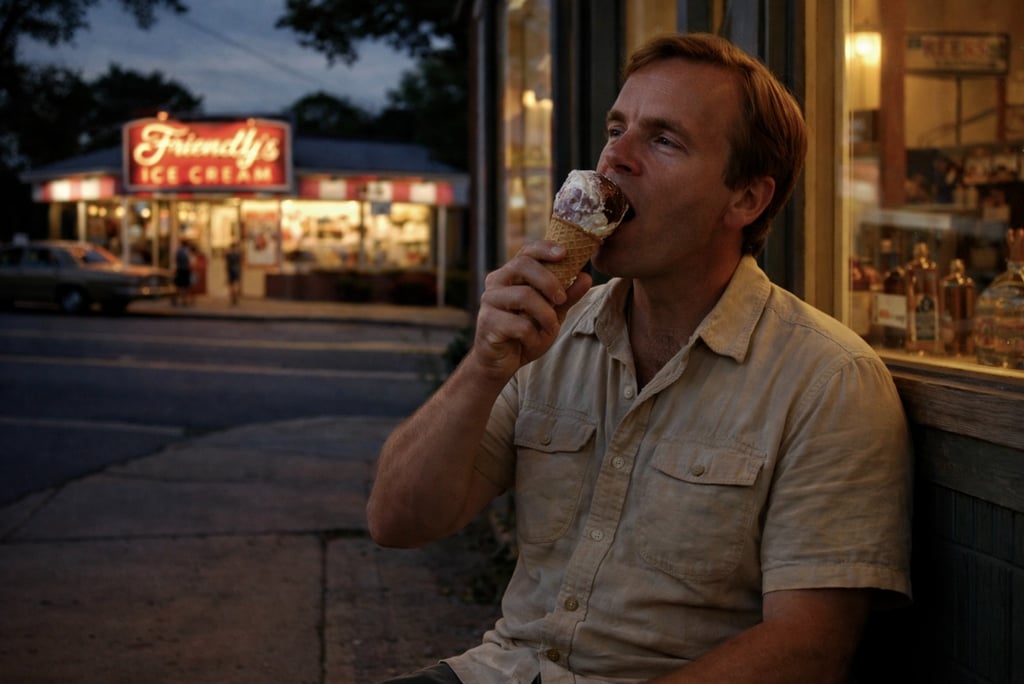
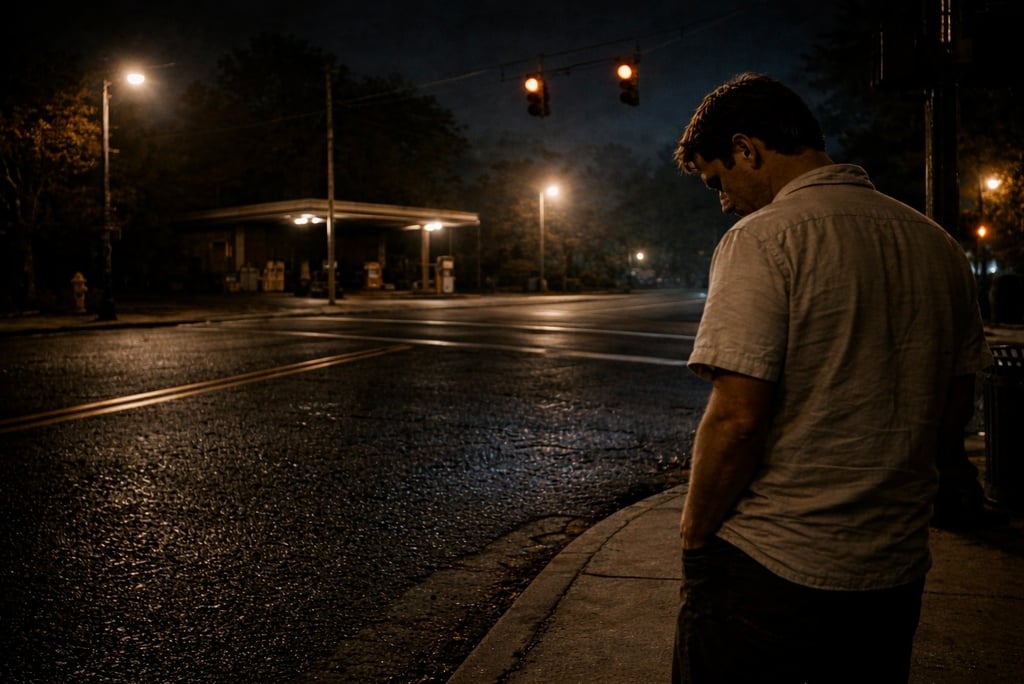
Beginning to move again, I crossed over the darkened intersection and began walking past a deserted gas station. But again I didn’t get very far because all at once I noticed something on the dimly-lit pavement. Full of curiosity I walked over to it and gently nudged it with my shoe. To my complete surprise the object felt like it had something in it. There was very little light and thinking that I must have found some money, I bent over to take a closer look.
Picking it up with my hand instantly confirmed in my mind that, indeed, it was full of something, but never in a million years was I prepared for the sight I saw when I took a closer look. It was the exact, blue-and-white box of chocolate chip cookies I had been craving—brand-new and unopened!
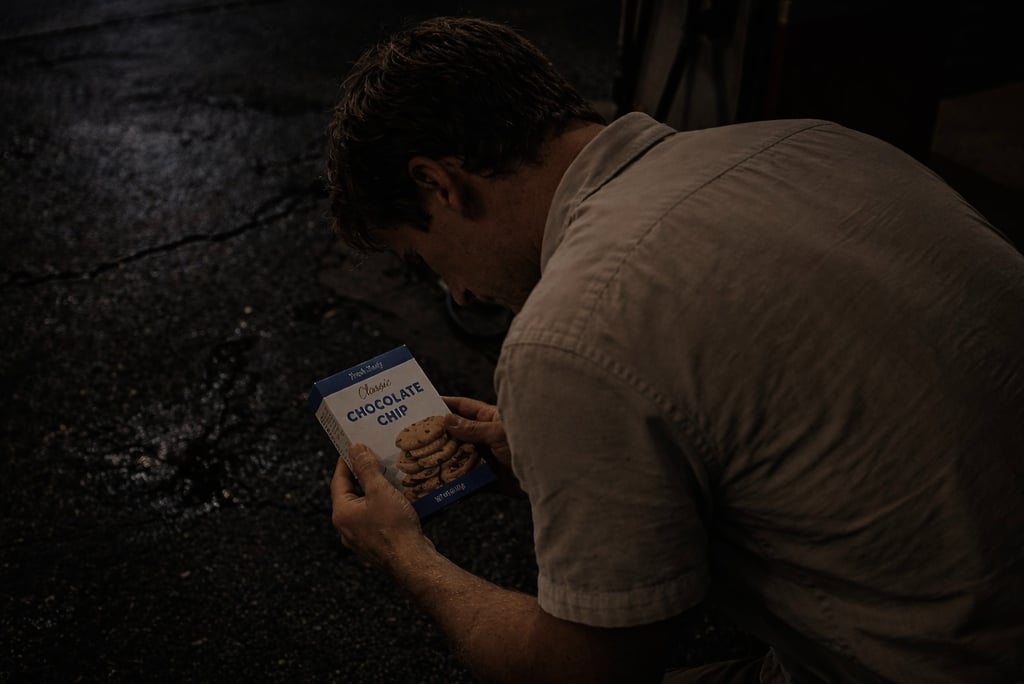
However, at that same instant, like a bolt of divine lightning, it struck me that this was far beyond any ordinary coincidence and that I was experiencing the most incredible moment in my life. I remember running all the way back to my bicycle shop. With the box in hand, sitting on the ground crouched up against the door, I slowly ate the most delicious cookies I have ever tasted. I went in and shut the door. I didn’t come out for two days.
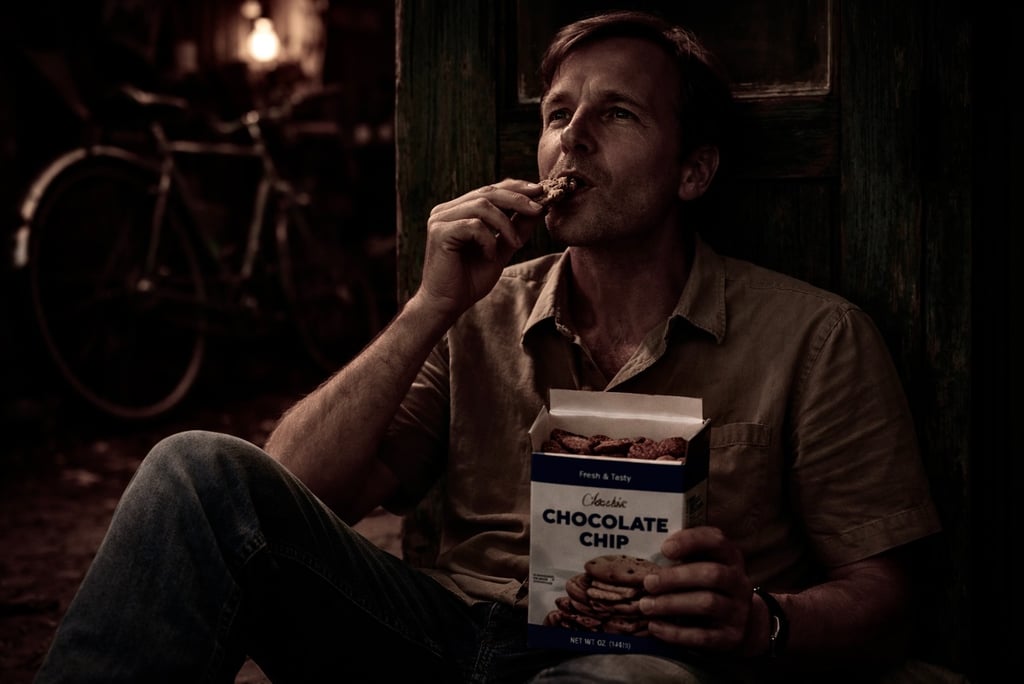
---🔧---
“Where in the heck is Fischer, Texas?” I had just finished with some chores in San Antonio. With me was my lovely three-year old daughter, Julia. I always enjoyed her pleasant company and had asked her to come along for the ride. Patrick, her baby brother, had to stay home with his mother. After getting back onto I-35 to head home, I decided on the spur of the moment to get off the freeway and visit a newly opened flea market in New Braunfels.
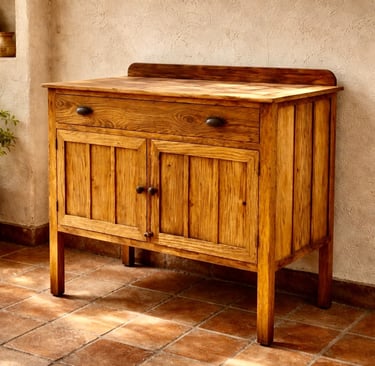
Another ten years had passed by. As I will explain later, I had already lived as a celibate monk for nearly five years but was now taking a different path, remarried and making my living manufacturing picture frames and rustic furniture out of old barn wood. This wineglass cabinet is one of several I built over the years.

My gallery was located at another flea market, just down the road, but I was wondering if this one might prove to be a better location. Soon realizing that it wasn’t, Julia and I got back into our Dodge Town Wagon to continue our journey home.
But then, as little girls often announce, she said she wanted something to drink. Spotting a Stop N’ Go, I pulled up to the convenience store and left Julia in the truck while I got us both some milk. Standing in line at the checkout counter I noticed a stack of local newspapers—so I bought one—hoping that I might find a house to rent that was closer to my art gallery and further away from my in-laws. Back inside the truck I turned to the classifieds and while Julia drank her milk I found a promising ad: “Charming country house for rent in Fischer. $350.00 a month. Please call for information.”
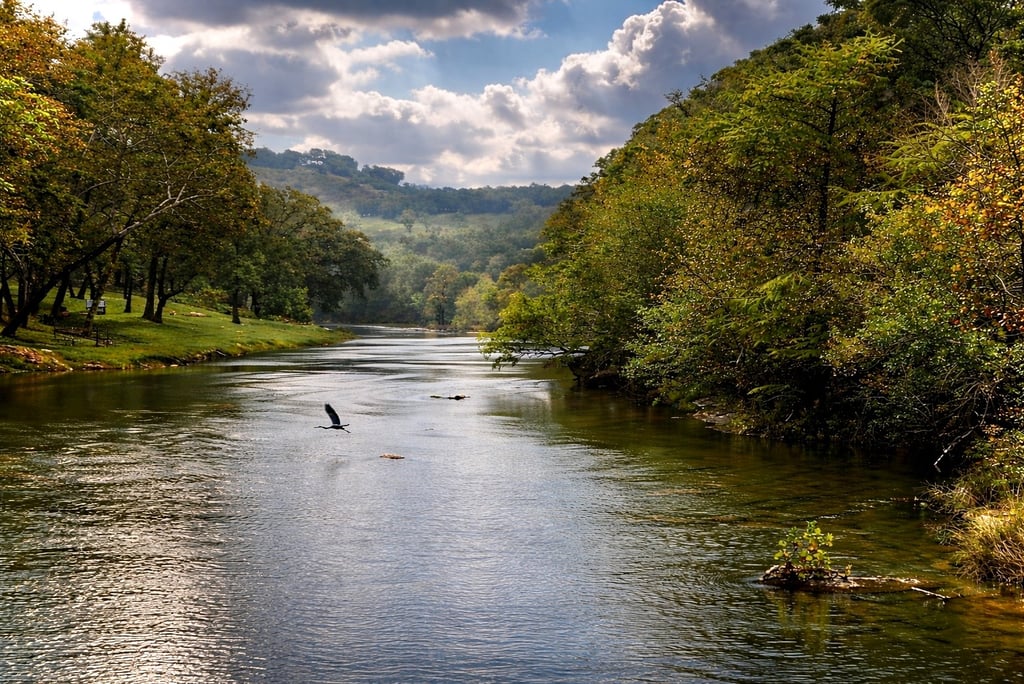
Told over the phone that the place was still available, the unexpected trip to Fischer took us about forty-five minutes, three times over the Guadalupe River, past Canyon Lake, and deep into the beautiful Texas Hill Country, that makes this part of Texas so famous.
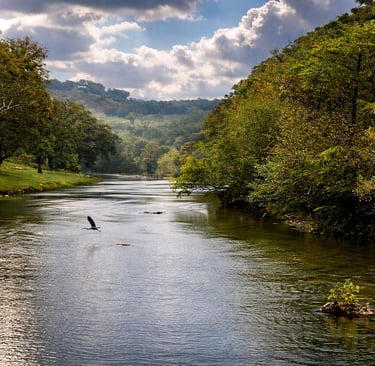
During the drive I kept thinking how lucky I was to have found such a great deal that somebody hadn’t already scooped up. Furthermore, the lady on the phone said there was a building behind the house that might be converted into the workshop I needed.
Later I would tell my new friends in Canyon Lake that this was the most mystical place I had ever lived. From the moment Julia and I crawled under the wire gate to look at the house, I could hardly believe my eyes.
Built by German settlers in the 1800s, the old homestead had originally been the site of Fischer’s, one-room schoolhouse. Now it was a dream come true, as if I were touring an old estate that belonged in one of those glossy country magazines.
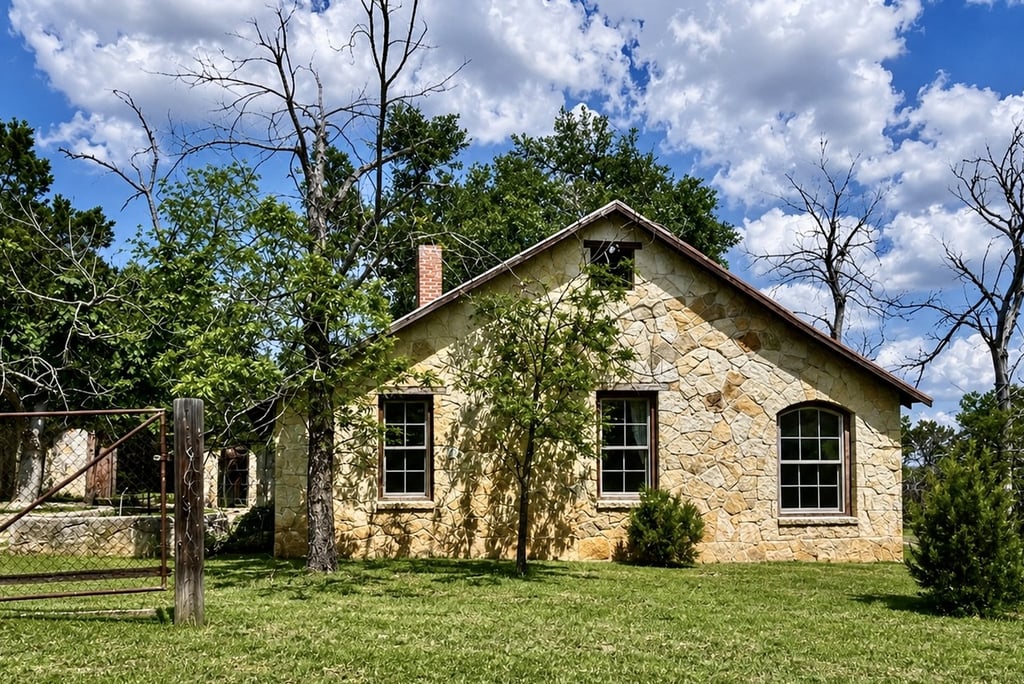
It was also one of the few houses in all that part of Texas with a basement. Down there sat an antique wood furnace and I quickly realized that I could heat the entire place with the wood scraps left over from my business. There was even a sun room attached to the house, perfect for plants and reading. In back of the house was the workshop that the landlord’s wife had mentioned over the phone, also made out of beautiful stone. Here was the shop I had always wanted.
The house sat on about five acres of land, including a rolling orchard. From there you could look off into the distance and see a small sliver of Canyon Lake, about ten miles away. There was also a garden with plenty of rich soil, a stone well-house and a picnic table sitting under three large shade trees. In fact, there were at least a dozen large oak trees on the property. They surrounded the house on all four sides and created a very cozy feeling.
While I was in the workshop trying to picture how I could arrange my tools, Julia went outside to explore. Full of excitement she came running back to get me because she said there were cows outside. Sure enough, behind the well house and on the other side of a fence, stood six large Herefords surrounded by their frightened calves. Over time we would come to love those dear and gentle creatures very much.
The mystical part is that during the year and a half I lived in that old house, time and time again Lord Krishna would directly intervene in my life and encourage me to remember Him.
Our little stone house was located in a remote area of Canyon Lake and if more than ten cars a day drove by I would have been greatly surprised. Because we didn’t own a washing machine, once a week I would drive into town to do our laundry. The most extraordinary thing is that on three different occasions (twice inside the same Laundromat) I met someone who had lived in our little house when they were a child. The first time this happened I thought to myself how that was really wild, to meet anybody at all who even knew that our place existed, not to mention having lived in it
Because the house had been built about two hundred yards from Cranes Mill Road, hidden down a long driveway and under a canopy of trees, several times visitors would drive by looking for us and not even see the place.
As I was saying, a few weeks later when I met the second person who described sliding down the cement chute that led into the basement when she was a little girl, that really blew my mind. After all, the house was close to twenty miles away from that Laundromat.
Hoping to increase sales, I had moved my business, The Blue Ribbon Gallery, into a much larger space at Bussey’s Flea Market, located about forty miles from Fischer. One afternoon a young couple came in and before long we struck up a conversation. It turned out that they were from Austin and were out enjoying a Sunday drive. When they noticed the flea market they decided to stretch their legs, eager to see what bargains they could find. It also just so happened that they, too, were in the art business, owning a wholesale mat-cutting shop. In a friendly way they asked where I lived and I told them in Fischer. “Oh, I know where Fischer is,” said the young man.
Now that in itself was almost a miracle, if you know anything about Fischer. He then asked me if I knew the lady on Cranes Mill Road, whose house was located on the bend. Yes, I knew the house very well but I had never met the owners, only having waved at them a few times while passing by. He then told me that this same lady used to babysit him when he was just a child—when his family had lived in Fischer, Texas. Growing more suspicious by the second, I asked him, “Exactly where did you live in Fischer?”
“Oh, just down the hill from her, in this charming little stone house.” I almost fell over speechless. In less than three months he was the third person I had met who had lived in my house!
Although I am normally very happy, after a very difficult time brought on by the loss of my dear wife and two lovely children (I’ll explain later), I found myself planning to leave Canyon Lake and never come back. However, with a business to run and commitments to fulfill, leaving was going to take some planning.
With less than six months remaining before moving to Denver, I was blessed by Lord Krishna with two more wonderful coincidences, both occurring while I was driving my car. I’ll tell you about one of them.
I was in Austin and pulled onto 6th Street, quickly finding a parking spot in front of Amado Pena’s gallery. I was very pleased to hear that he had recently sold two of my small tables.
Of all my business accomplishments I think that being invited to sell my furniture at the El Taller Gallery was the highlight of my success. If not the most prestigious art gallery in America, it was by far the most famous in Austin. It was really neat how a cabinet made out of old, weather-beaten wood and rusty iron could end up looking so beautiful.
With my chores finally taken care of, I was on my way out of town looking forward to getting out of the city. Maybe I’d even stop in Wimberley for a grilled cheese sandwich over at the bowling alley. In any event, I was looking forward to the drive home.
Every moment can be constructive, if you just try. Over those many months of driving, I had learned that instead of just so many miles clicking off my odometer, I could transform the time into very rewarding moments, spent in prayer.
On that particular day, during my drive home, all I knew was that I had tremendous respect for the Divinity behind all these coincidences and that here was another opportunity for me to reach out to God. Who can predict what can happen if there is a sincere outpouring of a person’s heart toward his All Merciful Creator?
Sometimes I would even hold my hands out and beckon God to touch me, just as He had so many times before. In fact, this is exactly what I had been doing, just as I was about to enter Dripping Springs to make my left turn onto Ranch Road 12, toward Wimberley.
Since nothing unusual was really happening, I got a bit upset with myself, as if I was trying to order God around. “Now wait a minute. This is completely ridiculous! I don’t need to ask Lord Krishna for a special sign. Besides, I’m open to God all the time, not to mention the fact that there is absolutely nothing on this boring road that could possibly happen.”
I had no sooner thought this when off to my right, about two hundred feet away, upon a large mound of sand left by the highway department, I saw Jesus Christ hanging on a cross.
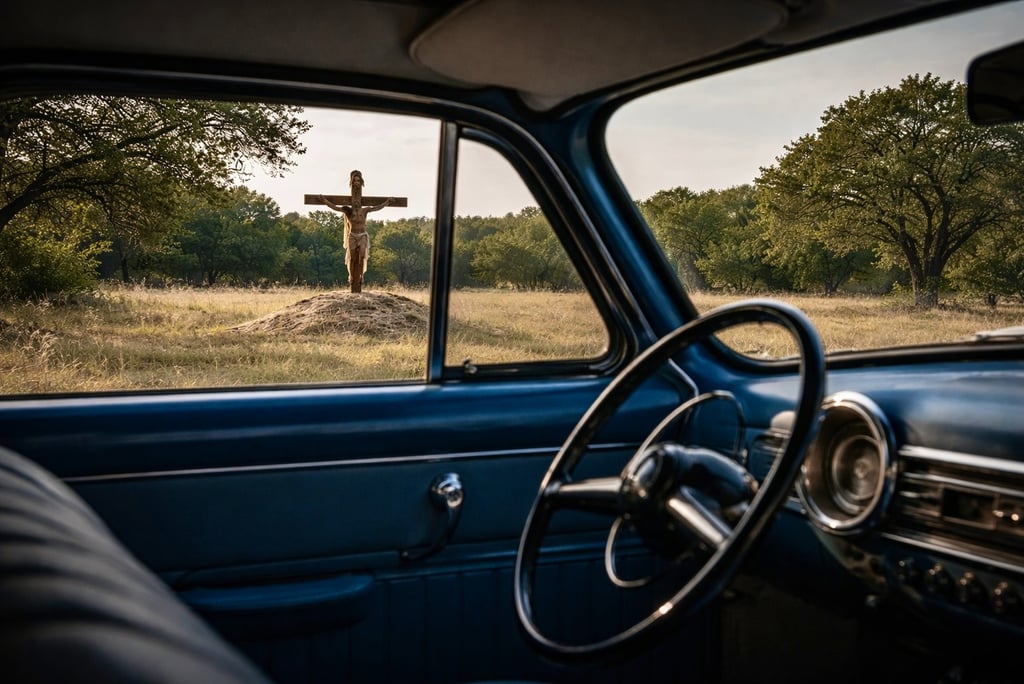
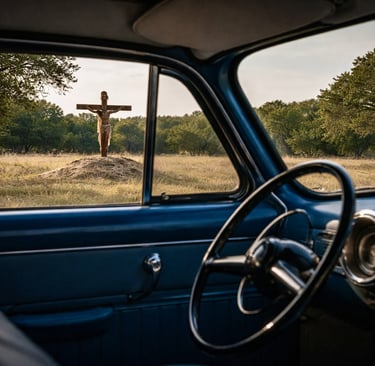
Absolutely flabbergasted, I turned my 1953 Chevrolet around as fast as I could and parked the car on the shoulder. With my eyes wide open and heart racing, I rolled the window down and stared in disbelief.
Completely naked except for a white loincloth, the statue looked exactly like pictures I had seen of Jesus. But the harder I looked at him the more confused I became. Desperately searching for a logical explanation and finally remembering that Easter Sunday was only a few days away, I then concluded that this had to be some sort of promotional gimmick thought up by one of the small churches in town. This had to be the answer.
Still keeping my eyes glued on the cross, I then began to marvel at how minutely detailed the statue was constructed. I wondered if it was inflatable, or made out of some kind of exotic plastic. Then to my surprise I noticed that its head was moving, ever so slightly. With my mind searching like mad for answers, I remembered having once seen a small ceramic bobblehead, whose head also moved. “Whoever in the world made that statue of Jesus really did a fantastic job!”
Obviously I am not the brightest person because suddenly it dawned on me that this wasn’t a statue, at all, but that a real man was actually hanging there. How could I have been so stupid? Then a car pulled up and a woman began pounding a sign into the ground, announcing their Easter services in a few days. “So there’s nothing unusual out here on this boring road.” Continuing to mutter to myself I started the car and continued west on 290.
Granted, some of these coincidences may not appear to be highly spiritual. I have never had a celestial being glimmer before my eyes and speak to me, but really, it’s just a matter of how you look at life. At first I thought that my guardian angel was playing tricks on me, but in time as my knowledge and faith in God increased, I began to see His hand in everything around me.
Even the Lord encourages us to see Him everywhere. He tells us, “I am the taste of water, the light of the sun, the ability in man, the fragrance of the earth, the heat in fire, the intelligence of the intelligent, and the life of all that lives.” (Note: Please refer to the seventh chapter of the Bhagavad-gita As It Is, for an in-depth study of the above quotations.)
Also, in the sixth chapter, verse thirty , Lord Krishna tells Arjuna (are-joo-na), “For one who sees Me everywhere and sees everything in Me, I am never lost, nor is he ever lost to Me.” (Bhagavadd-Gita 6.30)
I also believe that trying to see the hand of God in everything is one of the meanings to the Greatest Commandment, given to us by Jesus Christ when he said, “To love the Lord, thy God, with all your mind.” Using our mind to perceive God in our lives is one way to obey this spiritual injunction.
Or, as Father Damascene has written in the PHILOKALIA (FEE-lo-call-lee-a)—“Man is to remember God at all times, in all places, and under all circumstances. If you are making something, you should remember the Creator of all things; if you see light, you should remember Him who gave it to you; if you see the heavens, the earth, and sea, and all that is in them, you should marvel and praise God who called them all into being; if you are clothing yourself, remember the blessings of your Creator and praise Him for being concerned about your well-being. In short, every action of every day should cause you to remember and praise God, and if you do this, then you will be praying ceaselessly and your soul will always be joyful.” (HELEN BACOVCIN, The Way of A Pilgrim, p. 72, Image Books, 1978)
---🔧---
I have a friend who lives near Austin and he once told me a terrific story about what happened to him many years ago. It is a true story showing how God touched his entire family in a most remarkable way. I met this gentleman in 1986 at the Seventh Day Adventist church in San Marcos where he served as one of their pastors. He told me that when he and his wife had been much younger, and their children very small, they had taken off in their “Volkswagen Bug” for a ride along the sand dunes on Padre Island—next to the Gulf of Mexico.
After venturing miles away from the nearest town and having thoroughly enjoyed themselves, they wanted to return to their motel room and put their tired children to bed. But as they turned their car around, suddenly the engine began acting up, refusing to hardly run. However, luck seemed to be with them because they spotted a nearby lighthouse.
Proceeding very slowly they were able to get the Volkswagen off the sand and up onto a cement driveway. No one was there but at least they felt better. Unfortunately, even after many attempts to restart the engine the only thing that happened was that the battery went dead. Their only hope was to push-start the motor. Again they were fortunate because the driveway had a slight incline to it. So this is what Ken and his wife tried to do and for what seemed like hours they pushed and pushed and pushed, but with no luck.
Approaching 9:00 p.m., it was getting late and his exhausted family was totally unprepared to spend the night in the middle of nowhere. But as I mentioned, my friend was a religious man, so gathering together his wife and children, he told them that they only had enough strength for one final push. However, before trying, he wanted them to ask God for His help.
After several minutes of prayer they slowly pushed their little “Bug” to the top of the driveway and with their last ounce of energy got the car going as fast as they could. Ken told me that the engine then started to make the strangest sound imaginable, apparently firing on just one spark plug. Both thankful and amazed that the engine kept running at all, everyone piled in and they slowly drove away—riding on a prayer and a cylinder.
This story isn’t over yet. Just to show them that it really was God who answered their prayers, standing in the sand they saw a man with his thumb out. Naturally, Ken was very reluctant to stop with the engine just barely running like it was, plus the fact that his small car was already loaded with the children, his exhausted wife, and all their picnic supplies. But no, something inside told him to give the stranger a ride. Shifting into reverse, the Volkswagen gradually backed up and they let him in. To make room for the stranger Ken asked his wife to get into the back with the kids. With everyone set, off they went again.
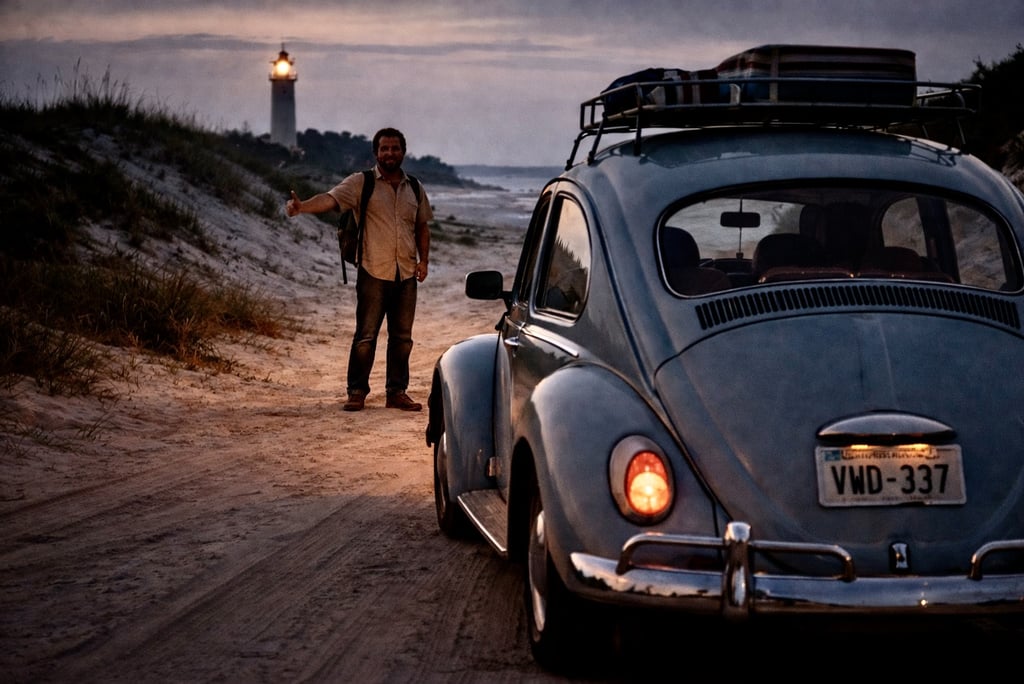

As for the stranger, it turned out that the young man had been abandoned by his drunken buddies, who like everyone else had been trying to enjoy the long holiday weekend before going back to work. “So what kind of work do you do,” Ken asked the young hitchhiker? “Well, I’m a Volkswagen mechanic!”
Undoubtedly we all get excited when something very special happens to us, such as receiving an unexpected gift, maybe seeing an old friend for the first time in years, or being told that we have won something. This is only human nature and I think the more unexpected the surprise, the greater the impression it leaves on us.
Take, for example, this incredible story that appeared in Denver, printed in the Rocky Mountain News, Wednesday, January 9, 1991. What happened is that a fifth-grade student (Cetericka) had joined-in with the rest of her classmates at the Windsor Forest Elementary School, in Atlanta, Georgia and had written a letter to one of our soldiers in Saudi Arabia. Eventually her little envelope filtered its way through a mountain of backlogged mail, finally getting tossed into a pouch with a bunch of other letters headed for Fort Apache, somewhere near the Kuwait border. Remember, this was during the first Gulf War in 1991.
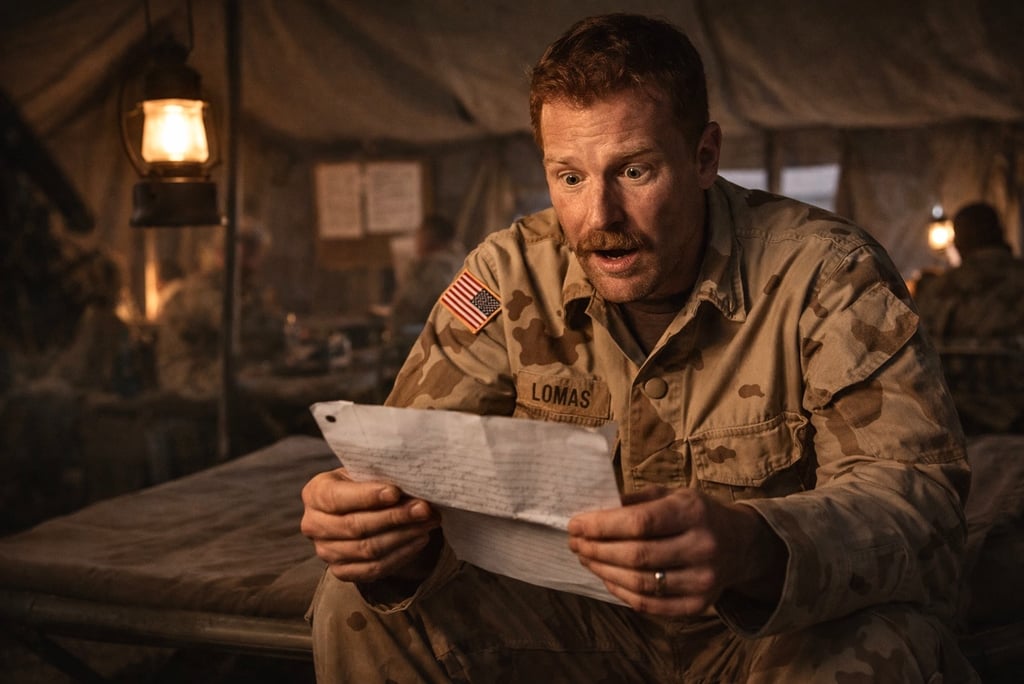
Bored to death like the rest of our half-million soldiers waiting for the January 15th deadline to arrive, Army Sergeant Rory Lomas was glad to see the unit’s clerk come into the mess tent and yell out mail call. He was hoping to get a letter from his wife, Barbara, but instead was tossed an envelope addressed: “To Any American Soldier.”
“What the heck,” Sgt. Lomas thought, “any mail is better than no mail.” But what Sergeant Lomas wasn’t prepared for was the neatly penned signature at the end of the letter. It was signed: “Your friend in America, Cetericka Lomas”—his daughter! You can just imagine the look on his face and what went racing through his mind.
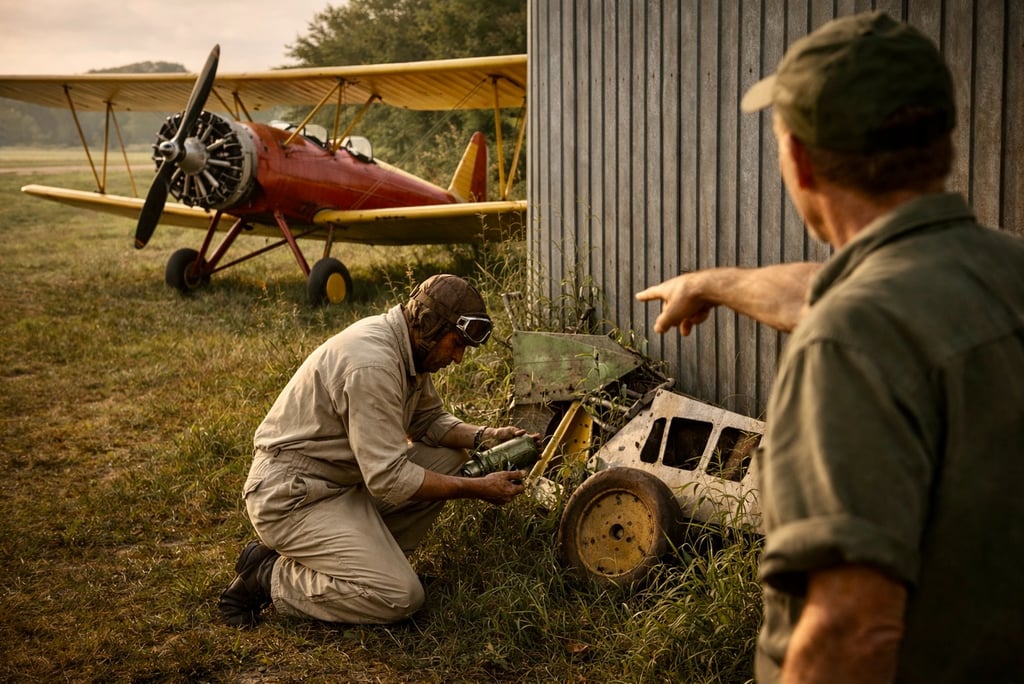
Likewise, I’m sure that Richard Bach (author of the famous novel, Jonathan Livingston Seagull) received more than a little dose of excitement as the incredible events unfolded for him when his rare biplane, a 1929, Detroit-Parks P-2A Speedster, upended in Palmyra, Wisconsin. Only eight of these planes were ever built and because it was so rare, to acquire the necessary part to repair the aircraft seemed highly unlikely—or should I say, impossible?
Observing Bach’s predicament, a man who owned a nearby hanger asked if he could help. When Bach described the uncommon part he needed, the man walked over to a pile of junk and pointed to the precise piece. Richard Bach later said, “The odds against breaking the biplane in a little town that happened to be home to a man with the forty-year-old part to repair it; the odds that he would be on the scene when the event happened; the odds that we’d push the plane right next to his hanger; within ten feet of the part we needed—the odds were so high that coincidence was a foolish answer.” (RICHARD BACH, Nothing by Chance, quoted in Reader’s Digest, August 1979, p.118)
When we hear these delightful stories, they irresistibly invite us to think of the hand of God and His mysterious ways. They are like a spiritual nudge, designed to wake us up to our real position: God’s holy servant.
I once read that, “A coincidence is God’s way of remaining anonymous.” I like this idea. In any event, they are truly a delight to experience. They are divine treats—spiritual magic performed by the greatest magician of them all: Lord Krishna. No two tastes alike and they are spontaneously full of humor and wonder. But above all, at least from my perspective, a coincidence is a blessing. They are an added surprise in my stocking. I am truly grateful, not only because of their generous numbers, but also to now have the opportunity to share them with so many people.
It was a simple thing to be touched by Lord Krishna’s unlimited kindness. First I gave up hunting (hurting animals), I became a vegetarian and then I began chanting the Lord’s Holy Names, as recommended by Shrila Prabhupada: Hare Krishna – Hare Krishna – Krishna Krishna – Hare Hare – Hare Rama – Hare Rama – Rama Rama – Hare Hare. I also read the book, Krishna, The Supreme Personality of Godhead, wherein Shrila Prabhupada comments several times that anyone who just hears the auspicious pastimes of Lord Krishna will be forever blessed.
As I have discovered over and over again, as long as we sincerely look for God, He has unlimited and marvelous ways to show us His mercy. Reach out to Him with your heart and mind. Believe and expect His blessings, and soon, you, too, will experience His wonderful touch.
- End of Chapter One -
Chapter Two