


Table of Contents - Part 3
Chapter 37 - The Saga Marches On
Chapter 38 - Father Mark
Chapter 39 - A Great Mystery
Chapter 40 - San Angelo, Texas
Chapter 41 - The Confession
Chapter 42 - Angels or Carpenters
Chapter 43 - Crucifixion of Jesus
Chapter 44 - West Texas 1621 A.D.
Chapter 45 - Agreda, Spain
Chapter 46 - Secrets
Chapter 47 - Fr. Mark in India
Chapter 48 - Lord Shiva
Chapter 49 - The Reunion
Table of Contents > Part One
Table of Contents > Part Two
Chapter 37 - The Saga Marches On
Reader's Review (coming soon)
Three days and two nights passed quickly as Maria, Sutton, and her father became reunited. All the mysteries surrounding what had happened over the years became abundantly clear. Of course, the news about Eleni passing away was an especially difficult thing to tell her father. That was the second time she saw tears fall from his eyes.
During this time not only were all of Maria’s questions answered, but equally profound, Major Sutton now understood all that had happened: the helicopter never arriving; the ambush; Nick then being nursed back to health by Suryavarman and the monks; Nick having buried the letter well over 20 years ago, and how Rama had followed Nick and was able to warn him about the Vietcong who were hot on his trail, and finally returning to the monastery.
Other than that one attempt to escape, Nick never again tried to leave and besides, as he told everyone, Surya was already advanced in years when they first met and then, over the following months as Surya’s old age left him increasingly fragile, the thought of leaving him for some wild attempt to once again reach America became unthinkable.
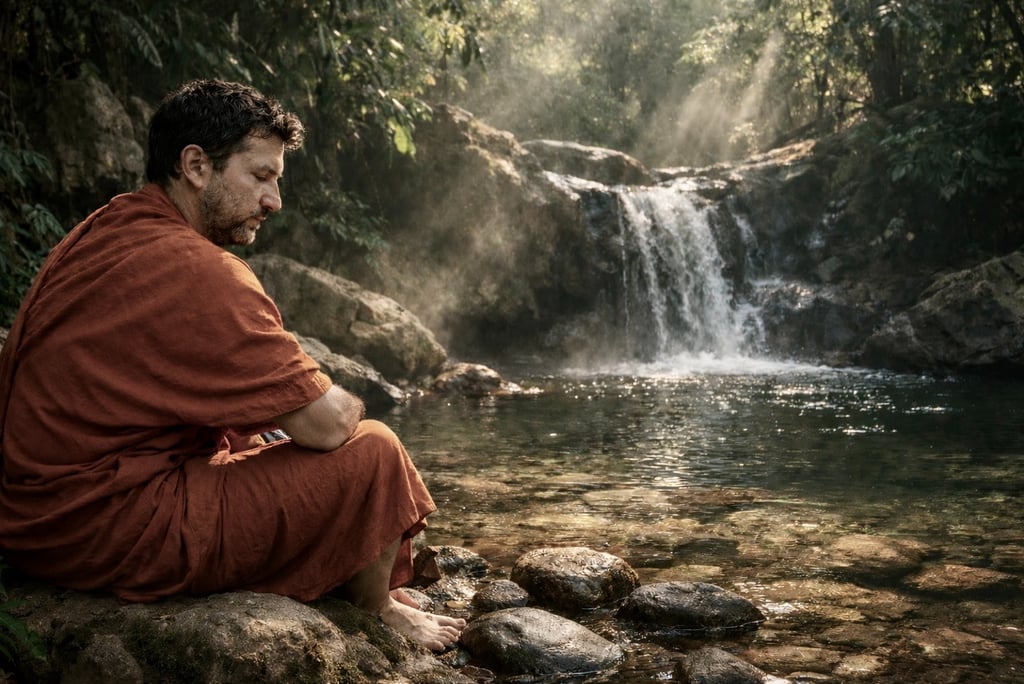
Nick had many reasons to remain in Laos. Chief among them was his frequent return to the place where Surya and the monks had first found him. There was a quiet peace there—a stillness that allowed him to revisit what had happened on the day he died. Something extraordinary had taken place in that hidden corner of the world.
Nick had always possessed a rare ability to remember his dreams, yet what he experienced that day was nothing like a dream. Even the most vivid dreams, no matter how carefully held, tend to dissolve with time—slipping away into obscurity. But this was different.
Sitting beside the small waterfall, as he reflected on those events, he realized that nothing had faded—not a single detail. It remained as clear and present as the moment it had occurred.
There was something sacred about that place… and about what had happened to him there.
Something that had forever changed his soul.
Who knows what the future would have been if instead, Nick had just been found by some ordinary farmers? But fortunately this wasn’t the case and Providence had blessed Nickolas with the greatest friends that he could have ever hoped for.
The relationship between Nick and Surya was like a loving son taking care of his aging father—but it was much more than that. In Nick’s eyes, Surya was nothing less than a saint of the highest order. Safely back at the monastery, rather than dwelling upon another foolish attempt to escape, it became apparent to Nick that God had other plans for his life, starting with the fact that beyond any doubt, he had been given a second chance.
When Nick explained all this to Maria she could easily sense the unmistakable sincerity in her father’s character—something that warmed her heart. Whatever had happened to her father, one thing was certain in her mind: he had become profoundly close to God. Blake, Sutton and Judy were aware of the same thing. Nick had become something far more than any of them could have guessed in a million years. They were now about to learn other things—impossible things—things that would touch each one of them to their very core.
As evening approached on the third day, out of respect for Rama, Nickolas wanted to hear more about his friend’s trip to India. All the monks did. That conversation had been suddenly interrupted with the arrival of his daughter.
Chapter 38 - Father Mark
Table of Contents
Reader's Review (coming soon)
Again the weather was cooperating as everyone settled down in the beautiful glen to listen to Rama. For Maria, Blake, Sutton and Judy the evening promised to be a welcome opportunity to change gears. Besides wanting to hear about Rama’s trip to India, they were also looking forward to thinking about something else besides all the things that had been consuming them for the past several months—especially the last six weeks.
Seated to Nick’s right were Maria and Blake, with Major Sutton and Judy beside them. Rama sat immediately to Nick’s left, the two of them close together. The remaining monks formed a gentle semicircle around the group. Nick and Rama shared a quiet moment, their eyes bright, both men smiling as they looked out over everyone gathered before them.
Nick began to speak. “Normally when we sit down together we like to say a few words thanking God for His kindness—and naturally we always remember Surya and thank God for the many years that we were blessed by his presence.”
After a few quiet moments in prayer, Nick then looked at Maria, taking her hand. “Obviously,” he continued, “we have so much to be thankful for.”
As everyone sat looking at Maria, her smile became infectious and happiness stirred within everyone like little butterflies flirting with a bed of beautiful flowers.
Looking very happy, Nick continued. “Not only do we have Rama back safely, by now you have all met my daughter and Major Sutton, as well as Judy and Blake. It seems that God is intent on making our small family just a little bit bigger.”
Hearing this everyone became even happier and their laughter a delight to their ears. Maria squeezed Blake’s hand. Nick continued. “As we all know it was just a few days ago that Rama was sitting on this very spot telling us about his adventures in India. Of course, with the unexpected arrival of our guests there was no way he could continue. Because of this I have asked Rama to begin this evening where he left off. He has already told us about meeting his American friend, Jai.”
Reaching out and taking Rama’s hand, Nick then said, “we are all so happy that you made it back safely."
Feeling a little shy, Rama reached down and took a sip from a small cup fashioned from a coconut shell that sat in front of him. “Thank you, Nick. Yes, there is so much to be thankful for and like you just said, it has especially warmed everyone's heart getting to know Maria and her friends.”
All the monks nodded their heartfelt approval.
“As for my trip to India—yes, there is much to share. As I mentioned, once I arrived in Vrindavan, I stayed with my uncle Sripada and his family. Being somewhat well known, he was often meeting musicians and would frequently invite them to join us for dinner."
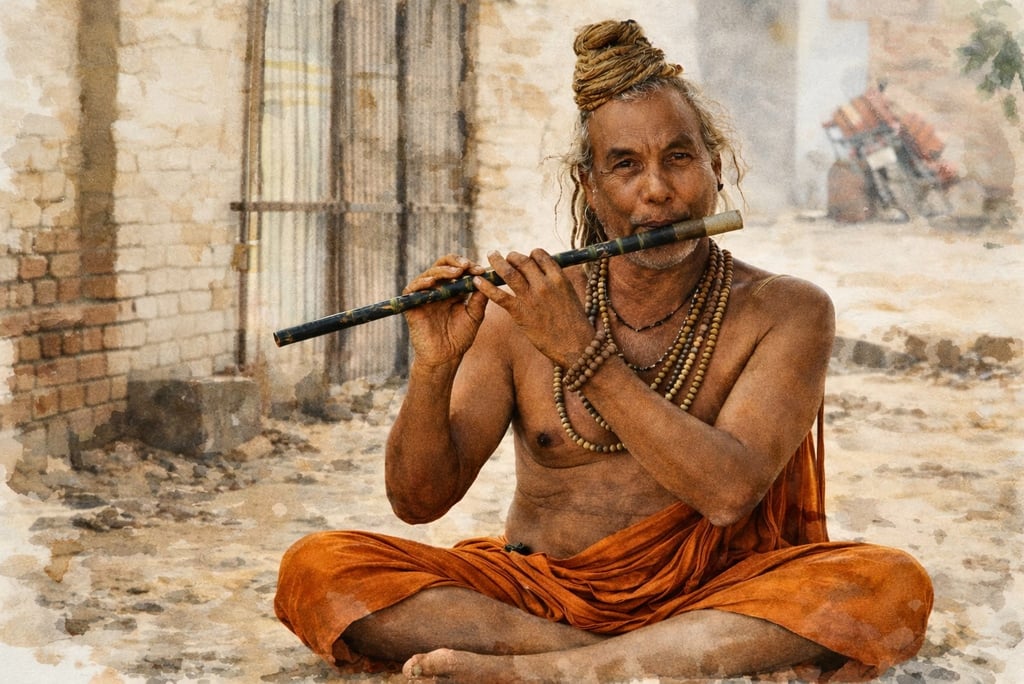
Rama continued, “For me, this is what I enjoyed the most about the time I spent in India. Not only did I get to meet people from all over the world, but those who make the journey to Vrindavan are naturally very religious. This not only brought me in contact with a wide variety of people, it also exposed me to spiritual topics that I had no idea even existed.”
Rama then turned toward Nick. “First let me say this, my dear friend. Before we found you on that fateful day so many years ago—we were just a small group of monks from Cambodia.
“Of course we knew about America and we all spoke a few words of English, but none of us except Surya really knew how to speak it. Perhaps I spoke a few more words than the others but as you know, Nick, my English was very poor. Everything about us was Cambodian—except that we still worshiped the old way. As I was telling Blake and Maria last night, today Cambodia is a Buddhist country, but Surya taught us that you only have to examine the roots of our country to see that Cambodia actually owes its greatness to India. For example, I am named after the greatest king that ever lived in India, Lord Ramachandra. He and His fierce army of monkey soldiers are famous in both India and Cambodia.”
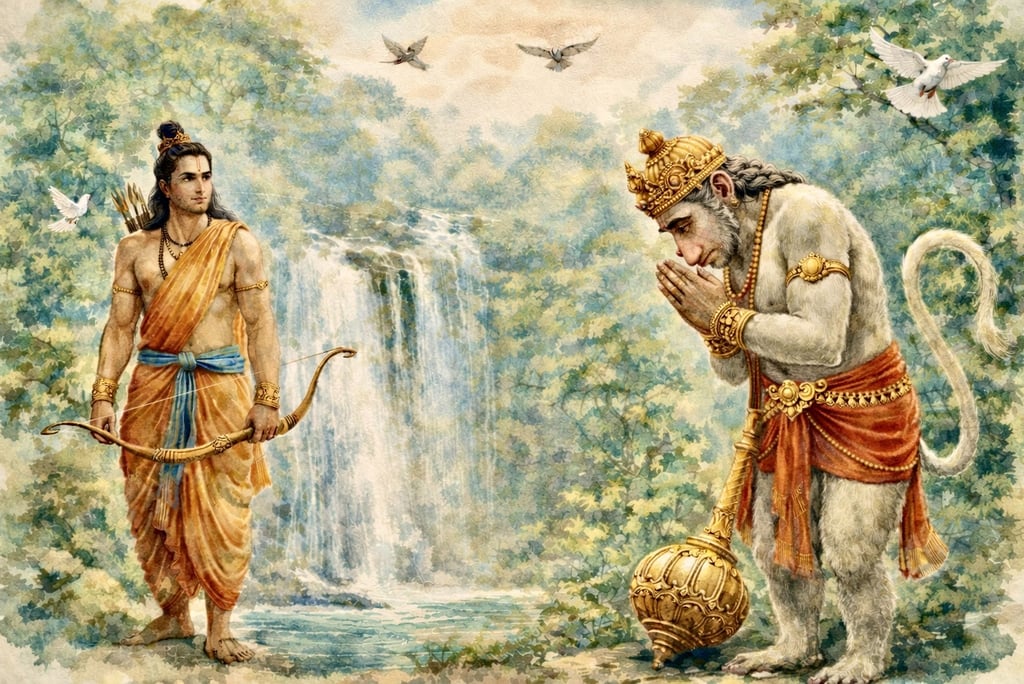
“This is why I wanted to go to India—to see all of this with my own eyes. Nick, do our guests know that my ancestors had come from India?”
Nick nodded, as well as Maria, Blake and Judy, all expressing their gratitude.
“Nick, I know that I am not the only one who feels like this. Before you taught us, our understanding of the world outside our little monastery was very limited. For example, yes, we had heard of Jesus, but His teachings were mostly unknown to us—except for Surya. But after you arrived this all changed. I remember how Surya spent hours with us explaining all the things that the two of you had talked about.
Rama began to tear up as he continued to speak. “As I think back on everything that has happened, it is actually we who have benefited the most. God is much greater than what any of us had ever imagined and so many times, both you and Surya showed this to us. Thank you.”
Nick blushed as Rama continued. “Yes I had a wonderful trip to India, but it’s also true that before that fateful day when we discovered you, I was clueless that knowing how to speak English and understanding Christianity would later have such a profound influence upon me during the time I lived in Vrindavan. I’m afraid that if Khmer had been my only language—who knows? Perhaps going to India might have simply remained a dream that I would have never fulfilled. Or, if I had gone, I think I would have missed out on so much. Even my uncle—and his wife and children didn’t speak the language of Cambodia, except for a few words, but they both could speak English.
“So yes, Nick, each of us has plenty to thank God for, and now there are new friends among us to share in the things we are about to discuss.
Shifting his weight, Rama continued his story. “Father Mark is another American I had the privilege to meet. One evening my uncle had invited him for dinner. Mark told us that his home was in a place called, San Angelo, Texas.”
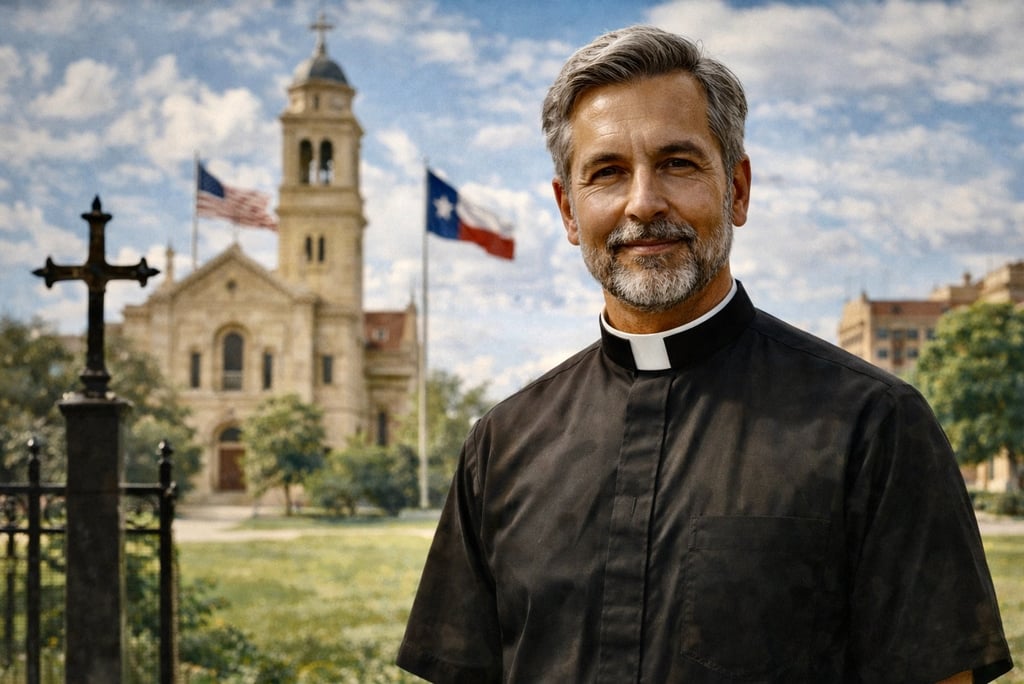
Rama paused for a moment. The pleasant aroma of incense slowly drifted through the beautiful glen. “Father Mark told me that he was a Catholic priest and with great fondness he also mentioned his parents. He said that his father was a very religious man and had made all the arrangement so that Mark could go to India. Mark said that his father had always tried to teach him that there is more to God than what most Christians like to admit.
“His father had been an airline pilot and often he was given a these curious books at different airports. Over the years, other similar books were given to him and what made all of this interesting is that all the books were written by the same person, an elderly monk from India, His Divine Grace A.C. Bhaktivedanta Swami Prabhupada.”
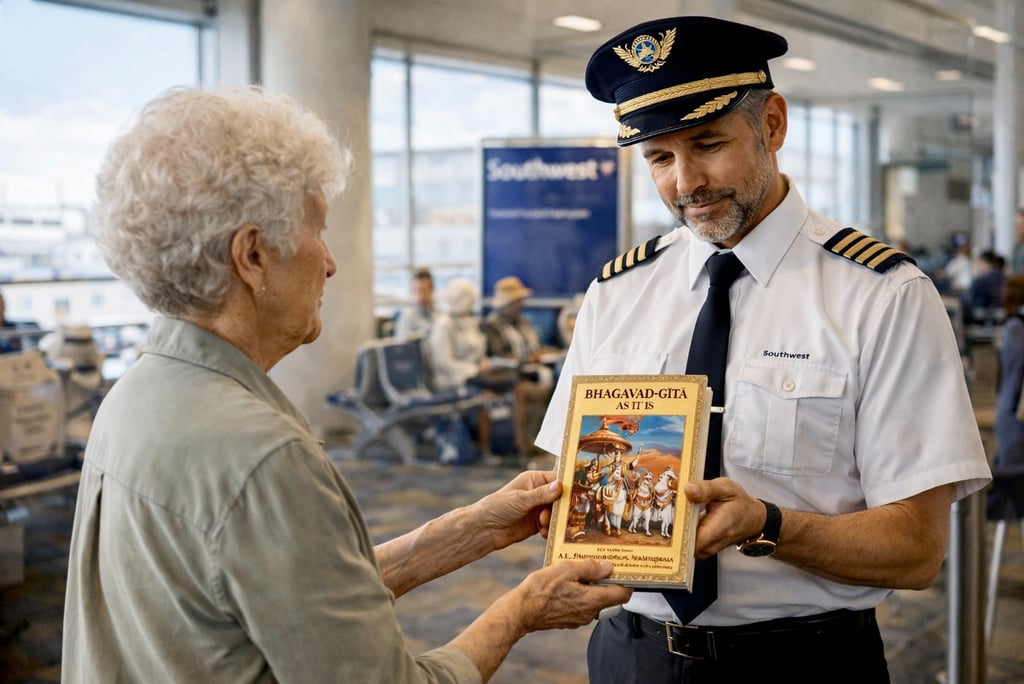
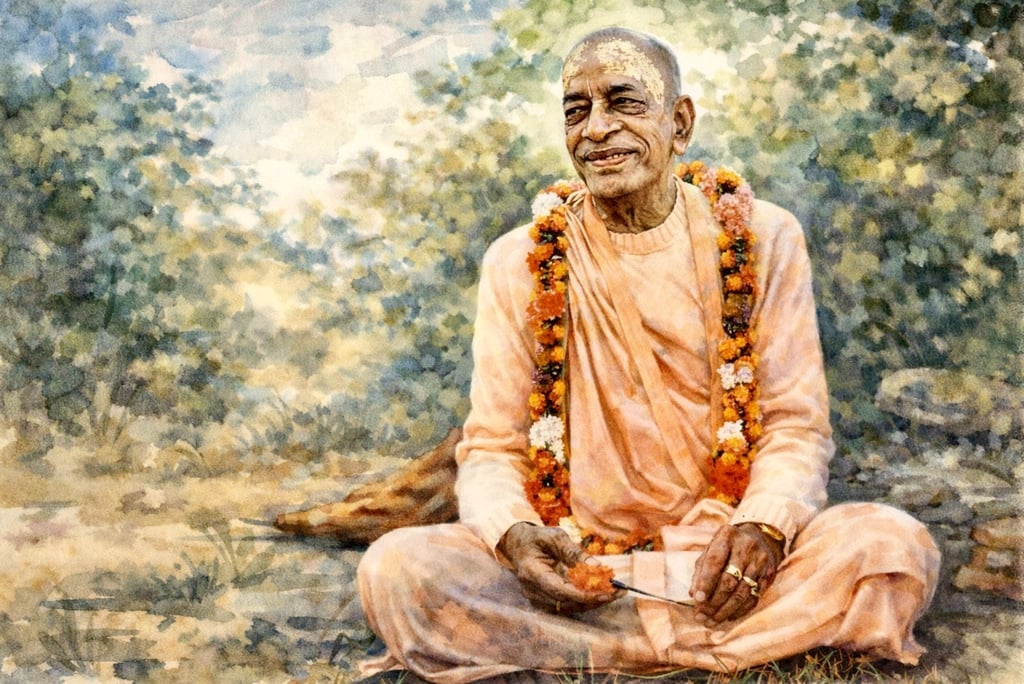
“Isn't he the spiritual master of Jai—the American you met at the hospital in Vrindavan!”
“Yes he is, Nick. Jai told me that Prabhupada’s mission was to present the real religion of India to the West and had ordered his disciples to print and distribute his books all over the world. Airports were the perfect place to meet people from all walks of life—many travelers with hours of waiting on their hands and a book to read not out of the question.
“Over time his son, Mark, also found his way to God, following the tradition of his Catholic roots. Meanwhile at home, his father quietly studied all the books he had accumulated and gradually discovered many similarities between the religion of India and his Catholic faith.
“Since Mark’s father felt that he was not well enough to travel to India, instead he paid for his son to go. He asked Mark to go to Vrindavan—a very sacred place that Swami Prabhupada had mentioned time and time again in his books.
“So yes, Father Mark impressed me as a person firmly grounded in his Catholic faith, and while it is true that most Catholics seldom look at anything beyond their faith, like I said, Mark’s father had often said that he found God much too big to belong exclusively to any one group of people.
“Respecting his father dearly, if Mark’s father told him that something was extremely worthwhile in those books and was willing to spend thousands of dollars sending him to India to discover what that was—then he was going to give his father an honest report. But Fr. Mark also told me that he was concerned how he was going to balance what he found in Vrindavan with his deep faith in the teachings of Jesus Christ."
Rama paused for a moment to take a sip of water, and continued: “Consciously resisting the temptation to pre-judge India, its religion, and the people he was about to meet—from the very moment he landed in India, Father Mark decided to not make that challenge more difficult by arriving with a head full of preconceived ideas. Out of respect for the ancient traditions that he discovered and doing his best to fit into the mood of Vrindavan, Mark even adopted the traditional clothing that everyone wore. Fr. Mark told me that he didn’t want to make his visit to Vrindavan about him.”
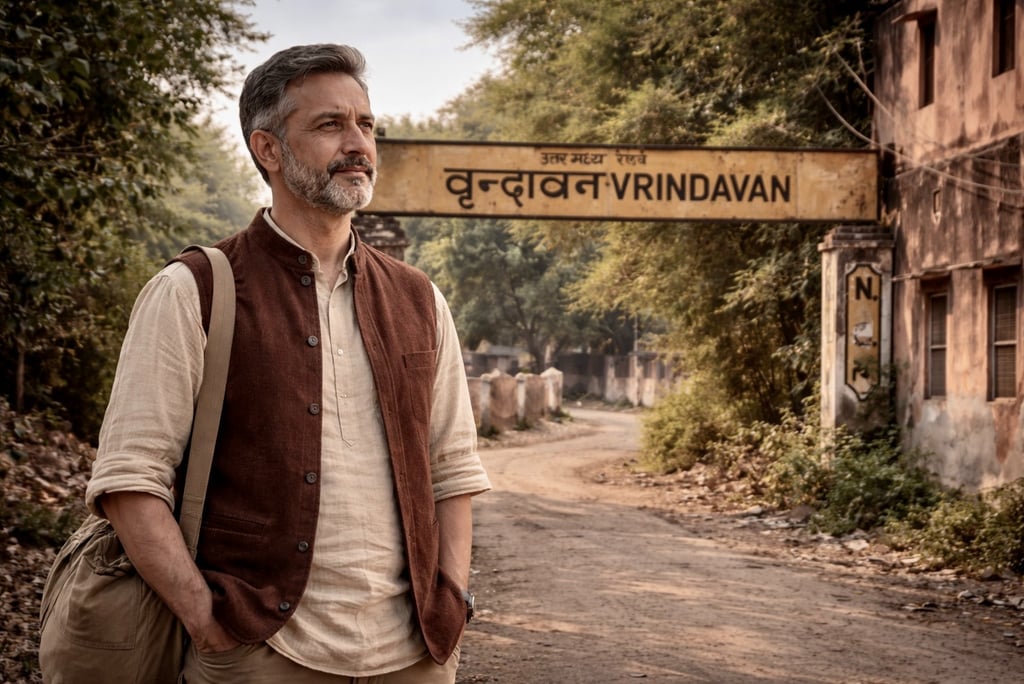
“Of course, as Mark told me, such an extended trip at this point in his career meant that a significant sabbatical would be required—but he wanted to go. After all, how long would his father live? If Mark was ever going to go to India and make it back to see his father again, he knew it was either then or probably never.”
The evening was growing more beautiful by the moment, the sun wanting to dip below the peaks of Elephant Mountain. A gentle breeze felt especially nice and the chirping of birds mixed with the tumbling of the nearby waterfall made the most pleasant sound.
Chapter 39 - A Great Mystery
Table of Contents
Reader's Review (coming soon)
As everyone sat listening to Rama speak, the gentle breeze continued to move throughout the glen, cooling everyone ever so slightly. Rama turned to Maria and said, “Earlier today your father showed me some pictures of your drawings and I must say they are very nice! Where did you learn to draw?”
Pleasantly surprised by Rama’s inquiry, Maria replied, “Simply a gift from God. I have been able to draw ever since I can remember but after high school I attended college where my teachers really helped me to master my talents.”
“Last night you told me that you went to school in New Mexico. I’m curious; did you ever go to Texas—where Father Mark lives?”
“Only once with my friends from college, but not where he is from. There is a famous river in Canyon Lake and the water is very cold. Floating down the river is a fantastic way to beat the summer heat.” Knowing something about hot weather, all the monks began to smile.
Maria then said, “You mentioned that Father Mark is a Catholic priest in San Angelo, but I have no idea where that is.”
“Thank you, Maria. Your drawings are just beautiful, and yes he did mention Texas but I’m not sure either, but Father Mark did tell me that after graduating from seminary school he moved back to his home in San Angelo to be near his father. He also gave me a piece of paper with some numbers on it. I have it and will show you later.
“He also mentioned that one day while he was looking at some old history books in the school’s library, that he accidentally came across a very unusual story that he had never heard about, even though he was born in San Angelo and is also Catholic priest. Later, after reading every book he could locate about this growing mystery, he finally began to find answers—but Mark also said that they involved events that he would have never thought possible.
“But first let me tell you that when I was introduced to Father Mark, he had already been living in Vrindavan for nearly a month and had made many friends, including other Americans who were living at the large temple that A.C. Bhaktivedanta had built in Vrindavan.
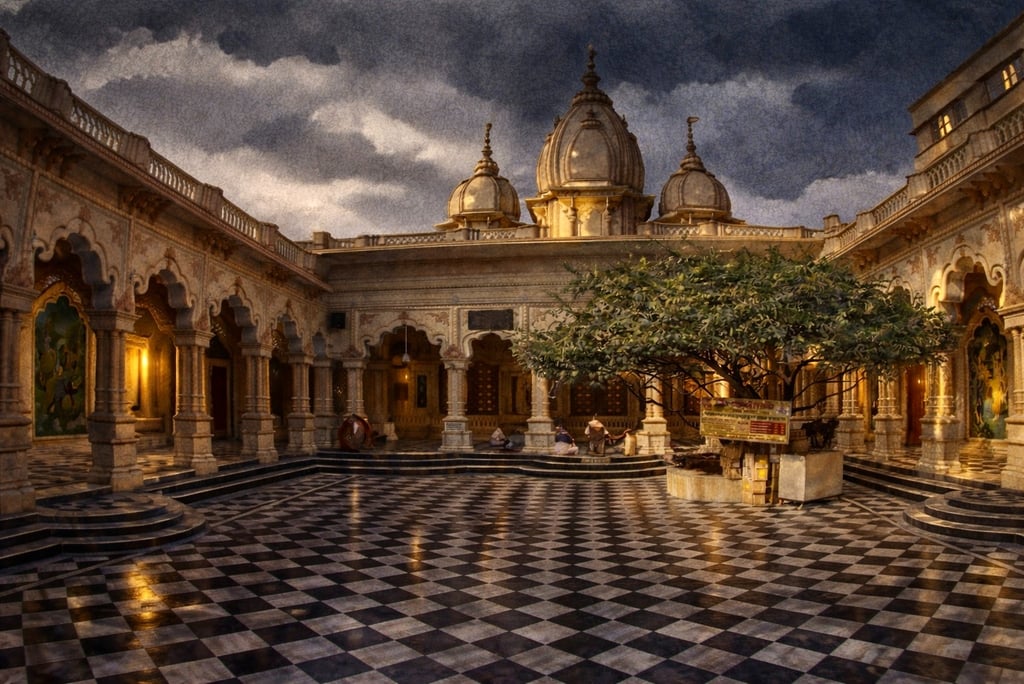
“Father Mark told me that in the same way that Prabhupada had instructed his disciples to spread the message of Lord Krishna throughout the world, in both the sixteenth and seventeenth centuries, Spanish kings had ordered their Catholic missionaries and soldiers to colonize what they called, New Spain, which consists of present day Mexico and New Mexico. This was all part of Spain’s efforts to increase her depleted treasury and at the same time spread the message of Lord Jesus Christ to the American Indians. Mark said that by royal decree, all Spanish explorations were required to take two missionaries with them—all their expenses paid for by the monarch.”
Sitting there on the top of Elephant Mountain and to hear Rama suddenly mention New Mexico where Maria had gone to college, was beyond mind boggling to her. Sitting a bit straighter, from that moment on she never took her attention off Rama, for even a split second. Where was this all leading to? What was he going to say next? Soon, everyone was about to find out.
Rama continued, “Father Mark told me that despite the efforts of the Spanish priests to fulfill their spiritual directives in New Mexico, historical records clearly show that whatever achievements were accomplished—converting the American Indians was not a great success. Only a divine intervention, similar to what happened to Juan Diego in Mexico City—a hundred years earlier—would save the day and sure enough, suddenly things began changing for the better, and all without the missionaries hardly having to lift a finger. This was the start of the mystery that Father Mark had discovered in that book, its author writing how in the early 1600s something very strange happened that left the priests in New Mexico simply mystified.
“As Mark was telling me this, I remember how he had stopped speaking for a few moments, as if searching for words. When he continued, he said that after studying what had taken place, he was convinced that the events he read about had actually happened. He said that there had even been eye witnesses—and then, when he stopped in Spain on his way to India, he was able to see the actual letters that had been written in the 1600s by the Spanish investigators, describing everything in detail.
“As I told you, Father Mark mentioned that for many years the Spanish missionaries were only having limited success preaching to the natives in that part of New Spain when suddenly, completely on their own, Indians began seeking out the priests. Can you imagine that? The Indians said that they wanted to be water-baptized. Needless to say, the priests were beside themselves for an answer as to why this was happening. How did the Indians know about being baptized? Even more puzzling was the fact that most of the Indians were carrying small wooden crosses!
“Spanish missionaries would suddenly meet a band of Indians and following their time-honored custom, the priests would hold up their iron crosses for the Indians to see. But to their astonisment, the Indians quickly returned their gesture, pulling out their own crosses and holding them up for the priests to see. But these were not civilized Indians, mind you. Instead, they lived in areas that, as far as anyone knew, had been never touched by Spain or her priests.
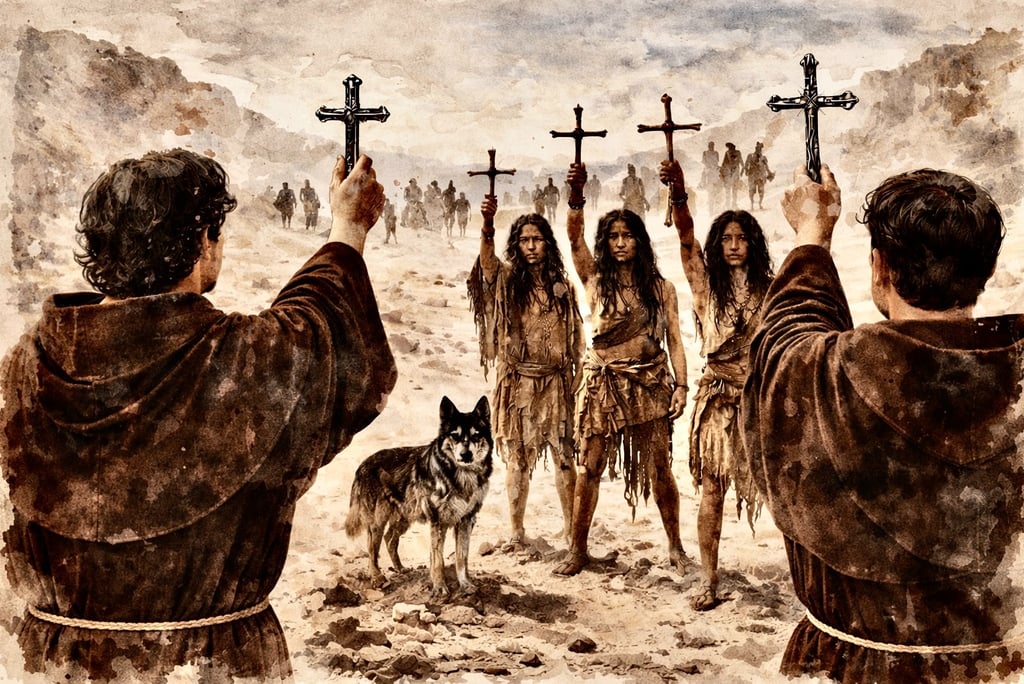
“When word reached Mexico City, and then Madrid, that large numbers of Indians were asking to be baptized, an investigation was organized. In Spain, the inquiry was led by the Franciscan Minister General, and in New Mexico by Archbishop Manzo and the priests, Padre Perea and Padre Alonso Benavides. They all asked the same questions: ‘How could Indians from a remote and distant area that priests had never set foot in, be seeking them out?’
“Not only were the Indians asking for water baptism, they also possessed a good understanding of the Catholic doctrine. ‘How was that possible?’
“To further amplify this mystery, one of the Chiefs even had a rosary in his possession. Again everyone asked, ‘Where did that come from? Did the Indians kill a priests and take it from him?’ ...but there was no record of that. And later, other rosary beads were discovered. There is even a Spanish note that mentions how Father Benavides eventually took possession of one of the sacred rosaries and later asked to have it buried with him.
“As Father Mark said, a divine mystery was suddenly unleashed upon the unsuspecting missionaries. Since the crosses and the rosary beads had been seen by the leading investigators, the mystery confronting Spain simply grew beyond the boundaries of legend, myth, or even human understanding. What appeared to rational men to be impossible was being reported as possible—in fact, more than possible. This is what no one could understand.
“Maria, like I was saying, Father Mark continued to investigate this mystery and to his great surprise he even came across a record that described an incident that directly involved San Angelo. In it he read that on June 22, 1629, after a long journey, fifty Jumano Indians from San Angelo approached the San Agustin Mission located in Isleta, New Mexico.
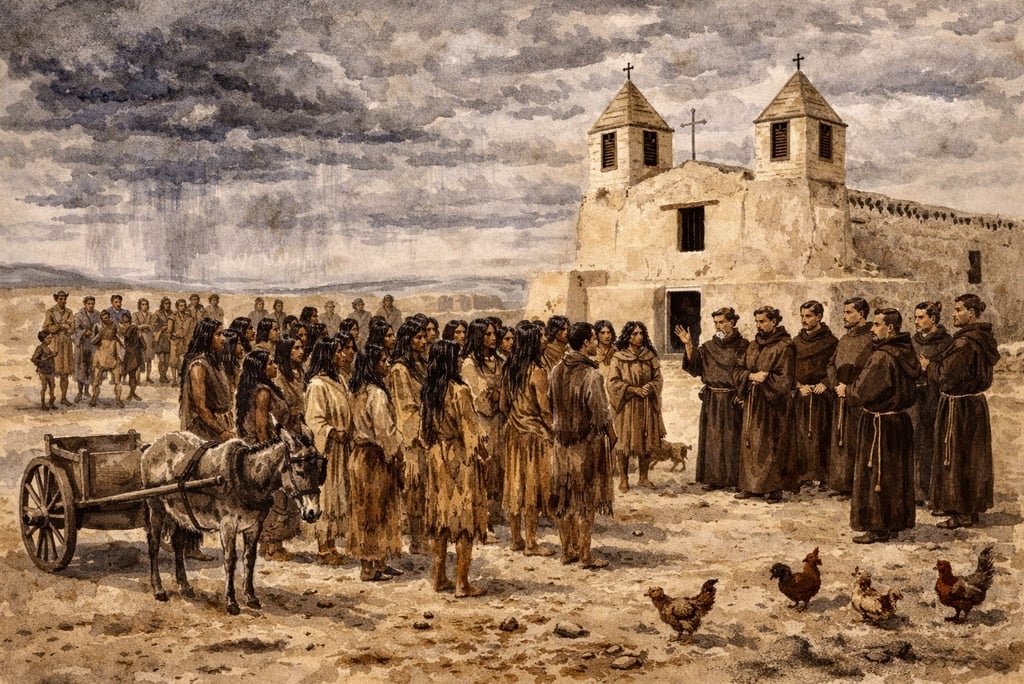
“Immediately, when this band of Indians arrived, as I said, they started asking for water baptism. Also at this time, more than 30 Spanish priests had recently arrived at the mission, part of a large caravan from Mexico City. Padre Perea received the Indians and immediately began asking them who had taught them about baptism by water.
“Father Benavides then summoned all the Indian Chiefs who were ushered into the church. In his official report, Father Benavides stated that the Indians had also requested that missionaries follow them back to their tribal lands, located in San Angelo, over 500 miles away.
“Father Mark then told me that because of the recent arrival of so many priests, their request was granted and after a long march, two Spanish padres stood spellbound as they gazed down from an ancient bluff, hardly able to believe what they were seeing.
“Mark also mentioned that these events were taking place during a time in history when a great effort was being made by the Spanish government to weed out false gods, witchcraft, black magic and other demonic elements that had taken root within certain parts of their Catholic religion. In other words, the priests who investigated the Indians were very astute men, keenly aware of the possibility of fraud and were always on the lookout for any sort of trickery.
“Finally, there was a break in the investigation. A clue suddenly emerged that would eventually challenge even the most devout among them.”
Maria was simply stunned by what she was hearing.
Chapter 40 - San Angelo, Texas
Table of Contents
Reader's Review (coming soon)
The drive from Austin’s, Bergstrom-International Airport to San Angelo took Father Mark and his friend over six hours, including a stop in Fredericksburg. Fortunately, a member of his diocese had a business appointment in Austin that morning and had volunteered to pick him up at the airport. Images of Vrindavan, Rama, and his new friends were still fresh in Father Mark’s mind—the exotic flavors of their food, smells and sounds all pleasant memories.
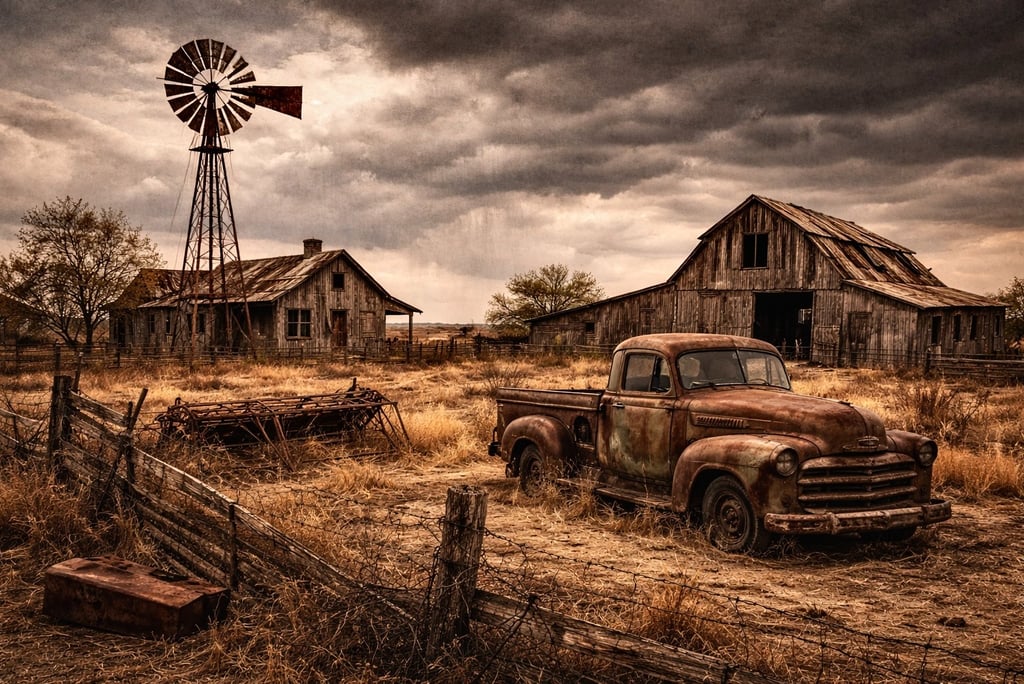
From Fredericksburg their car seemed to be headed on a straight line due west, but in fact, highway 87 also meanders its way north—slowing to a crawl at times through little towns such as Mason, Brady and Eden. After Eden, the last 45 minutes of their journey witnessed the end of the Texas Hill Country, sending their car down into a massive plain, filled mostly with mesquite trees, cotton fields, an occasional farm house and of course, cotton gins. Some of the farms were abandoned—remnants of long-forgotten homesteads from the Great Depression. As far as the eye can see the land is mostly flat and on this particular day, rain was in the forcast.

Although Father Mark was a history teacher, eighteen months ago he didn’t even know that the earliest history of San Angelo could be traced to the start of the 1600s. Finding that book buried under some boxes in the library suddenly changed everything for him—all centered around the eyewitness testimony of two Franciscan monks who reported to their superiors that in 1632, ten thousand Christianized Indians were living within the present day city limits of San Angelo, worshiping Jesus Christ. That amazing piece of history he had discovered right before his trip to India and inwardly he was still reeling from it. "Why was that never taught to me?" Mark had asked himself that question at least a dozen times.
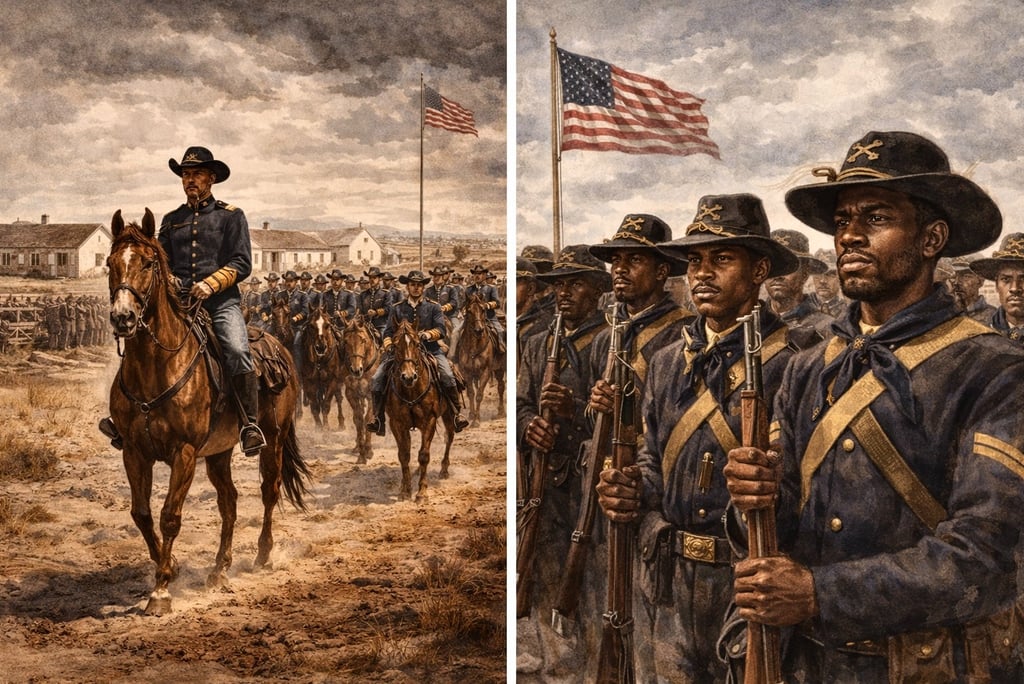
No, instead of going back that far in time, Father Mark started his history classes on far more familiar ground, telling his students that in 1867 the United States government established Fort Concho to protect the frontier from the savage Indians. A few years later a great army emerged from this same fort to once and for all eliminate this threat. The army was led by Col. R. S. Mackerzie and his famous 4th Calvary. By the end of their campaign and killing all their horses, the great Comanche Nation that had once ruled Texas was destroyed forever. For Father Mark, this was where his official lesson planner started. Next he would have mentioned how the fort became famous for its Black Cavalry, known as the Buffalo Soldiers.
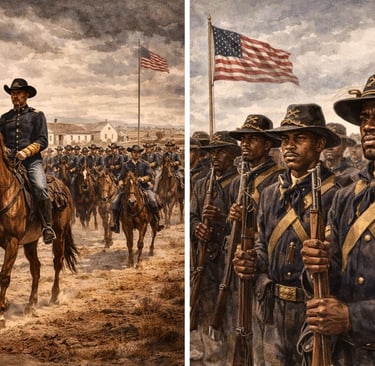
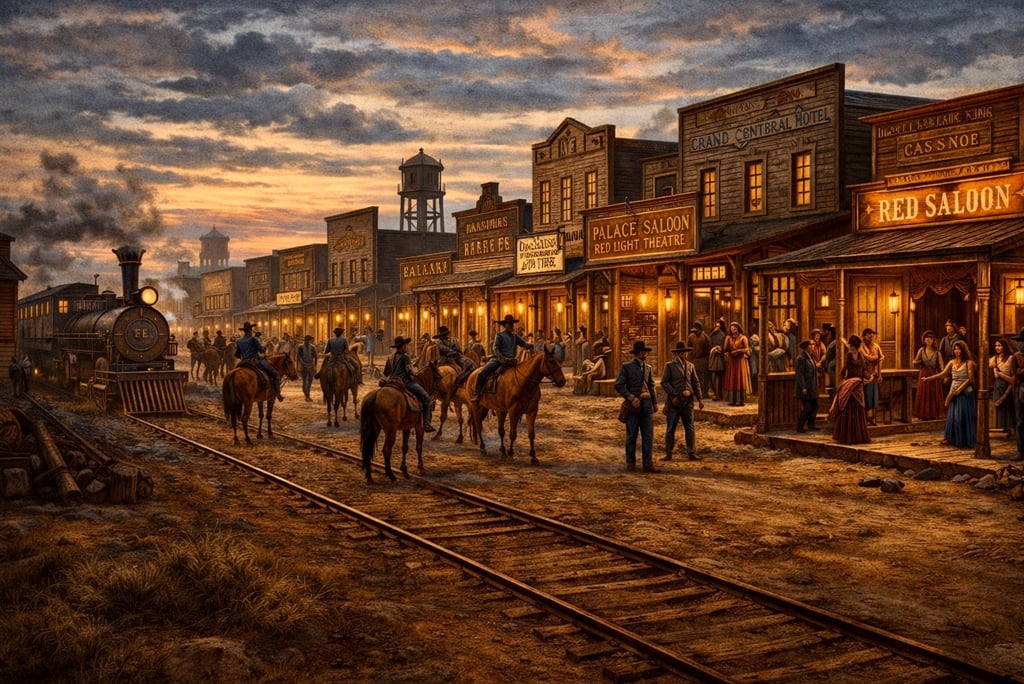
Following the establishment of Fort Concho, the first proper buildings in San Angelo began to appear and the city soon underwent a rapid expansion, after the arrival of the Santa Fe Railway in 1888. Main Street became famous for its brothels, saloons and gambling. Then during the 20th century, the small city saw continued growth, spurred on by various influences. For example, a tuberculosis outbreak across America brought about another influx in her population as people moved into San Angelo’s dry climate. This was followed in 1928 by the establishment of San Angelo College and after that, Goodfellow Air Force Base. Before long, large deposits of natural gas and oil were also discovered, triggering even more growth. Actor Fess Parker grew up on a ranch near San Angelo and the country music giant, Ernest Tubb lived and worked there for several years.
The history of San Angelo with her dashing young officers at Fort Concho is certainly colorful but as Father Mark discovered, nothing about this West Texas city can match the story of its original inhabitants who lived there long before the fort was ever built. Even the two Spanish priest who first visited San Angelo were amazed at what they saw and surely, they, too, wondered what had really happened there. After all, this vast area is considered by historians as being unexplored until the late 1650s when Hernan Martin and Diego del Castillo first arrived. Unless, of course, nearly 100 years earlier, Francisco Vasquez de Coronado and his expedition to Texas had visited San Angelo, but had somehow forgotten to mention it. However, this is not true because Coronado was required to keep meticulous maps of his journey and they clearly show that his route was far to the west and far to the north of San Angelo.
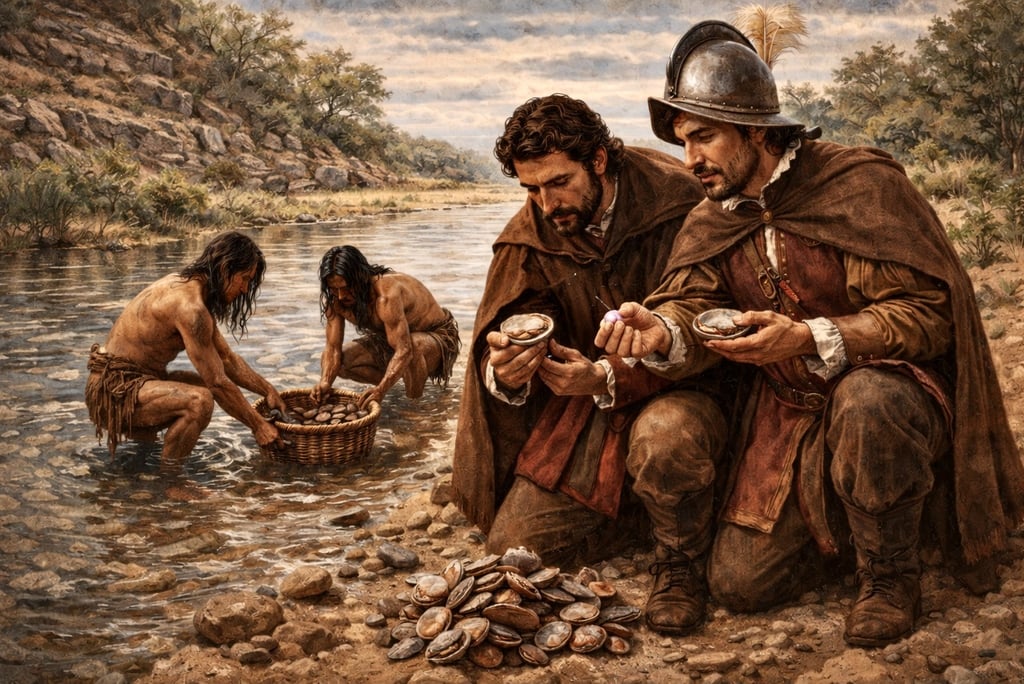
Regarding Martin and Castillo, their interest were rather unique and strictly focused on the freshwater mussel shells of the Rio Concho river, and the pink pearls that can be pried out of them. These two men were in San Angelo strictly for the money. In fact, Concho pearls from this era can still be found in the possession of Spanish royalty back in Spain. Even today, as this author discovered, if you take a walk along Main Street, inside the Legend Jewelry Store you can still buy a pair of pearl earrings, harvested from the same freshwater mussels that were discovered in San Angelo over 350 years ago.
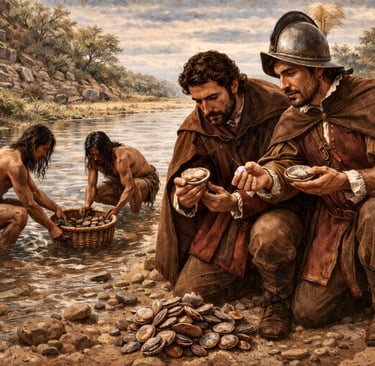
No, what makes this so interesting is that instead of the incomplete history that most people read about, Father Mark had accidentally discovered that a more accurate account tells that the first Spaniard to step foot in San Angelo were not the two pearl merchants—and not even the two Spanish padres mentioned earlier, who were the honored guests of the Jumano Indians. No, there was another person from Spain involved and this was a great mystery that had to be solved.
Again referring to Spanish records, as already mentioned, not only did the Indians from this unexplored territory know the exact location of the San Agustin Mission in New Mexico, they also knew about water baptism and the basics of Catholicism—and they all carried small crosses. Even more astounding, they also spoke lovingly about their spiritual guide—but that was a person who would have been strictly forbidden by Spanish law to be living anywhere in the New World. So this is a short introduction to the actual history of San Angelo that had shaken Father Mark to his very core.
Checking his watch, Mr. Penrose expected his son to knock at any moment. He had not seen Mark since he had left for India and they had a lot to talk about. It had been a long time since Mr. Penrose had been so excited to see anyone. The knock on his door came about 4:30 in the afternoon.
*** ** ***
Mr. Penrose (Mark’s father) sat in his favorite chair next to his phone at the Rio Concho Manor where he had moved to after his wife had passed away. As an only child, his son was really all that he had left in the world, besides a few acquaintances at The Manor and around town. When you reach the 80s, going on 90, most of your family and friends have passed away.
But Mr. Penrose considered himself one of the lucky ones. Other than the constant ringing in his ears from all the years he had been around aircraft, Mark’s dad felt that he was still in pretty good shape. He also felt that selling his large house on South Harrison had turned out to be a great decision, freeing him from all the headaches involved when you own your own home at an old age. Plus it gave him more than enough money—plenty to pay for his son’s trip to India.
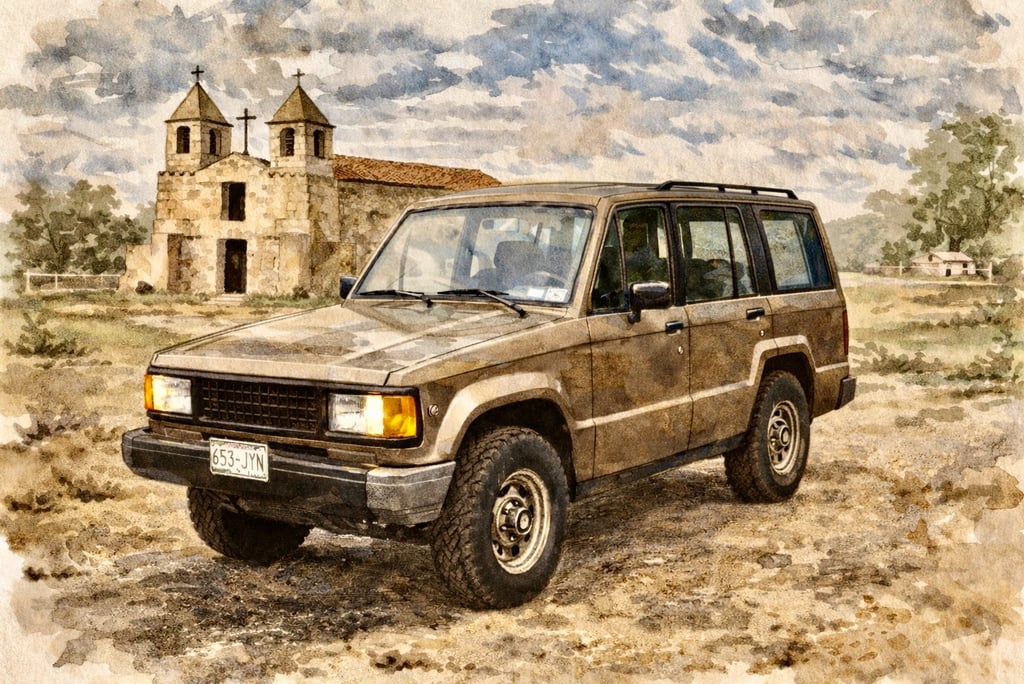
For less than five-hundred dollars a month, Mr. Penrose had everything he needed at the Manor, without any of the clutter—bills paid and two square meals a day. Downtown was literally a 5 minute walk from his front door and with his binoculars, the rectory where Mark lived was clearly visible from the window of his 9th-floor apartment. And to get around town and beyond, Mr. Penrose could always rely on his good old Isuzu Trooper.
Chapter 41 - The Confession
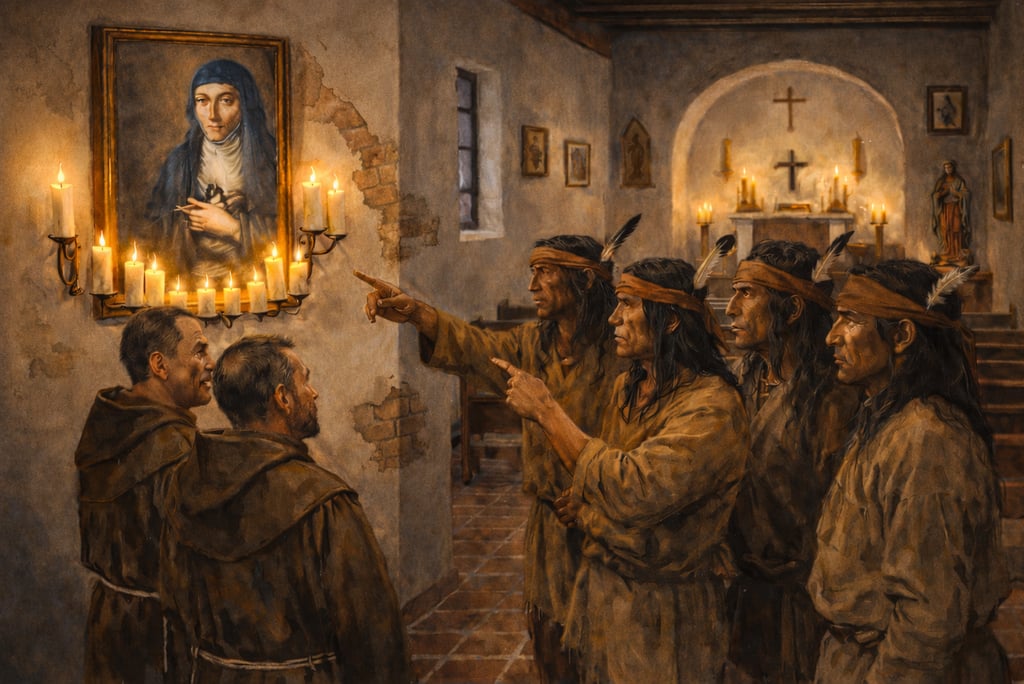
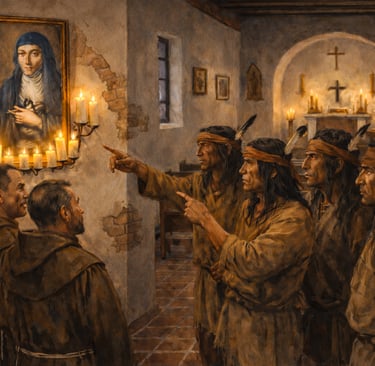
“Asked why, the Indians said that the woman who taught them was dressed exactly like her. However, instead of the old nun in the painting, their teacher was a young woman and very much alive.”
Rama paused for a second and continued. “Understandably, this was something that Father Benavides was hardly prepared for because everyone knew that nuns were simply not allowed to leave Spain and join their Spanish brothers in their missionary work. Mark told me that in 17th-century Spain, nuns were actually confined within the wall of their convents by papal decree and were never allowed to leave. So how could the Indians claim that a nun had been teaching them?
“The Spanish padres were dumbfounded. Could there be a renegade nun, or even an impostor wandering out in the wilderness on her own—preaching to the Indians? Where did she come from?
“Considering every possibility, perhaps Coronado had left behind a few Spaniards who were now teaching the Indians—but again, there was no record to indicate that. Or, had there been an unknown European woman on his expedition who had given birth to a baby girl, and later, this girl gave birth to a another girl who was now a young woman—the same teacher that the Indians spoke about? Was she somehow a descendant from Coronado’s expedition? After all, he had traveled to other parts of Texas—but that was nearly a half century ago. Talking among themselves, Father Benavides and the priests simply found these speculations impossible to believe.
“However, when the facts of what really happened were finally revealed, the theory of a renegade nun would have been much easier to accept as true. This is what makes this story so fascinating.”
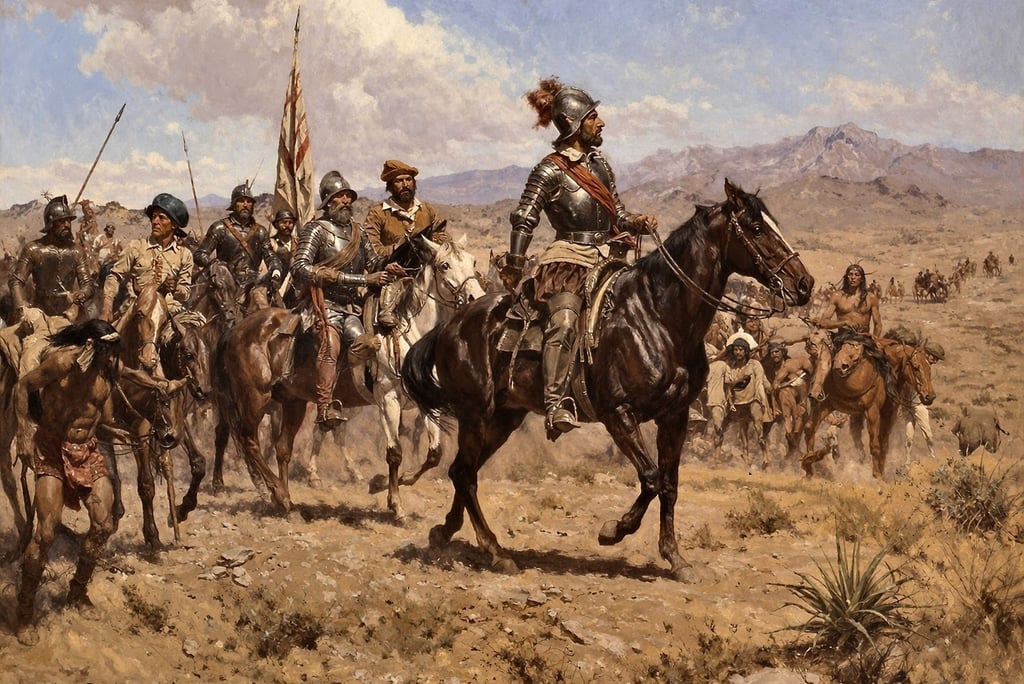
Stopping for a moment to take another sip of water, Rama looked at Maria and continued with his story. “As I mentioned, an invitation to visit the Jumano's homeland had already been extended to the priests, who were desperate to solve this mystery. Suddenly with new men at his disposal, Father Benavides gave his blessings, sending two priests back with the Indians—but it would be nearly two years before they returned to report what they had seen.
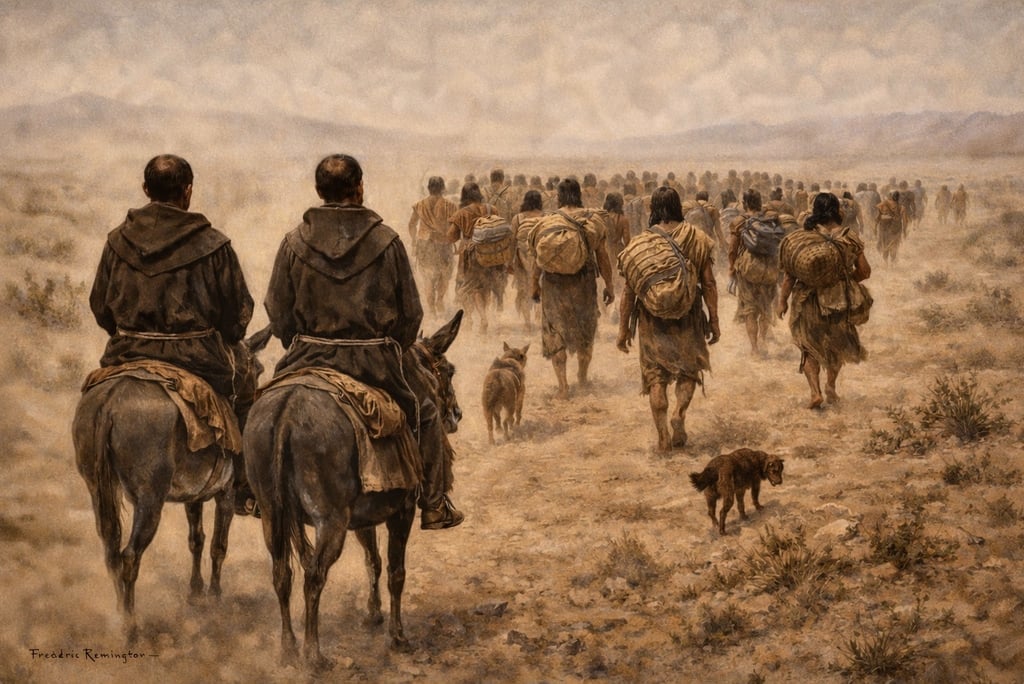
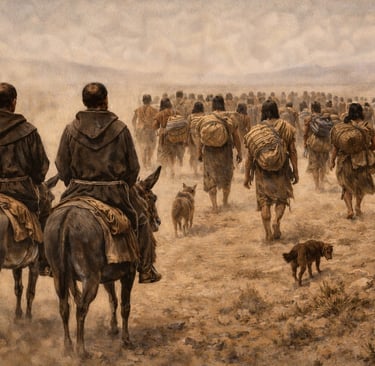
“In the meantime an urgent letter was dispatched to Spain requesting that a member of their Franciscan Order go to the villages of Burgos and Agreda, both located in the north of Spain, and inquire at their Franciscan convents if anyone knew anything about a nun living with the Indians in West Texas. After all, it was not unheard of that a young novice was unable to withstand the hardships of being a nun. Had this happened? Could it be that this woman had somehow set sail to the Americas on her own and was now teaching the Indians?
“Father Benavides was well aware that only the Poor Clare nuns of Burgos and Agreda wore the blue cape that the Indians had pointed to when they saw the oil painting of Mother Luisa de Colmenares. This was the only clue that Father Benavides had to follow, but in Agreda it turned out to be a good one.
“Prompted by Benavides’ letter, in 1622 Father Sebastian Marcilla was the first Franciscan Minister General to question Sister Maria, whose fame was already spreading quickly throughout Spain. Maria’s mystical levitations and other miracles had already been made famous by the loose lips of many, including Father Andres de la Torre—to whom she had confided in—and certainly from the nuns she lived with and whose gossip was famous. Thus, Maria’s secrets were even common knowledge among the simple villagers of Agreda.
“It was during Fr. Marcilla’s interview with Sister Maria that she openly confessed everything to the Franciscan Minister General. Wearing her blue cape, Maria told him that she had personally been to the territories of New Spain, fulfilling her childhood ambition to save the souls of the Indians. She also confessed that she had entered the convent when she was 18 years old. Once she took her vows it was a known fact that Sister Maria never lived outside its walls, but remained there until her death.”
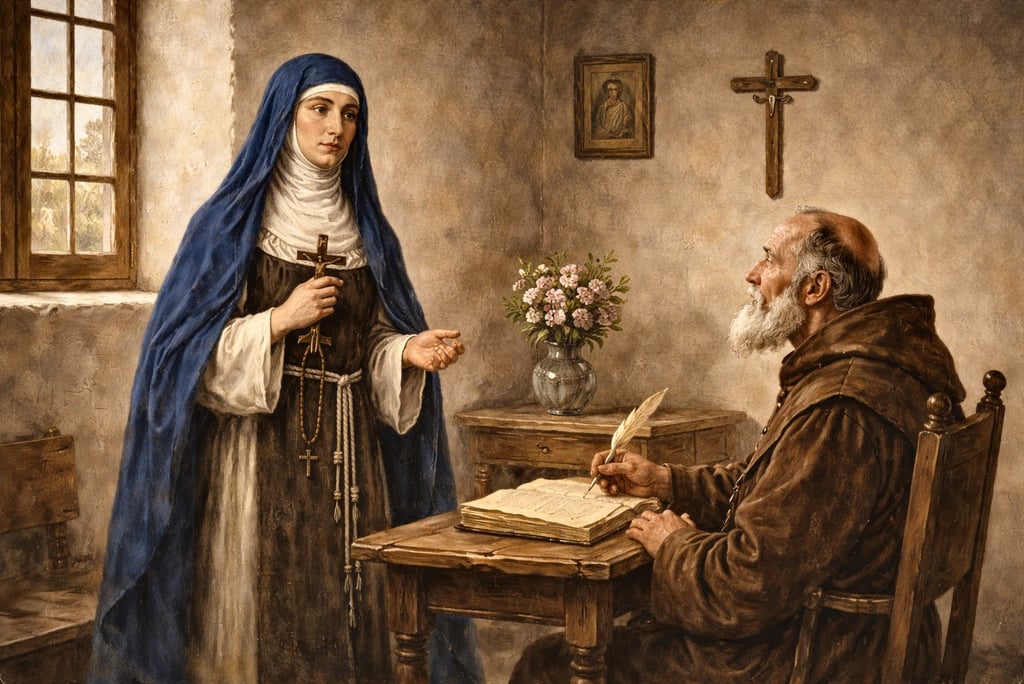
As Rama continued, a few birds landed nearby and began chirping. Maria smiled as she squeezed Blake’s hand.
Rama continued. “Always obedient, it was Sister Maria who then revealed to Fr. Marcilla something very mysterious. Alone in her room—absorbed in prayer and sacred hymns—by the power of divine sound and God’s grace, Sister Maria was able to materialize to the Indians—not just once, but by her own account nearly 600 times over a period of five years! She showed Father Sebastian a priceless journal in which she meticuously recorded everything!”
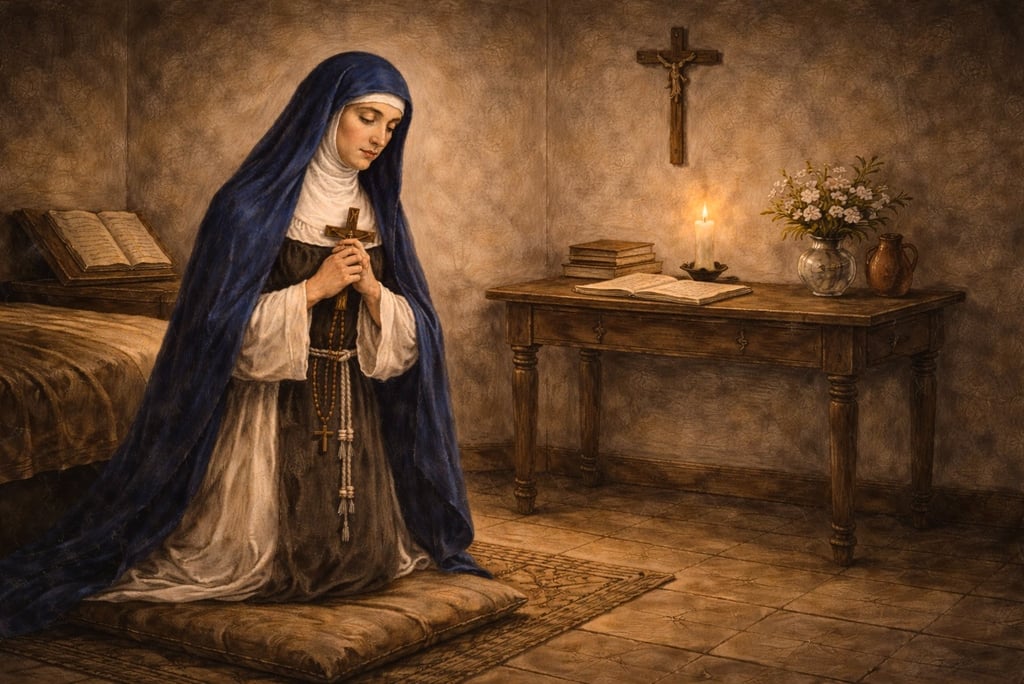
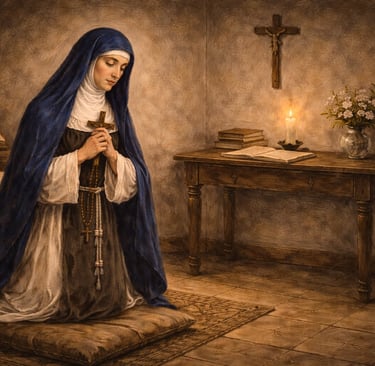
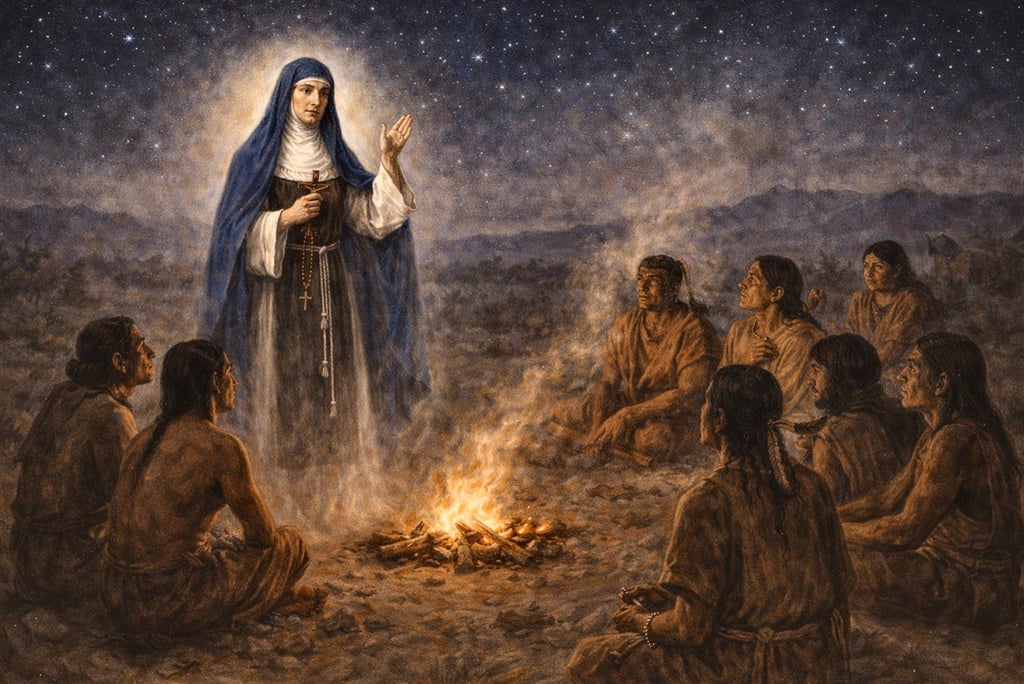
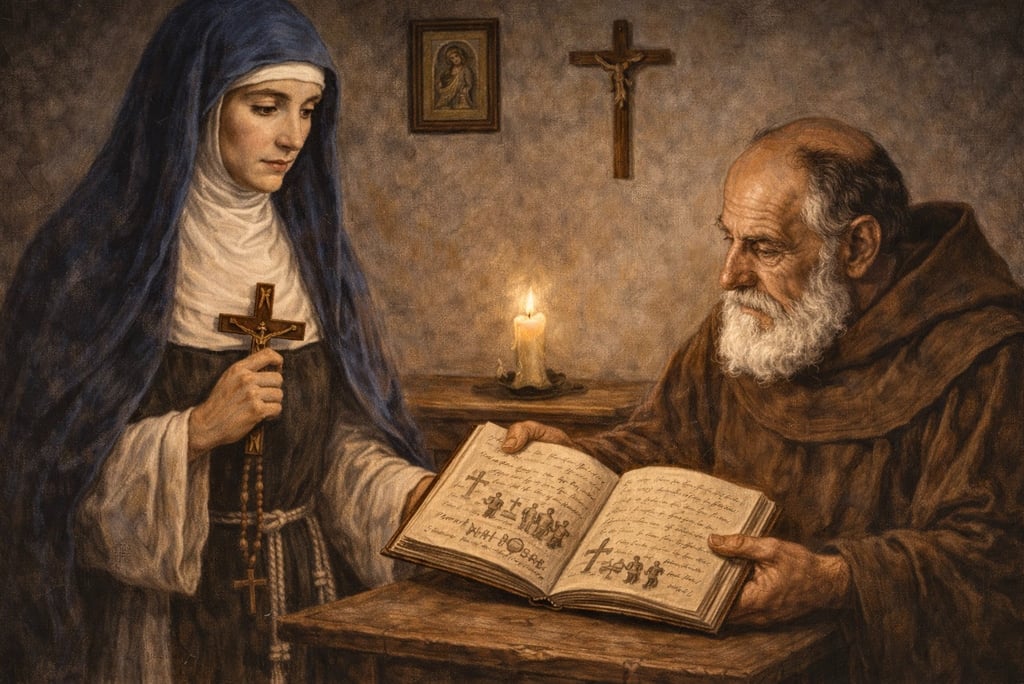
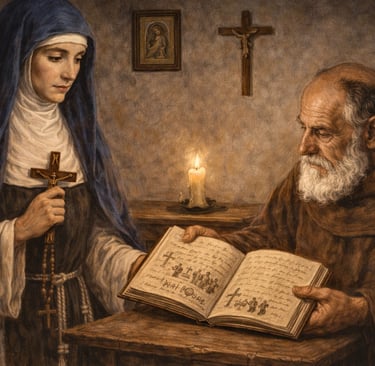
“During her mystical visitations to the Indians, she told the father that she had taught them the basics of Catechism—also educating them about the meaning and construction of the cross. She humbly confessed how she had personally guided the Jumanos to the Spanish Mission in New Mexico and had instructed them to ask for baptism with water. Maria also told the Minister General how she had taken rosaries from the convent and had given them to the Indians.”
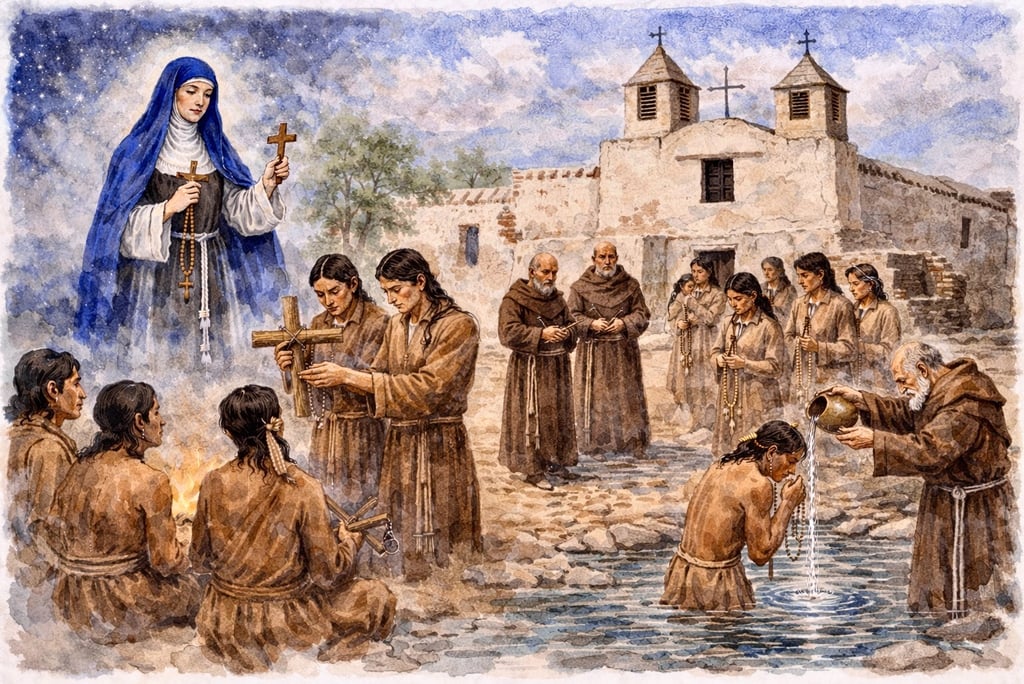
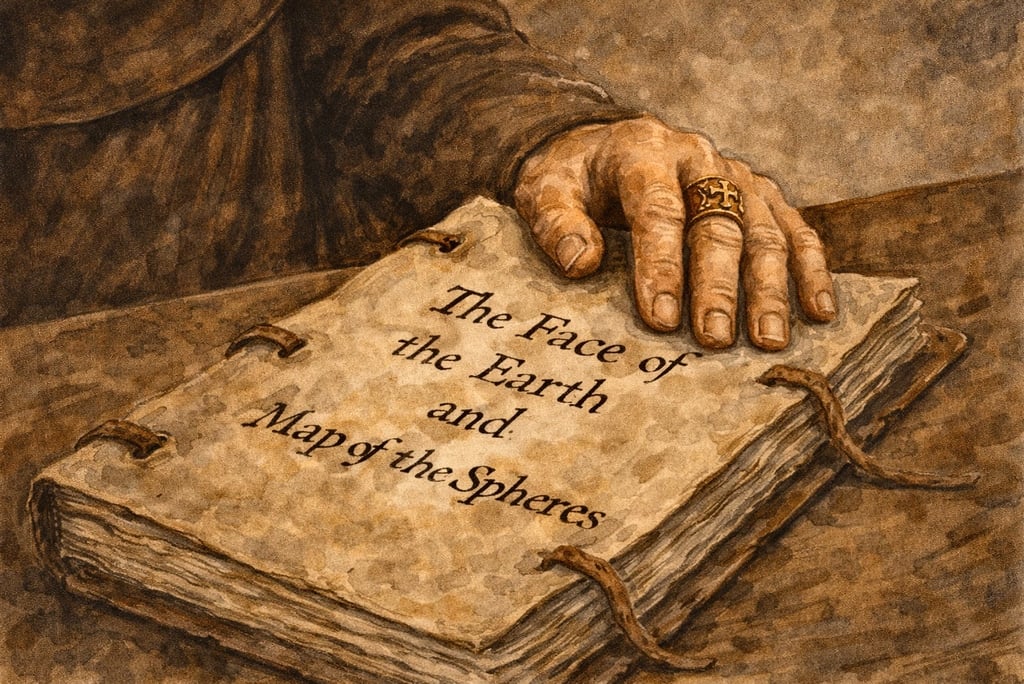
“Perhaps even more remarkable, after his interview with Maria, Father Marcilla reported that by Maria’s own recollection, she had visited the Indians even before she had entered the Poor Clare Convent—proven by a book she authored in 1616 at the age of 14. Even Father Sebastian couldn’t help but notice that the book’s title suggested something far beyond the scope and interests of a young, uneducated girl living in rural Spain. Instead, “The Face of the Earth and Map of the Spheres” was something he might have expected to find inside the Royal Library of San Lorenzo de El Escorial—but certainly not in the hands of Sister Maria, what to speak of actually written by her.”
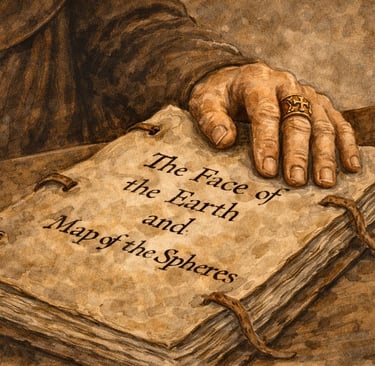
Rama continued speaking: “Father Mark told me that the Minister General left Agreda feeling elated. Inside his carriage he sat alone, astonished by what he had just heard. The similarity between Sister Maria and Mother Luisa de Colmenares was unavoidable. He thought about Mother Luisa and how she had become famous in the previous century for restoring the eyesight of an Indian by placing her cross upon her. Inside his heart, faith in God had never burned more brightly. The Minister General was thoroughly impressed with every aspect of Maria’s grace—what to speak of her keen intellect and wonderful character. Even her beautiful smile did not escape him.
“As for Mother Luisa de Colmenares, Father Mark told me that she is still revered throughout Spain as a great Saint. Belonging to the generation immediately before Maria, Sor Luisa’s capacity to bilocate (a person with the ability to be physically present in two places at the same time) was a well-known fact. While cloistered within her convent, Mother Luisa was seen in Assisi at the tomb of Saint Francis; she witnessed the death of the Spanish King, Philip the 3rd; appeared in Japan to comfort the Franciscan priest, Juan de Santamaria; and was observed giving comfort to sailors on a Spanish galleon who were fearing attack.
“The Minister General thought to himself that he should have known. After all, there is a substantial Catholic history of bilocation, but nothing on the scale admitted to by Sister Maria.
“Again the Minister General let his thoughts rest upon this saintly nun. Yes, it is possible. He needed to report all these things to his superiors quickly. Also, a letter had to be sent to Father Benavides—however, mail between Spain and New Mexico often took a year to reach their intended recipients—therefore nearly two years passed before Father Benavides received a reply to his first letter. That letter would bring him to his knees.
“Father Benavides had already overcome so many difficulties—traveling on rough seas by Spanish galleon; seasick for weeks on end; then by foot, wagon, and horseback; without proper food, water and shelter; finally reaching Mexico City—and then another arduous journey to New Mexico. Finally arriving, Father Benavides was able to put all that behind him and embrace the important duties that faced him. The Spanish Mission in New Mexico was going to become his crowning service to Spain & God, with 30 new priests to assign duties to. But then the letter from the Spain arrived, containing one of the greatest shocks in Benavides’ life.”
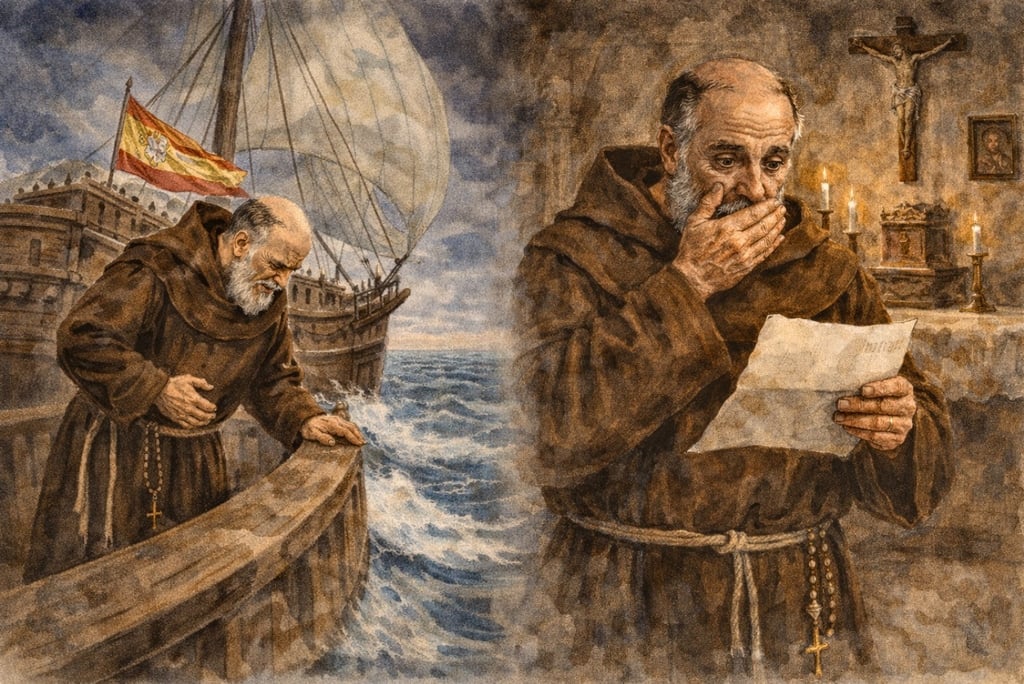
Rama took another sip of water and continued. “As I said, Father Mark had discovered all these things from the book he had stumbled upon in San Angelo. He also told me that on his way to India, he first flew to Spain so that he could visit Maria’s convent in Agreda.
“Indeed, the Minister General was absolutely convinced that at various times, somehow, Maria was able to serve God through a second body—physically just as beautiful, just as real, and wearing the same clothes that she wore in the convent. After speaking to some of the other nuns at the convent about Maria, Father Benavides was told that while in her room praying, they could would hear her singing sacred hymns glorifying the Names of God.
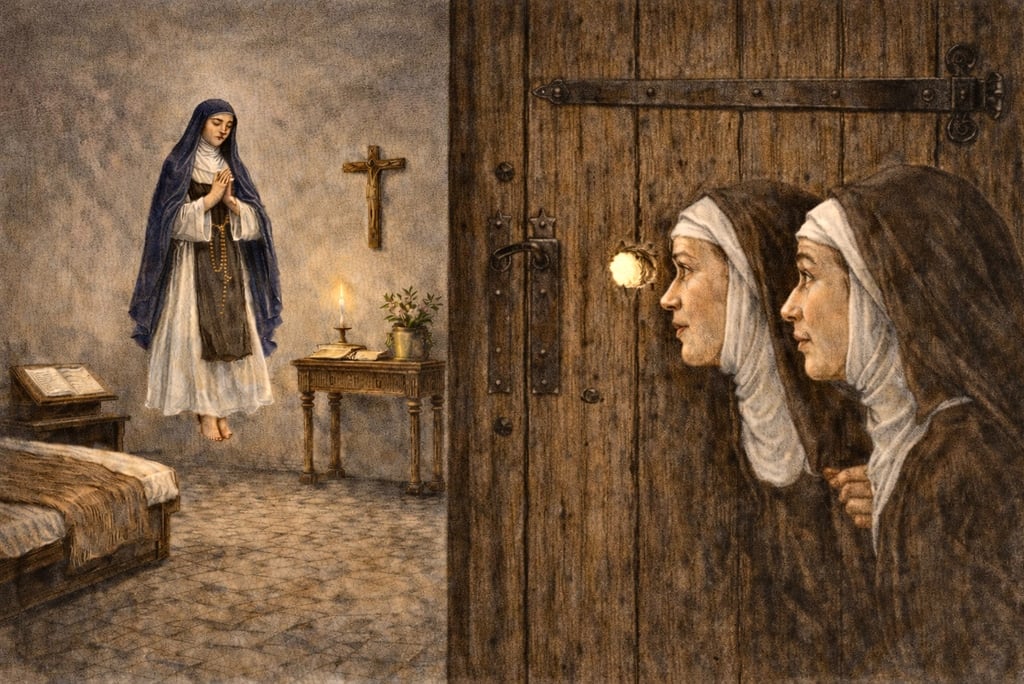
I remember Father Mark laughing as he told me how immature some of the nuns cut a peephole in Maria’s door to spy on her. To their great shock, several times they saw her floating in the air; her feet not touching the floor.
“They also noted that when Maria was levitating they could actually move her body by blowing through the little hole. At other times, in plain sight, as Maria sat in the chapel, a ball of light would hover over her head. Nun’s also reported the wonderful scent of flowers as she walked by them or entered a room.
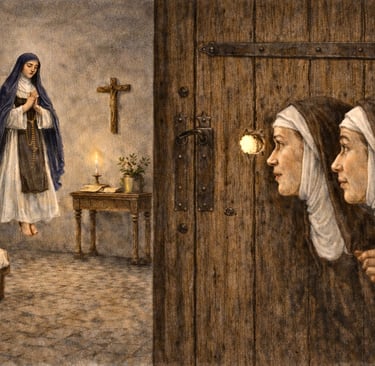
“Father Mark said that he became extremely enchanted by Sor Maria and spent many months learning everything he could about her.
“He told me that she was born in 1602; a precocious little girl with an enormous love for God. While Father Mark was living in Vrindavan he also became acquainted with the teaching of Shri Krishna Chaitanya (1486 -1534). Mark said that he found it interesting how both Maria and Chaitanya shared similar sentiments—both exhibiting great anxiety over the possibility of losing sight of God. While Sister Maria certainly struggled with her feelings in a different way, Lord Chaitanya was often distraught by the total absence of His beloved Krishna. For Sister Maria, this emotion was felt and described in exactly the same way.
“Writing about her own life, Maria is quoted as saying, her heavenly spouse concealed himself; whereas in the case of Lord Chaitanya, who is none other than God Almighty, one of the fundalmental reasons He took birth was to personally experience the highest form of love possible, by assuming the mood of His eternal consort, Radharani, who like Sister Maria, would often search desperately for Her Krishna.”
Hearing this, Nickolas then spoke up, wanting to know if he was understanding what Rama was saying.
“Rama, are you saying that it was Radha and her ecstatic sentiments of separation from her Divine Lover, Lord Krishna, that most closely matched the feelings of Sister Maria’s for Christ? ...and that Lord Chaitanya wanted to experience those same feelings for Himself by assuming the same moods as His beloved Radha. Kind of like walking in Her shoes?”
“Exactly. As a young girl, Sister Maria often prayed for forgiveness and became a beggar, asking over and over again, for the return of the smile of God upon her soul. Lord Chaitanya—in the mood of Radha—would search madly for Krishna, begging everyone He met to tell Him where Krishna was hiding.
Rama continued speaking as everyone listened, captured by every word he spoke. The chatter of monkeys could be heard in the distance.
Taking another sip of water, Rama continued speaking. “Mark also found in Sister Maria other qualities to admire. For example, even Suryavarman taught us the virtue of renunciation.
“Reading about Sister Maria and later from the nuns he had spoken with at her convent, Father Mark discovered a lifetime of renunciation—beginning before the age of eight when she informed her parents of her determination to become a chaste nun, thus forsaking the worldly pleasures of the flesh enjoyed by others.
“However, when Maria was barely 13 years old it seemed that before her wishes to become a nun could come to pass, a priest was called to her bedside—her burial plot shoveled and prepared deep within the local cemetery. A severe illness was about to take her young life and there was no one who could help her. But instead of succumbing to death, Maria used her suffering to remind her of Jesus’ great trials. In quiet solitude and prayer, she later wrote how she came in touch with a light far greater than death. This was also around the time when Maria began mentioning her burning desire to save the Indians. She found not only light, but was completely cured.
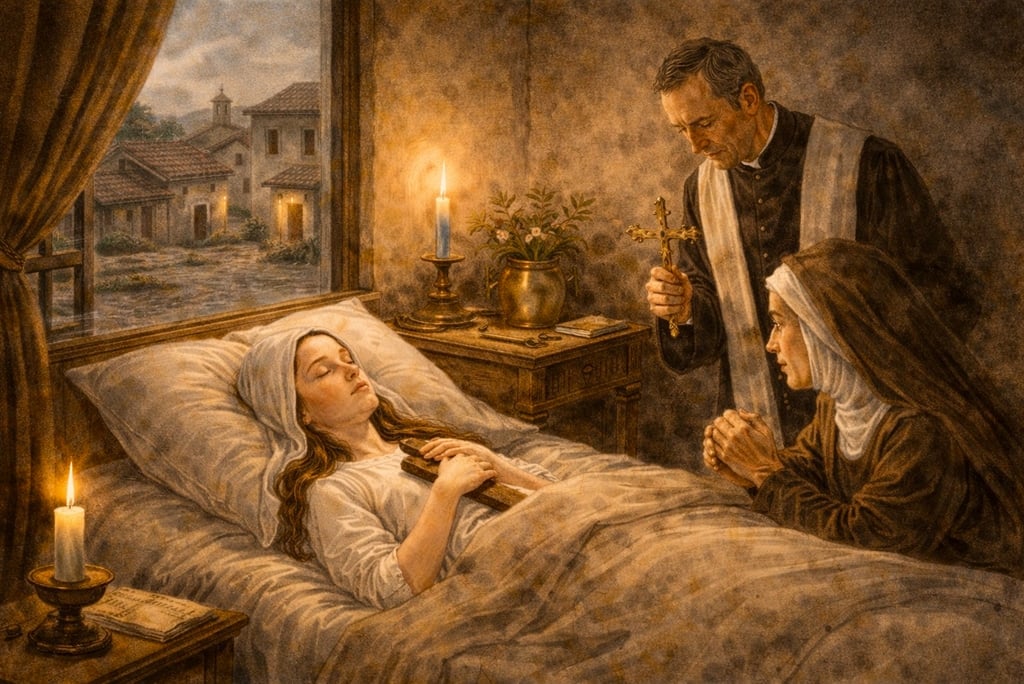
“As far as her wanting to be a nun, her wishes came true in 1620—her life further elevated toward God by her self-imposed austerities, penances, solitude and vegetarian diet—all a constant way to remember and unite with Jesus Christ. Later in life, on Tuesdays, Thursdays and Saturdays she would fast on bread and water. On Fridays she would fast from even water. This, she said, reminded her of Jesus’ terrible thirst as He hung on the cross.
“Father Mark also learned that in her everyday dealings with others, Sister Maria was a kind and gentle friend. Her consideration of others was famous, coupled with her heartfelt humility—always considering herself the least of God’s creatures: lower than a wormlet, in her own words.
“By now Mother Maria was 21 years old and during a vision of Jesus’ mother, Sister Maria was encouraged by the Virgin Mary to begin writing the Holy Mother’s biography. Shaken by such a request, not only did Maria feel spiritually unqualified, she was well aware that unlike the rest of the children in Agreda, due to constant illness, other than a couple of months at the village school when she was barely six years old, she had never received any sort of formal education. Yet, in her lifetime she wrote 14 books.
Rama continued: “Maria was now 24 years old and had been serving as a nun for 6 years. She was also given the added responsibilities of overseeing the entire convent that for many seemed excessive for such a young person. Normally the role of Abbess was assigned to a much older woman, allowing the younger nuns to free themselves from the worldly chores of management. Instead of complaining, not only did Maria successfully supervise the convent’s everyday affairs until the end of her life, she was also forced to endure the severe investigations into her claims of bilocation to the New World.
“Perhaps it was an accumulation of factors that once again summoned the specter of death to her bedside; all the hard work; her weak constitution; her self-inflicted austerities. Whatever the reason, once again Maria’s life seemed to be slipping away. The nuns prayed for their beloved sister’s recovery but all hope had vanished. Accepting her pending death with grace, one day, the now paralyzed nun, heard it raining, ending a severe drought that had covered many parts of Spain with a fine dust. She overheard that when the townspeople of Agreda had prayed to the Madonna of the Martyrs, rain clouds quickly appeared. Wanting to pray to the same statue, Maria asked that it be brought into her room where her fervent prayers soon followed.”
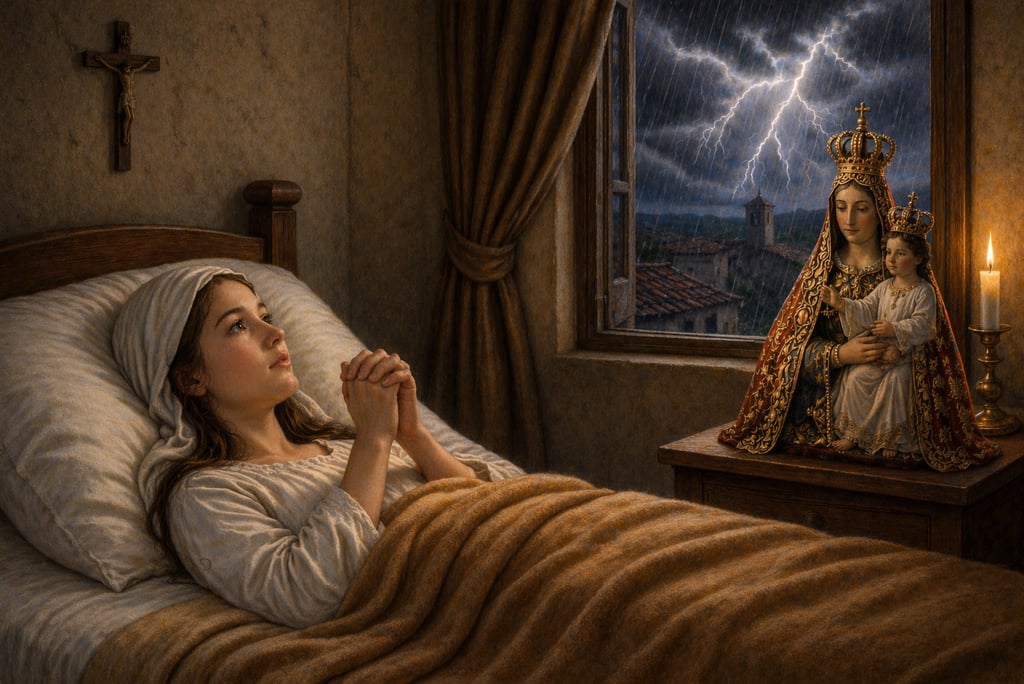
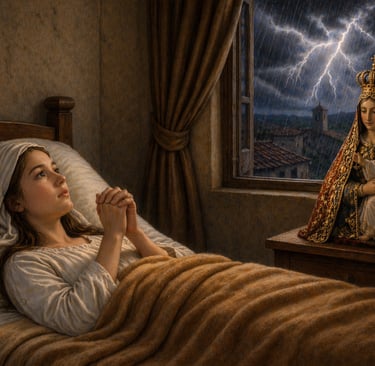
“To everyone’s amazement Sister Maria fully recovered that very day. As a token of her heartfelt gratitude she took a piece of precious cloth and sewed a beautiful cape for the statue. Father Mark told me that when he visited Agreda, the cape was on display at the convent.
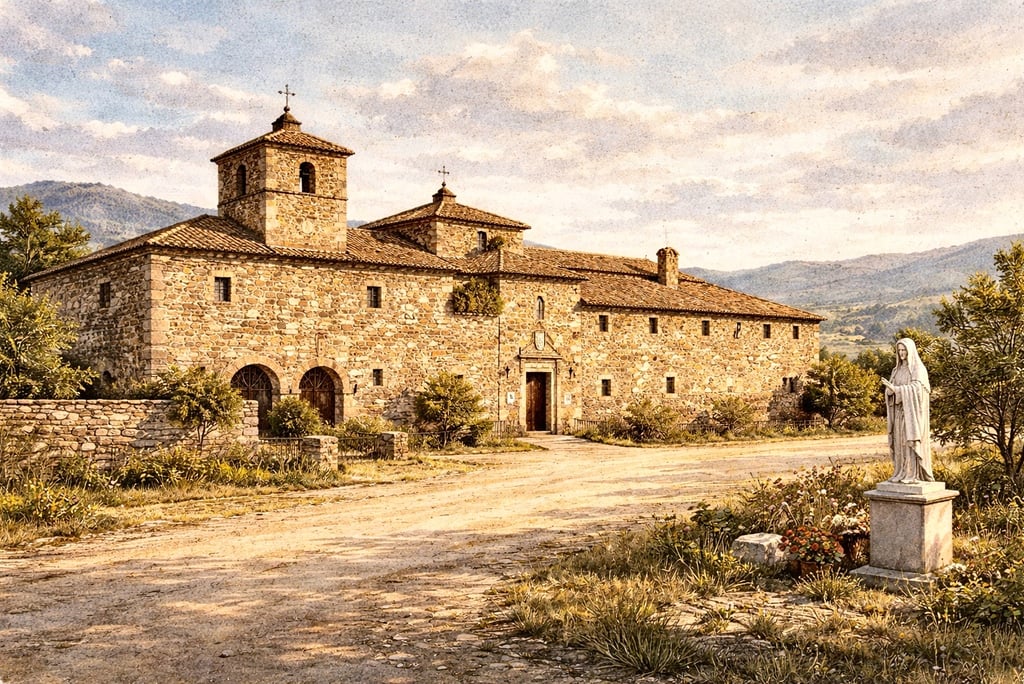
“It was also during this time that Maria felt that the size and location of their present convent left much to be desired. The building that housed the nuns had originally belonged to her parents—being the same house that she was born and had grown up in. Then one day she was informed that on the far edge of town some vacant land had become available. Undaunted by her situation, with great determination a cornerstone was positioned and nine years later a magnificent and fully furnished convent was built right on the very spot—a miracle in so many ways, what to speak of her total lack of funds.”
“During that construction, while stone walls were being built, a primitive form of dynamite was used 2500 times to blast away a vein of stubborn rock. One day Maria was praying when suddenly she came out of her room and called for the priest in charge of the construction. She told him that the blasting had loosened a newly built wall and that it had to be immediately taken down because it was about to fall over and kill someone. The priest obeyed and exactly as Maria had described, the damaged wall was quickly discovered. Of course, the priest was curious as to how Maria could have known about the damaged wall. She simply told him that her guardian angel had transported her there.”
“One other thing happened. After the construction was finished, the two master craftsmen who had been in charge were summoned. Their handiwork had transformed the empty lot into a beautiful convent and church, whose magnificent design would inspire future convents all over Spain. Maria had summoned the men so that they could be paid. However, after searching far and wide, they had simply vanished. This created the legend that the two men were actually heavenly angels who had come to help Maria fulfill her dream of a new convent.”
Hearing Rama mention how the two men had disappeared, Maria politely interrupted and began to speak.
Chapter 42 - Angels or Carpenters
Table of Contents
Reader's Review (coming soon)
Maria looked at Rama and said, “Oh, thank you very much. Although I must admit that I wasn’t able to understand everything you said, I am simply fascinated. But honestly, listening to you speak about Catholic nuns and the history of New Mexico and Texas, this was the furthest thing from my mind that I thought you would be talking about. Your religion & history—yes—but to hear you speak about New Mexico and the Mission of San Agustin de la Isleta—I cannot tell you how thrilled I am.”
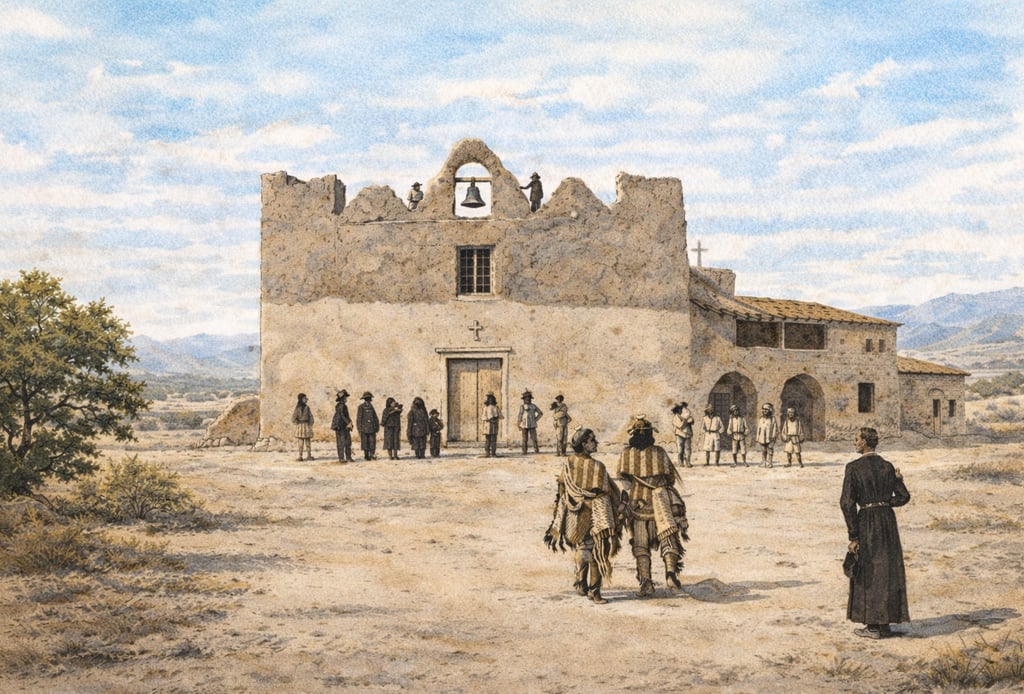
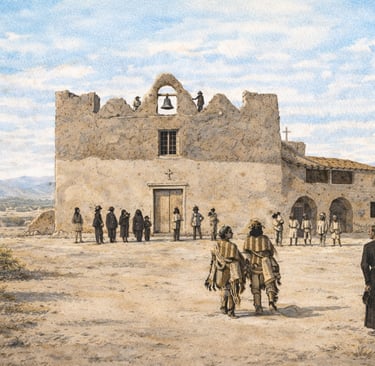
Everyone smiled as Maria continued. “Yes, it is truly a beautiful Mission and then you were describing the architecture of the convent in Spain—the very subject that I earned my degree in—and just now, the legend of the two angels who had helped Sister Maria. There are just too many coincidences here to be taken lightly.”
Understanding the significance of what Maria had just said, Nick turned to his daughter and said a few words before she continued.
“Maria, I had no idea that you graduated with a degree in architecture. There is still so much for us to talk about.”
Looking at her father, Maria continued. “Yes, I went to school in Santa Fe, New Mexico. I earned degrees in both art and architecture, but architecture is what I really love. So naturally I was very interested when Rama was telling us about the convent that Sister Maria had built.”
Turning her head and smiling, Maria then said, “When I heard Rama tell us how the two builders had disappeared and the legend that they were actually angels, I just had to tell you about a church that is located in Santa Fe, that has a similar story.”
“Please Maria.”
“Thank you Rama. Santa Fe was also founded by the Spanish around the same time as the Spanish community in Isleta. One of my college classes taught early architecture of the Southwest. So yes, I have actually been to Isleta and even inside the beautiful Spanish Mission of San Agustin de la Isleta.
“And exactly as you mentioned, it was built in 1612 by Spanish Franciscans and their Indian converts. But I had no idea about the Jumano Indians from Texas and Sister Maria. I can’t believe that I haven’t heard about her.
“What is really interesting is that not far from my college in Santa Fe there is another Catholic church and the thing that is so interesting about this old building is that during its construction in the late 1870s, the chief architect suddenly died and only later was it discovered that he had made a terrible mistake. He had left out the staircase that was needed to access a choir loft. Even worse, no matter what was suggested as a remedy, a normal staircase would simply take up too much space and disfigure the interior design.
Reaching this impasse, people were blaming each other and everyone was very upset. The stairs were absolutely needed so that the nuns could reach the loft and sing. Without a solution in sight, the nuns began nine days of prayer in honor of St. Joseph, for he was a both the father of Jesus and a carpenter.”
“As it turned out, on the very day that their novena ended, a modestly dressed man suddenly appeared at their door. Obviously aware of the uncanny significance of his sudden arrival, the sisters kindly invited him into the church and this is when they showed him the loft and the missing staircase.
“With confidence the man assured the nuns that he would be able to build them a staircase. Thanking him profusely, the nuns readily agreed. He offered to begin at once and naturally the nuns were very happy and quickly hired him. He agreed to be paid when he finished. Outside the church, the carpenter’s old mule stood patiently waiting, a box of tools securely tied to his back. According to many, for three months the carpenter refused to allow any visitors inside the church until one day, he opened the doors.
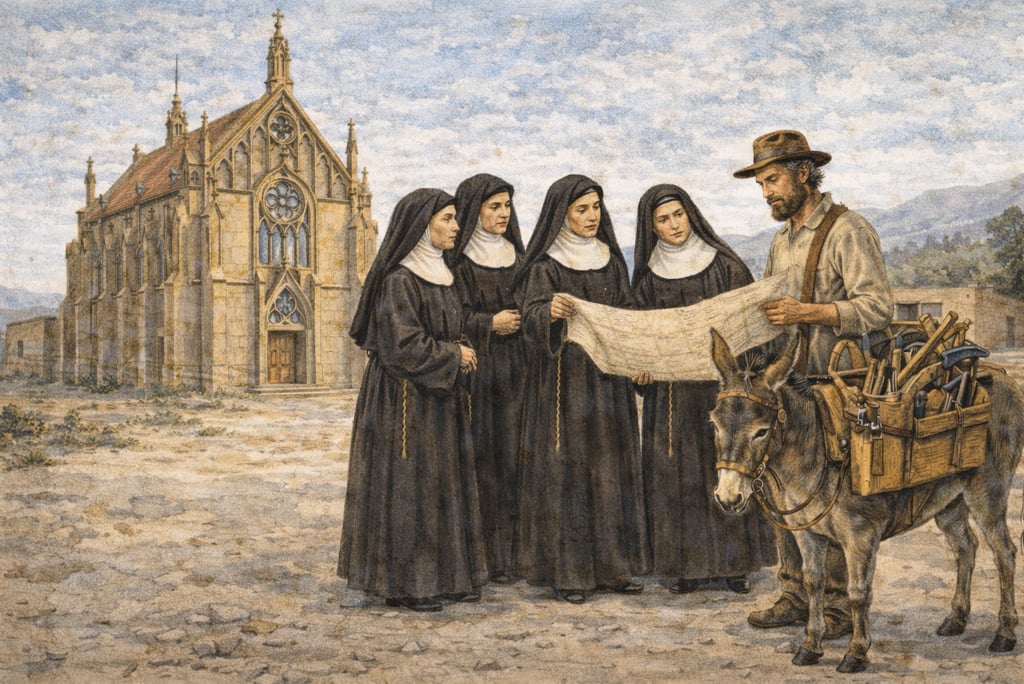
“When the Mother Superior heard that the staircase was finished she entered the church and looked in utter amazement. There in the left corner, neatly standing was a beautiful, free-standing staircase rising in a double spiral all the way to the choir’s loft.
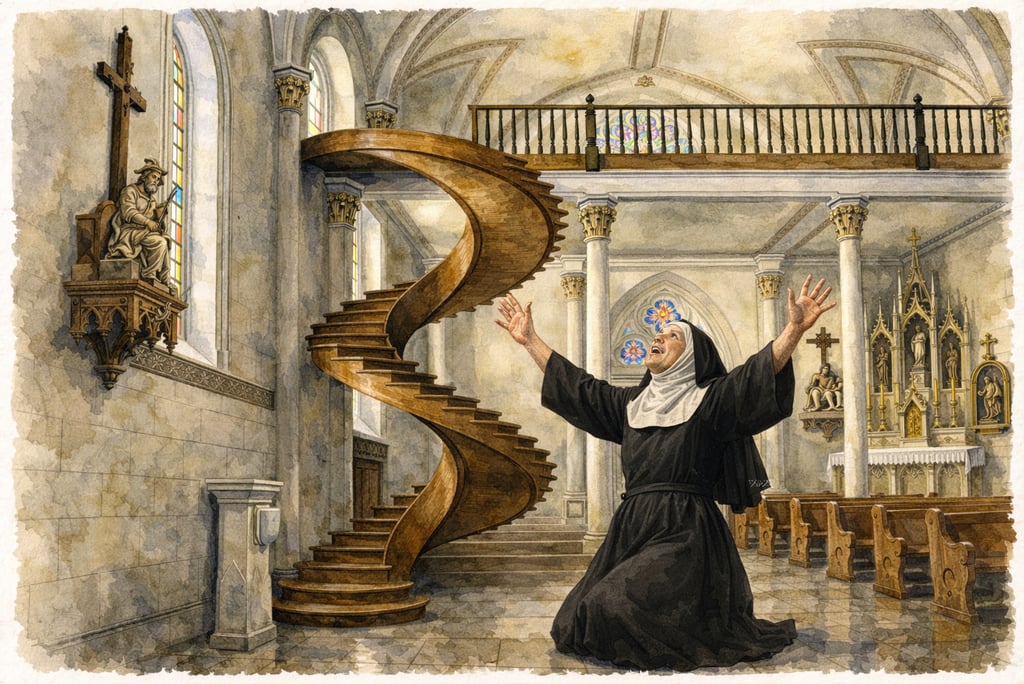
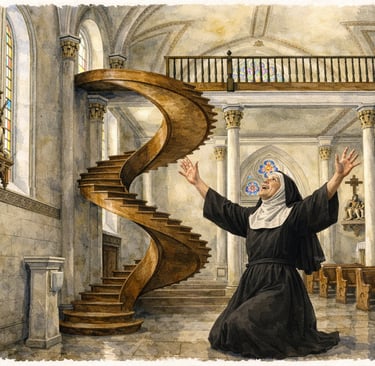
Maria continued. “The last time I was there, our class took dozens of pictures and the engineering students made all sorts of measurements. Each section of the staircase is perfectly fitted in a groove and not a single nail is used in its construction. There is not even a central pole and originally, no wall attachment. It just stood there. Even the hand railing was added at a later date. The entire staircase is held together by just a few wooden pegs and what’s really interesting is that over time, as other carpenters from New Mexico and around the world came to gaze upon it, they noticed how the wood that the craftsman had used was not even from that part of New Mexico.
“Today, tourists from every corner of the world come to look at it and still, there is not a single person who can conceive how a man with a box of primitive tools strapped to the back of a donkey was able to build such an intricate structure.
“Rama, you also mentioned the legend of the two men who disappeared after building the convent in Agreda. This is exactly what happened when the work was completed on the staircase in Santa Fe. The abbess was so happy that naturally she wanted to pay the man for his work but he was nowhere to be found. No one had seen him come or go. A reward was offered but no one ever claimed it.
“It was then decided that the unknown carpenter was none other than a divine angel or even Saint Joseph, himself, whom the Sisters had been praying to for nine days—just as the builders you were telling us about were suspected of being. There is no doubt that the prayers of those nuns were answered in a most remarkable way.
“Please Rama, what else did Father Mark tell you about the Spanish nun?”
CHAPTER 43 – The Crucifixion of Jesus Christ
Table of Contents
Reader's Review (coming soon)
Father Mark and his dad were content. Dinner had been great: salad, baked chicken, mashed potatoes, and pan-fried okra. The cafeteria was located on the ground level of the Manor— always a smiling face and plenty of laughter. On their way back to ninth floor, Mr. Penrose stopped a few times to say hello to friends—introducing his son as they made their way back to his apartment. He was so proud of his son: Father Mark Penrose.
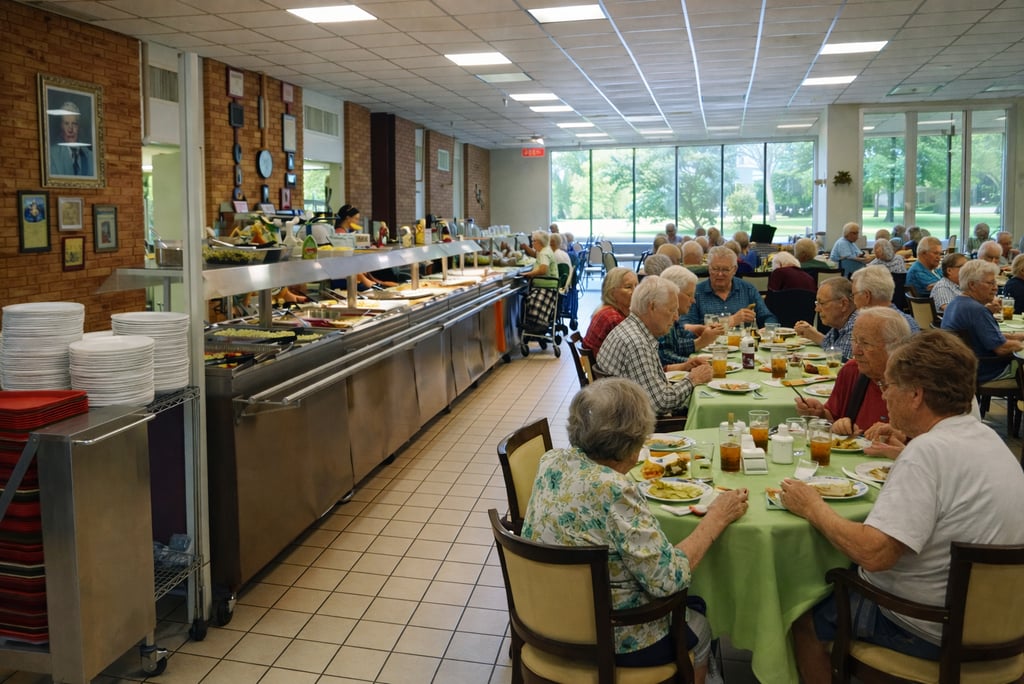
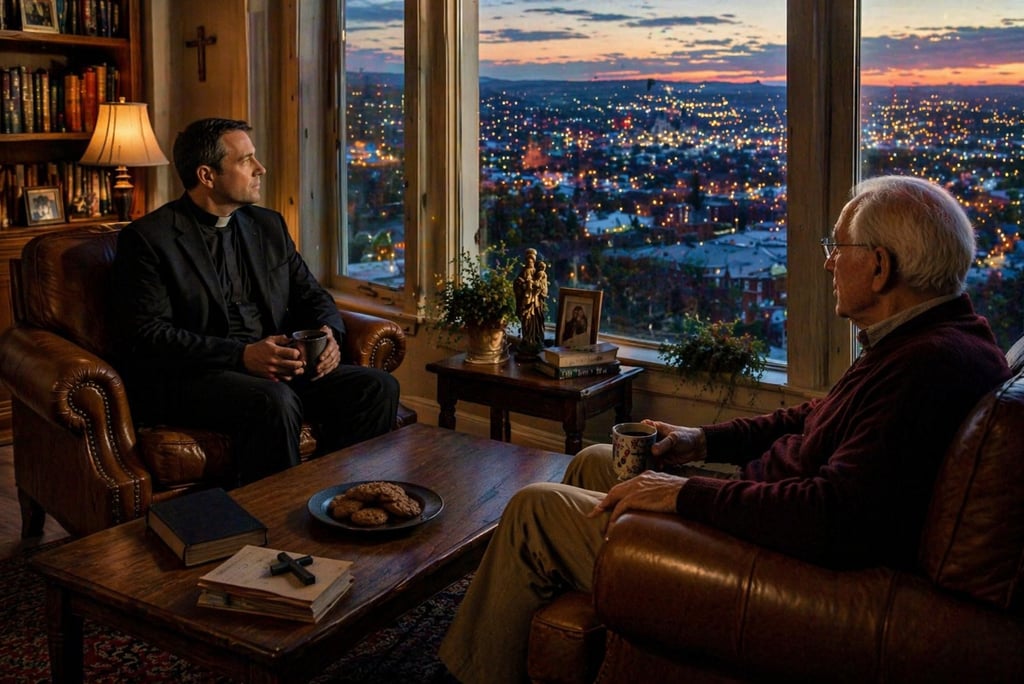
Back in his dad’s room they both got ready to settle down—two big easy chairs inviting them to get comfortable. A pot of fresh coffee filled the apartment with a rich aroma. From the bedroom where Mr. Penrose had accessed the Ancient Faith Radio website from his computer, the Chanters of St. Lawrence were softly singing, the Cherubic Hymn through a pair of powered speakers.
While his dad placed a few oatmeal cookies on a plate and poured the coffee, Mark gazed out the window at the city below, always impressed by the view. With the long summer nights quickly becoming a thing of the past and the first week of October already upon them, flickering lights were becoming more plentiful, although it was only a little after six. Both men sat down.
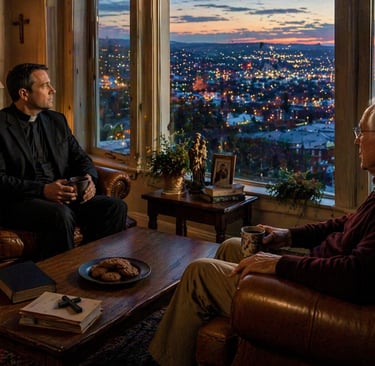
“So tell me dad, how have you been? You look great.”
“Oh, I have no complaints but I might be a pound or two heavier. But you know me, I try to keep busy. I’ll tell you Mark, it’s really great to have you back. I never realized how long four months can drag on—guess I kept an eye on the calendar a little too often.”
Mark chuckled. “I’m sorry but I just felt that since I made the commitment to go that I needed to take enough time to see a bit more than the average tourist—plus there was the additional time I wanted to spend in Spain.”
“Oh yes, I remember that you had mentioned something to me about a convent in Spain. What was that all about?”
“Yes, that’s right; but I wanted to get all my facts together before I told you more. That’s why I flew to Madrid first. Dad, you know that I like to read but the history of this part of Texas in the early 1600s and the mystery surrounding what happened here—somehow that had totally escaped me—even at the seminary.”
“I guess I don’t follow you son. Why do you say it’s a mystery?”
Mark took a sip of coffee and then continued. “Dad, the history I’m talking about is as interesting as it gets—full of details, eye-witness accounts, intrigue, geography, and covering enough material to fill a large book. But all of that is just window dressing. The real story, as I see it, is the unexpected conclusion that has made me think long and hard about something that I never even thought was remotely possible.”
“Well, that’s not a bad thing, is it?”
“Oh no, but it’s one of those, what if’s, and I know how much you like that kind of stuff.“
“I must say it hasn’t taken you long to get my full attention.” After sharing a laugh, Mr. Penrose continued, “I’ll tell you what, just give me a brief outline and we’ll get right to the point. We can backtrack at another time.”
Mark had always appreciated how his father helped him simplify his thoughts. The music from the bedroom changed and the rich voices from a Russian men’s choir chanted the beautiful, Doxastikon for the Praises. Not exactly your normal Catholic music but very beautiful just the same.
“Yes, that’s a good idea. Dad, have you ever heard of bilocation?”
“I think you mean when somebody defies the laws of science and is somehow able to be in two places at the same time.”
Looking at his dad, “Yes.”
“Actually, Mark, there are many Catholic stories involving bilocation. It is a phenomenon in which a very devout person is in one place, and at the same moment is in a different place. In other words, two places at once.”
“Good, I was sure you would know about it.”
“Son, all I can say is that bilocation is one of the most mystifying aspects of our Catholic faith that you will ever come across.”
“Yes, I am also coming to that conclusion.” Mark paused for a moment as he gathered his thoughts. “Dad, the thing that makes it so intriguing to me is that it has actually been well documented. For instance—because of the veracity and unquestionable character of so many witnesses, it’s just about impossible to dismiss bilocation as fantasy or illusion—you know—propelled along by lies and exaggeration. If you take that position then you’re disparaging the very stalwarts of our faith who bore witness.”
“Mark, I never mentioned this but I once spent a fair amount of time reading about bilocation and from what I can gather, in many instances there is first a prolonged state of spiritual ecstasy that precedes the actual event. Wait a second. Let me get something.”
Mr. Penrose then stood up and retrieved a small journal from a large bookcase and sat back down. “Here are some notes I wrote down years ago. This contains a list of Catholic Saints that were observed being in two places at the same time. Boy, it’s been a long time since I opened this up. Let’s see—OK, right here!
“First there is Bishop Alphonsus Mary De Liguori who was seen by his entire staff sitting motionless in his room for two days, but was also seen at the same time comforting Pope Clement XIV as he lay dying."
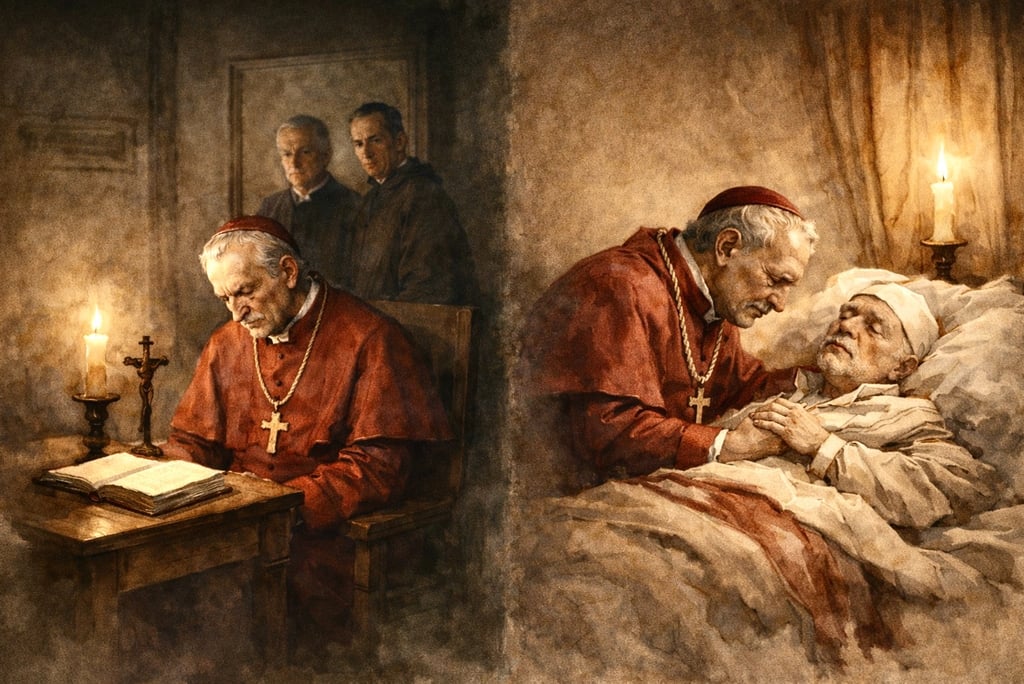
The list gets pretty detailed so I’ll just touch on the highlights.”
Mark nodded.
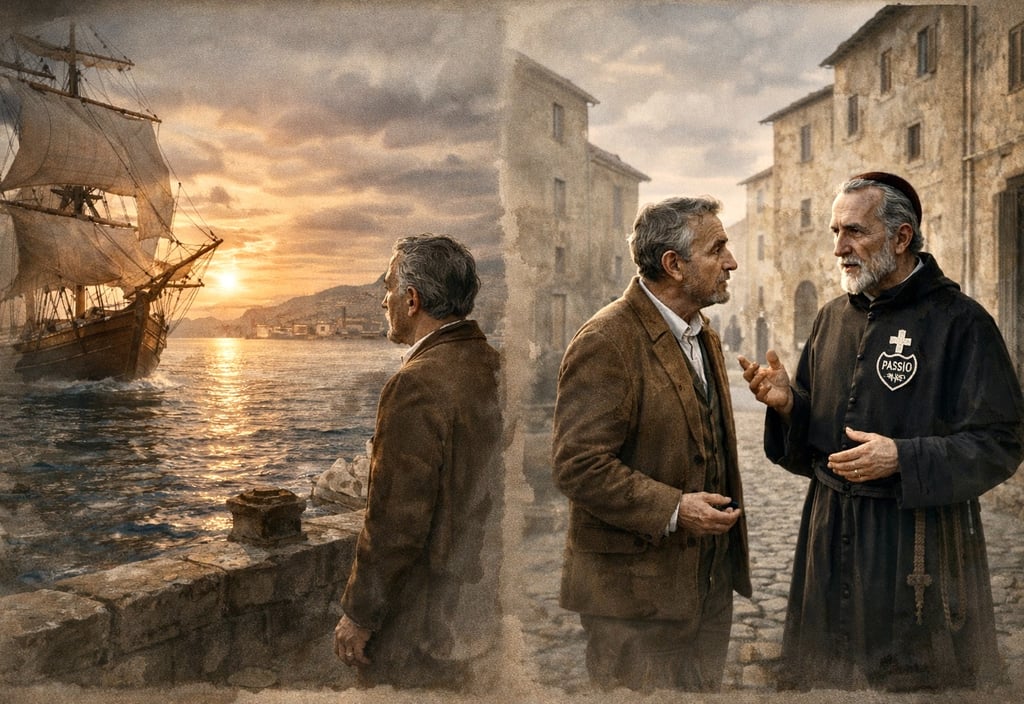
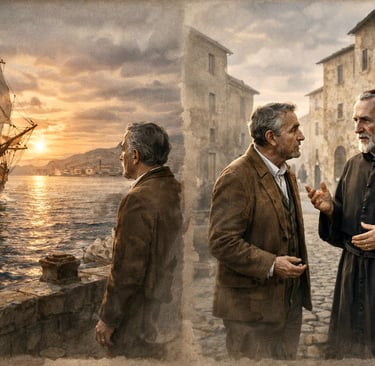
“Then there is Saint Paul of the Cross who was seen leaving on a ship but then a short time later was noticed back in the very city where he had just been. This was confirmed by the same person who first took him to the ship, watched it set sail, and then a few hours later—found himself talking to him again."
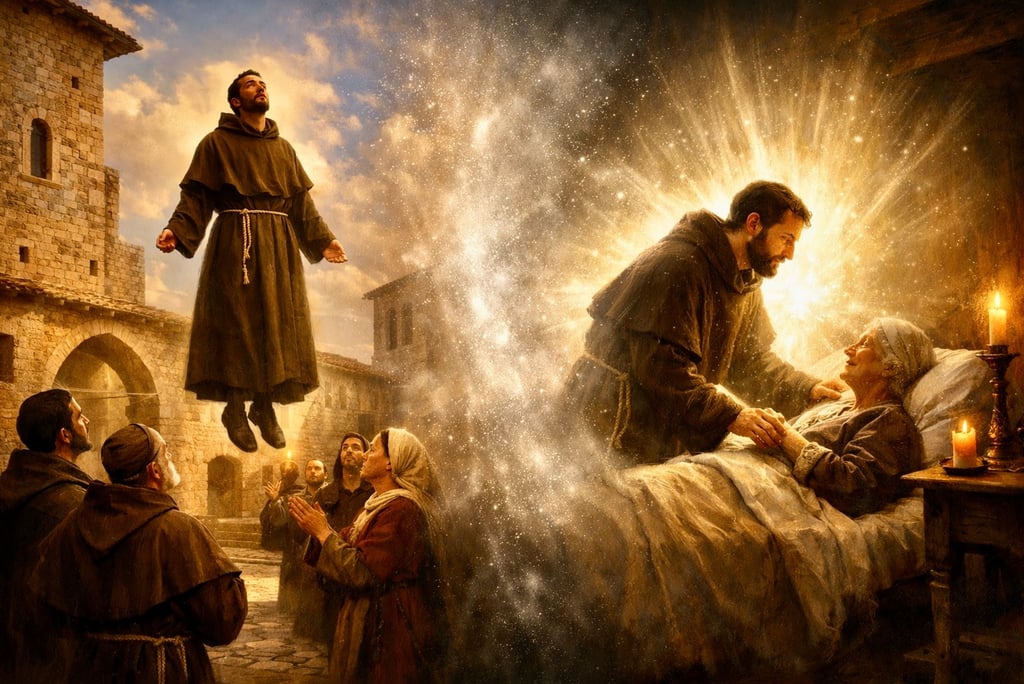
“Another saint was Joseph of Cupertino. He was seen in Assisi but at the same time, surrounded by a flash of bright light, Joseph suddenly appeared at the bedside of his dying mother, miles away."
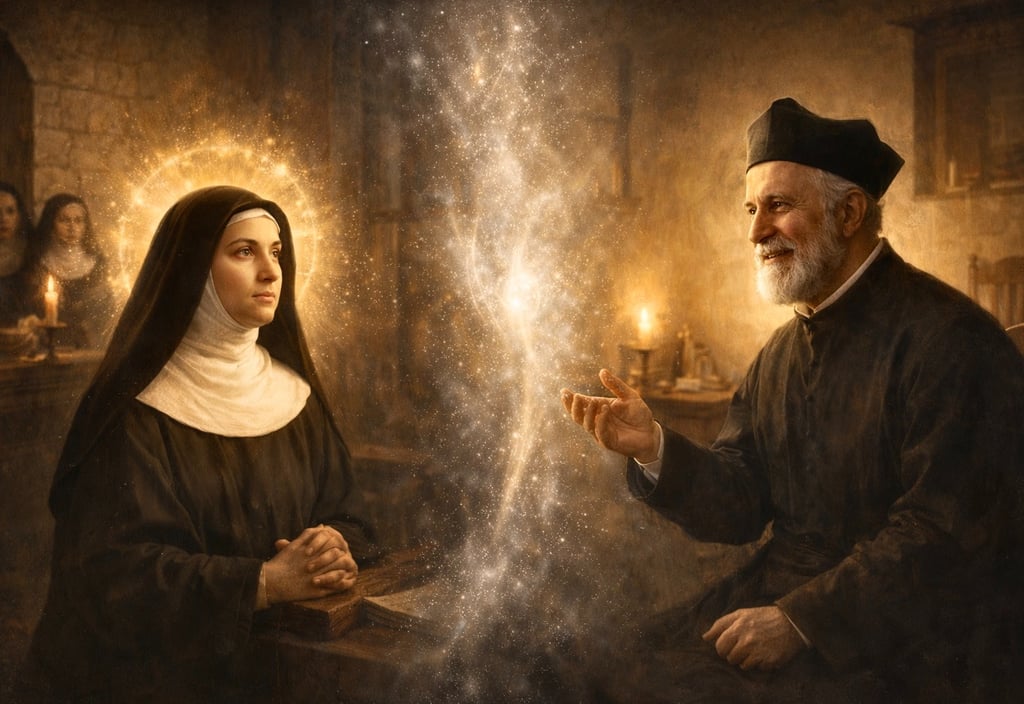
“There is also Saint Catherine Dei Ricci. She was the abbess of Saint Vincent’s Convent in Prato, Italy where she remained her entire life. Even so, she was observed having frequent conversations with Saint Philip Neri while he was in Rome."
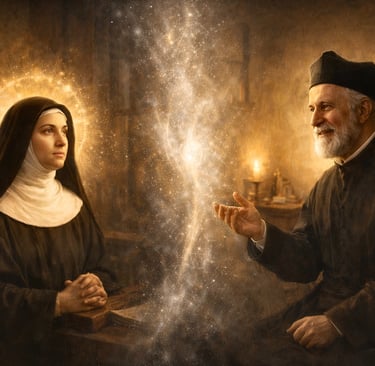
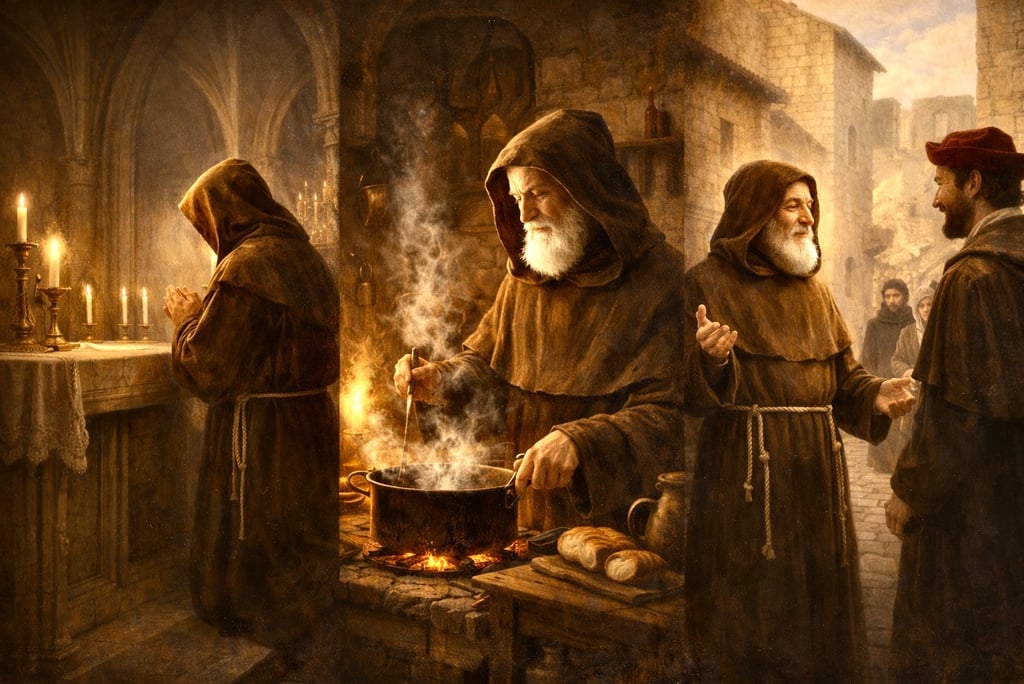
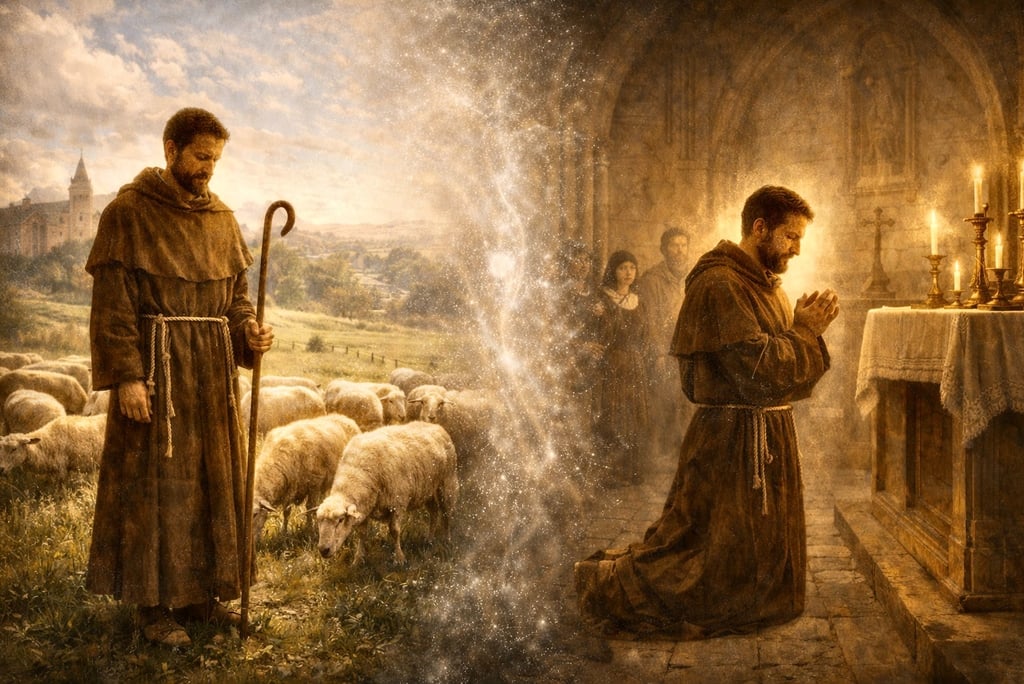
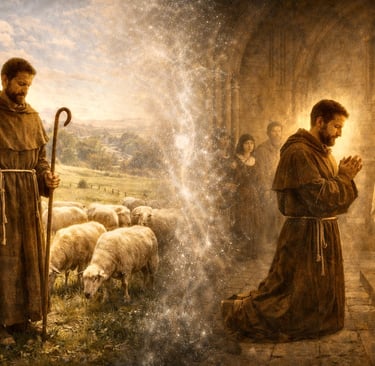
“Okay, here’s another one. Saint Anthony of Padua was a famous Franciscan theologian. One Sunday he was speaking in the Cathedral of Montpellier in front of hundreds, while at the same moment he was singing at another monastery with their choir."
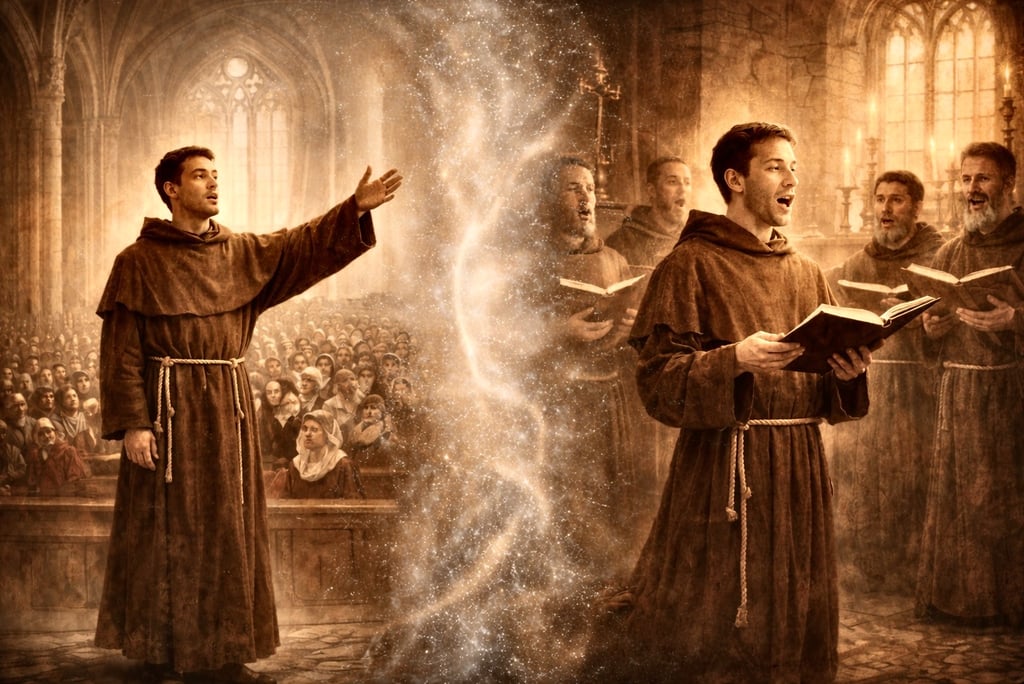
“Let’s see, I have two more pages here. Of course there is Saint Francis Xavier. He was one of the seven original followers of Saint Loyola. Xavier’s bilocations were both numerous and carefully witnessed.”
“My God, father, I had no idea that there were so many. How many more do you have listed there?”
“Well, let’s see: Saint Vincent Pallotti, Saint Lydwine of Schiedam, Father John Edward Lamy, Saint Peter of Regalado, Father Paul of Mol, Saint John Bosco, Padre Pio, Saint Gerard Majella and Sol Maria de Agreda. Oh, didn’t you tell me that you were going to visit Agreda while you were in Spain?”
“Yes, and I did go there. It’s a small village located in the north of Spain. Dad, how much do you know about Sister Maria?”
“Well, that’s a good question. She’s the last entry. Hm, I must have stopped reading by the time I got to her because I don’t remember a thing.”
Laughing at himself, Mr. Penrose continued. “I’m either becoming a fool in my old age and can’t remember anything, or I’ve got her confused with all the others.”
Enjoying the fun with his father, Fr. Mark then became serious. “This is just amazing. I had no idea that so many Catholic Saints were able to bilocate. I guess my seminary focused more on modern history and less on legends and the supernatural. But then, when I started to read about Sister Maria—including the eye-witnesses and the artifacts she left behind—her story just convinced me that she was the nun who the Indians from San Angelo were talking about and that she was speaking the truth. As I see it, when tangible artifacts are brought into a story it can no longer be called a legend.”
“What do you mean by artifacts? What artifacts? And what about San Angelo? I’m afraid your losing me, son”
“Rosary beads—she said that she had taken some rosary beads from her convent in Agreda and gave them to the Indians who lived here.”
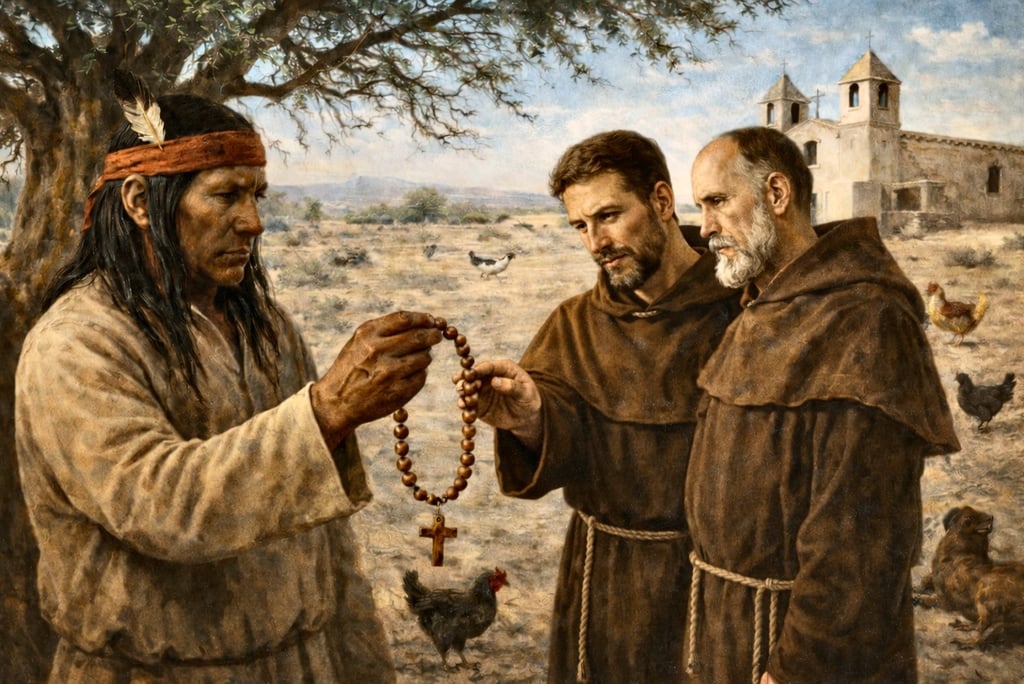
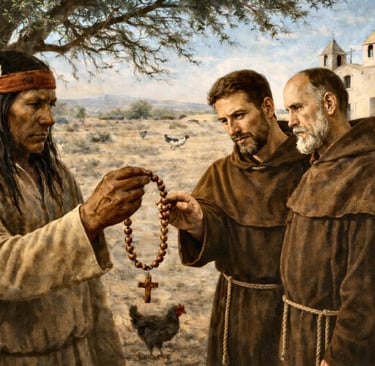
“Dad, there’s even a statement from the top Spanish investigator who was right there—testifying that an Indian chief actually gave one of the rosaries to him, as a gift. And that’s not all there is.”
“Where did you learn this—in Spain?”
“No. Actually, the most comprehensive source is a book I just read by Marilyn Fedewa. It’s in my briefcase. Would you like to read it? I can leave it?”
While Mark reached for his briefcase to get at the contents, O All Holy Spirit began to play in the bedroom, a song that Mr. Penrose especially liked. “Here it is, Maria of Agreda, Mystical Lady in Blue.”
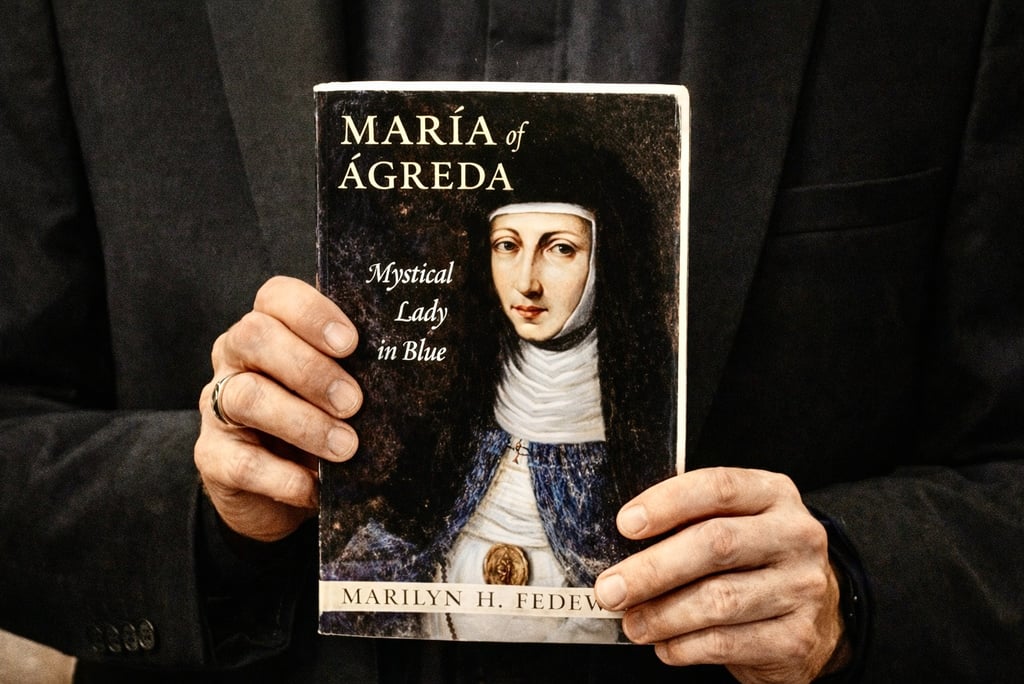
“You bet I want to read it—yes, on top of the newspaper is perfect. Great, the next time we meet I’ll be able to have a half-way intelligent conversation with you.”
Laughing again, Mark then said, “Dad, what impressed me the most about her sudden arrival in the midst of the Indians is that at first, she was not always treated well by the Indians.”
“Now what do you mean by that, son?”
“Well, as she said herself, they eventually came to love her. I would have to say that they even worshiped her. But at first, even she admits to problems.
“Dad, I spent a lot of time reading what Maria said and it’s easy to conclude that not only were the Indians able to see and talk to her in their native language, they were also able to touch her. However, she mentions that during her early visits, on more than one occasion they captured and tortured her. But in reality—if I can even use that word here—she was still safe-and-sound back in Agreda.
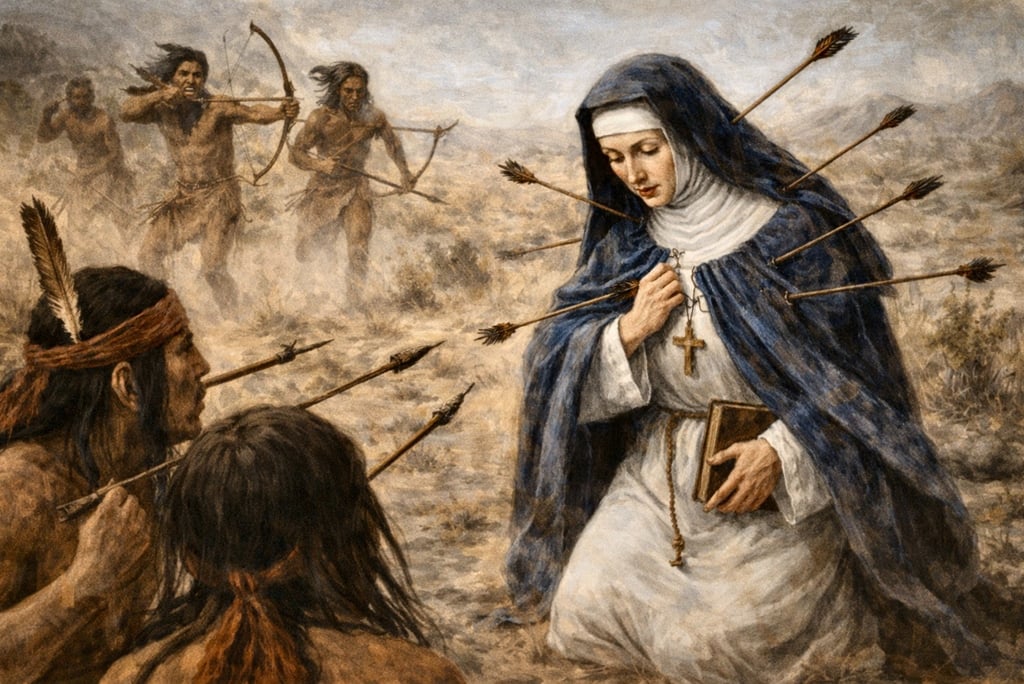
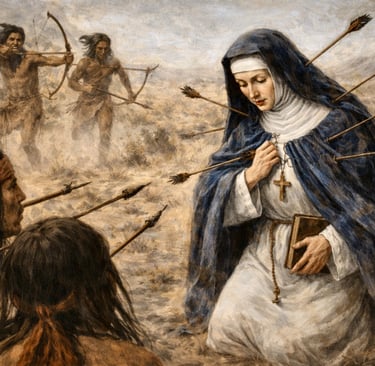
“After Maria’s ecstatic trance broke, she would simply resume her duties at the convent as if nothing had happened. I even read that the Indians martyred her more than once by shooting her full of arrows. But again, when she came out of her room she was just fine.”
“My God, Mark, that is just amazing!”
Looking at his father, Mark continued. “But what if—I mean—just think about this for a moment? Okay, I’m 100% convinced that bilocation happens. And not just in the Catholic realm, but let’s save that for another day. So yes—definitely it can happen. Alright, dad, you just read a long list of Saints who had this ability. Right?”
Mr. Penrose smiled. “You need to take my notebook and read about each one. I pretty much skipped over all the details. Here, you’re more than welcome to it”
Putting the notebook in his briefcase, Mark then said, “Thank you, dad. OK, let me put it this way. What is the common denominator that you see in each of them?”
“What do you mean—that they could all bilocate?”
“Well, yes, that was there but what was it—on the spiritual level? What is the one thing that clearly bound them together, even though they might have lived centuries apart and even continents apart? Jesus—right? In every instance, love for Jesus Christ united them as a family. Jesus Christ was their spiritual master.”
“Yes, of course—yes.”
“Well, then the question that comes to mind is who is greater, the master or the disciple?”
“Christ is God. Nobody is greater than God.”
“Alright, then—if Mother Maria, Padre Pio, and all those other saints were able to bilocate, then what about their Master, Jesus Christ? Do you get the drift of what I am saying? Surely Jesus Christ was the consummate practitioner of bilocation. This conclusion is inescapable.”
“Well, that’s something I’ve never considered. OK, I think I’m following you so far.”
“Good. Then this leads us to my point. One morning when I was in Vrindavan, a profound thought came to me. On one hand, the Indians touched, captured, tortured, and then killed Maria—a fact certainly real to the Indians, but actually not in truth, because her real body was located faraway in Spain. In reality she was safe in her room—lost in a state of spiritual ecstasy.”
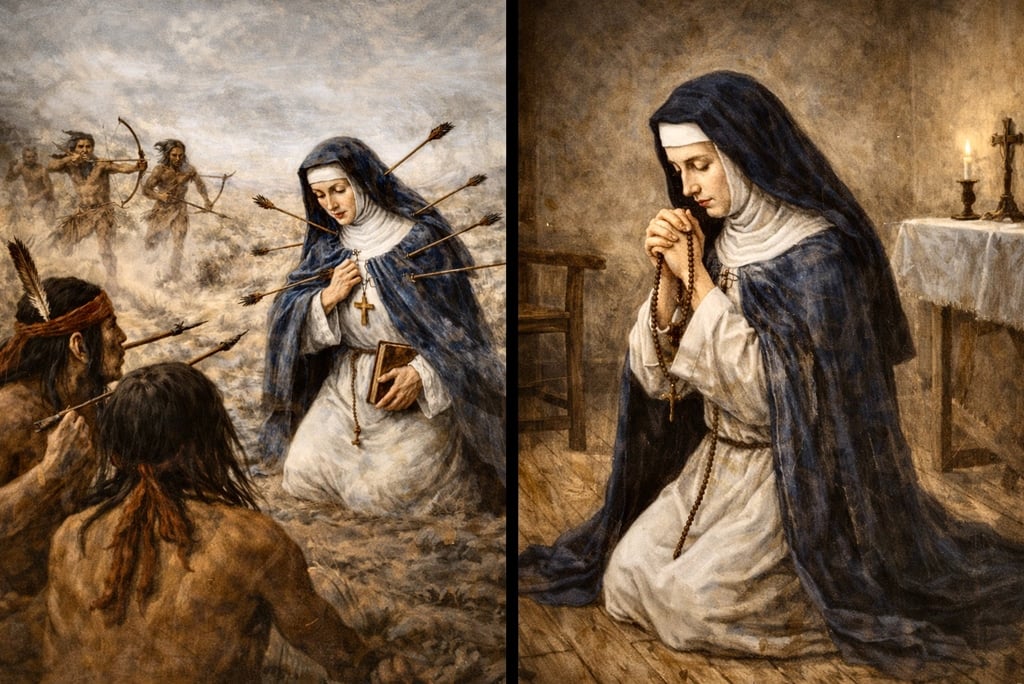
“Wait a minute, son. I think I see where you’re going with this.”
“Exactly, dad! And from all accounts, the clue that led the Spanish investigators to her was the fact that her bilocated-self was a perfect copy of her real self; clothing and all. It was her unique clothing that tipped off the priests.”
Looking a bit perplexed, Mr. Penrose said, “What do her clothes have to do with it?”
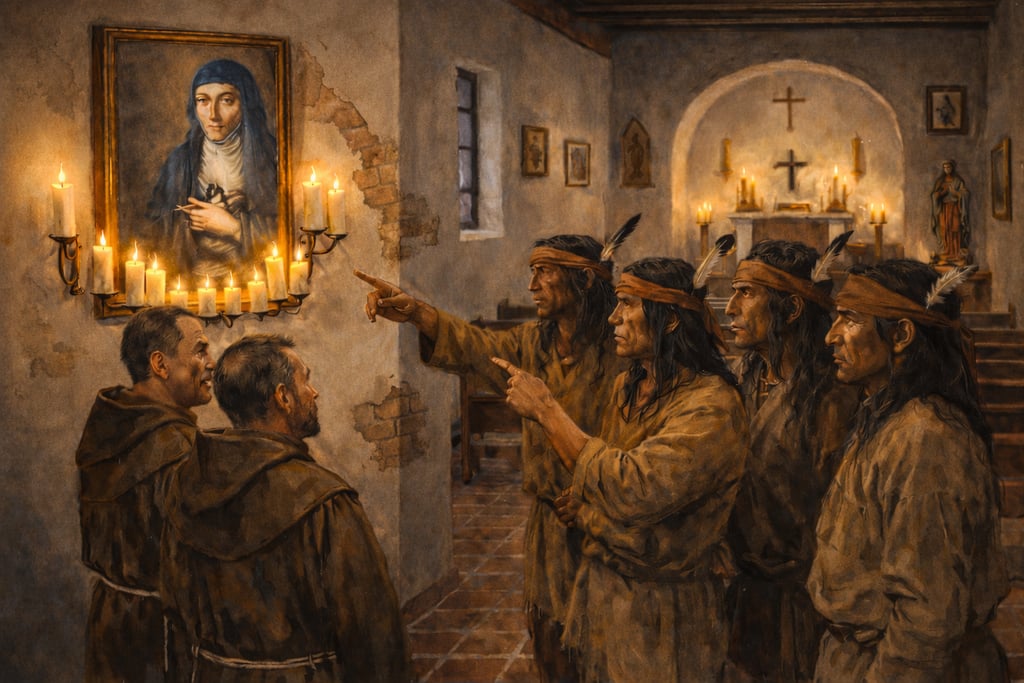
“Well, back around 1620 when a band of Jumano Indians were trying to explain who had given them their rosaries—when they saw a picture of Luisa de Carrion they suddenly said, 'Dressed like her, but not old. No, very young. Yes, dressed like her!'”
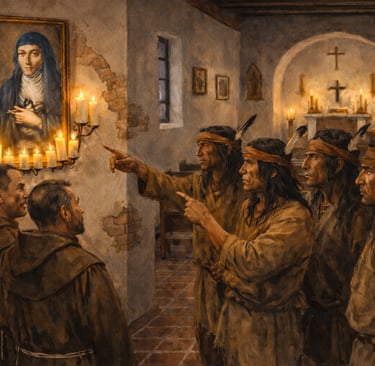
Mr. Penrose set down his cup of coffee. “I guess—hm, maybe I’m not following you so well.”
“That’s OK, dad. Let me explain. I’m getting ahead of myself. The Indians had gathered at the beautiful San Agustin Mission located near Albuquerque, New Mexico. Hanging on a wall was a painting of Mother Luisa who was wearing the distinctive blue cloak of the Poor Clare Nuns of the Conceptionist Order. They are still the only ones in Spain who cover themselves with a blue cape. That is why the priests sent a letter back to Spain asking that the Minister General go to the Poor Clare convents and ask if anyone knew about a nun preaching to the Indians.”
“My goodness, Mark, no wonder you spent so much time reading about her. I can’t wait to read that book.”
“Dad, let me get to the crux of the matter. Let me ask you this: Who did the Roman soldiers actually touch, capture, torture and kill? Jesus or His double? If Maria’s double was martyred by the Indians—but in fact she was safe and sound in her room—what about her Master? Dad, this is the one thing about Christianity that I never liked. How could God let His Beloved Son be so abused by those Roman barbarians? Remember when we saw, The Passion of the Christ? It was absolutely horrific what they did to him.”
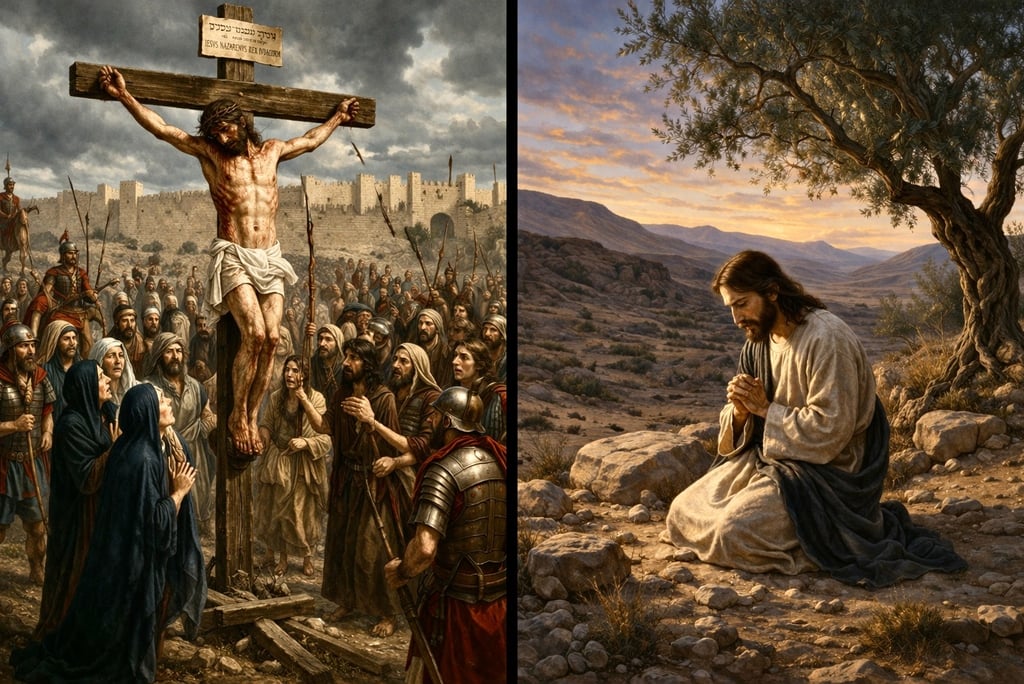
“Well, they say…”
“Dad, I know what they say. And sure—I guess you can build a theology around that. Actually, it’s a brilliant theology. If an innocent person has stepped forward and has given his life so that you—the guilty one—may live, then naturally that encourages feelings of love and gratitude for the person who died for you—what to speak if that person is the Son of God. Needless to say it has helped awaken my love for Jesus, as well as yours, right?
Mark’s father nodded in agreement, adding, “It has certainly resonated with the hearts of men and women from its very inception. Who but God could have created such a perfect blend of truth, sacrifice and even majesty?”
“I completely concur but still, it has always bothered me. I think that is why I unexpectedly enjoyed India so much. I’ve got so much to tell you.”
“Whew, just look at the time. Didn’t you ask me to remind you when it got close to seven thirty?”
“Oh yes, I am expected back at the rectory. But we have a few more minutes before I have to go.”
“Well, Mark, I must say that you have given me plenty to think about and we haven’t even gotten around to the biggest part of your trip.”
“I know, Dad. But please don’t think I came back emptied handed or disappointed. I took lots of pictures and made some new friends. I know you were in the Vietnam War and I even have something to tell you about that. Granted, going to Spain wasn’t part of our original plans but all at once I got myself involved in several things at the same time. But then again, they’re all connected to God, so everything is good. Yes, I had a wonderful trip. Thank you, dad. I cannot begin to tell you how much it has meant to me.”
“Mark, I am the one who is thankful to have such a wonderful son. You live nearby and we spend a lot of time together—more than enough for you to tell me everything. Thank you. Now you better get going so you’re not late for your meeting.”
Mark’s father walked him down the hallway to the elevators and pushed the button before giving his son a big hug.
“Thanks again for loaning me that book.”
“You’re welcome. Are you up for a nice walk in the morning?”
Back in his room Mr. Penrose sat in his easy chair holding the book that his son had left. He felt a little confused. Perhaps ‘unsettled’ is a better word to use.
Chants from Balamand seemed to stir his soul. He wanted to connect the dots for himself. No, he said to himself, I haven’t read anything about Maria of Agreda. But why is her name in my book? He began to reflect back, thinking to himself. Maybe I had looked around but couldn’t find anything. That was a long time ago. Way before Google. Maybe before Mark's book was even written.
He held the book, but just stared at the cover. Mark’s one hundred percent right! How did he put it? The consummate practitioner of bilocation.’
Mr. Penrose felt his eyes grow heavy. He slowly prayed: All things are possible with God. All things are possible with God. All things are possible with God. Who did the Roman soldiers actually kill? Does it really matter?
Mr. Penrose suddenly opened his eyes—What an amazing question!
Chapter 44 - West Texas 1621 A.D.
Table of Contents
Reader's Review (coming soon)
“By God’s mercy, soon we will find water.”
“All glories to Jesus Christ, His Divine Son. All glories to our Savior. Don’t fret Juan, soon we will find something to ease our parched throats. We have to trust that our guides, who were sent to us by God, will not let us down. Surely God is leading them as well as us.”
The two Spanish priests and the 27 Jumano Indians had been heading east from the Mission at Isleta, New Mexico for well over 13 weeks. The land didn’t appear that much different from parts of Spain. The blistering heat of the day and the cold nights were familiar. “Diego, how much longer do you suppose we have to walk?“
At least they had a donkey to carry their load. The squaws fared far worse. And sure enough, their thirst was soon quenched, but their feet still hurt. Then another week passed when suddenly they spotted a band of Indians in the distance.
“Padre, who are they?”
“I don’t know, it’s hard to see from here.”
Straining to see them, Juan blurted out, “I think they’re coming this way.”
Watching them closely for a good 20 minutes the two priests noticed that the six Indians were indeed, headed straight for them—speaking only a few words as they drew near. Soon they all stood still, facing each other in a random mass—eyes looking at each other, but heads still. The dust that had been kicked up settled back down upon the ground—their dogs eyeing each other nervously.
Both priests reached for the crosses—raising them slowly above their heads. In the name of the Father, the Son, and the Holy Ghost.
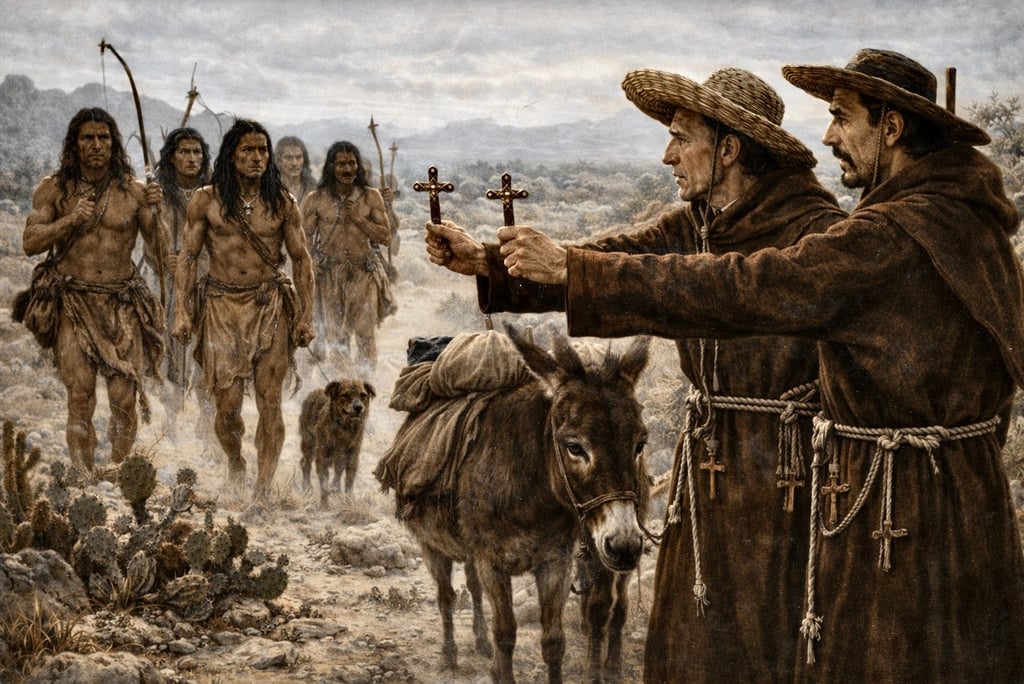
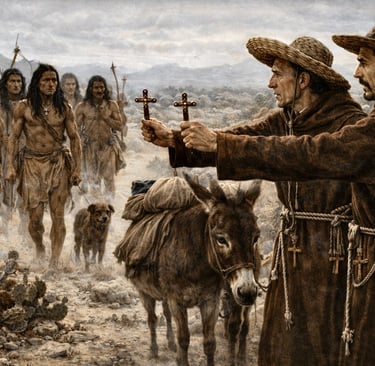
But what surprised them the most was how quickly the six Indians—in fact, how rapidly all the Indians pulled out their own crosses, hidden under their clothing—holding them in the same way for the two priests to see.
A one-eyed Jumano with a dirty headband tied across his forehead spoke. “They say they were told where to find us.”
“But for what reason? Who told them?”
“She wanted to give you a sign.”
Now it was the older priest who spoke. “Ask them if they can take us to her.”
Almost on cue the Indians turned toward the east without speaking another word and began to walk. “Padre, they are still holding their crosses.”
“Blessed is this day, Juan, God has kept us safe.”
Ten days later, after slowly climbing to reach the top of what would one day be called, College Hill, located behind the old H-E-B grocery store in San Angelo, the Indians stopped and motioned for the two priests to join them.
“What is it Father? What do they want?”
The six Indians who had recently joined them held out their crosses, pointing with them toward the valley below. But the two missionaries still had a few yards to climb before they could see what was down below.
“Padre, maybe a river—just a little further.”
Four hundred years later when the occasional scholar would try to put down in writing what the two men saw, facts always seemed to clash with fiction, frustrating the most prudent historian—discouraging most. Earning their degrees at Harvard and Yale, they were taught that history was not supposed to tease the sensibilities of sensible people. So what were they expected to say when asked to write about the history of San Angelo, Texas in 1622?
Reaching the top of the hill where they could see below, the two priests seemed to lose their breath.
Without warning the two Spaniards fell to the earth like rods—reverent obeisances offered again and again—the Indians mimicking their every move.
Juan slowly rose to his knees—his palms pressed together—seeking breath to pray. Father Diego followed his lead—the Indians trying to do the same. Quietly both men began to speak in Spanish, uttering the same prayer that she had taught the Indians, but in their native tongue. The Lord’s prayer never sounded so beautiful.
Padre nuestro que estás en los cielos; Santificado sea tu Nombre; Venga tu reino; Hágase tu voluntad; En la tierra como en el cielo; Danos hoy el pan de este día; y perdona nuestras deudas; como nosotros perdonamos nuestros deudores; y no nos dejes caer en al tentación; sino que líbranos del malo.
Both men stood up, holding their crosses high above their heads as a sign of triumph, for the glory of their Savior.
In the valley below, perhaps as many as eight thousand Jumano Indians—men, women, and children—were celebrating in a huge circle. Below, the two priests wrote in their report that the cross was over six feet tall and decorated with a beautiful flower garland.
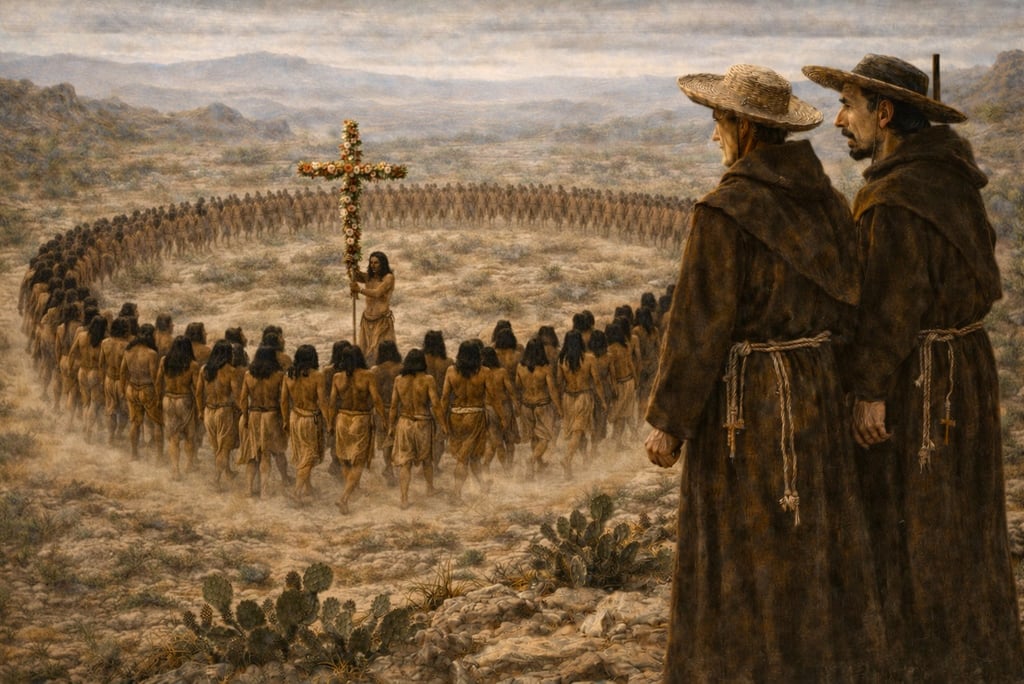
When the two Spanish padres came closer to investigate they found an area where many sick Indians were laying down as if waiting for them. “In the Name of Jesus Christ.” The two men stopped at each blanket, gazing into the hopeful eyes looking up at them. As they later wrote, the blind, the deaf, the paralyzed; all were healed. Over the next year they estimated that over ten thousand Jumano Indians were baptized. By the year 1630, Spanish priests wrote to King Philip of Spain claiming that 60,000 Indians had received Christ, living in 25 different mission districts—not a savage among them.
As for the woman the Indians had spoken of, she was never seen by the two priests. Only the rosary beads remained—beautiful, unmistakable—silent witnesses that she had truly been there. They seemed to have passed through some unseen veil, as if carried from another realm, along with the saint herself—body, garments, and all—held gently in her hands.
The Indians spoke with certainty. A radiant woman, clothed in a flowing blue cape, had come among them. She taught them everything—how to make the flower garlands, how to decorate the great cross—and as she spoke, it was in their own native tongue, clear and perfect, as though she had always belonged among them.
Omnia possibilia sunt crendenti – For the believer all is possible.
Chapter 45: Agreda, Spain
Table of Contents
Reader's Review (coming soon)
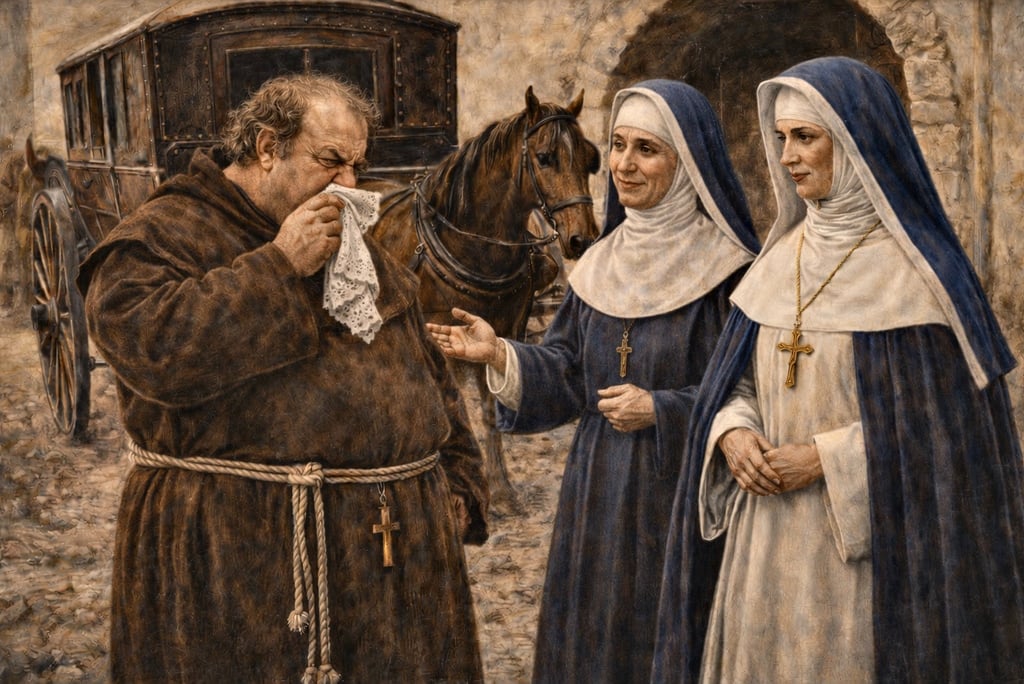
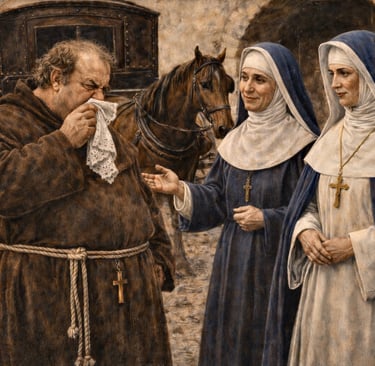
“Father, this is our Abbess, Madre Maria de Jesus.”
“Very well. May God be pleased with you.”
“Thank you, Father Superior”
“Since you have requested guidance, I am the one God has chosen to bring about some order here. Obviously you need help in obeying His will. Am I wrong or right on this matter, Sister?
“Of course you are right, Father.”
“You may bring me something hot to drink. I swear I’m catching a cold.”
“Yes Father, it will only take me a minute.”
“Alright then, hurry up before I’m too sick to attend mass.”
Maria returned with some hot tea, mixed with a few local herbs that were known for their healing quality, pleasant taste and wonderful aroma.
“My God, Sister, do you call this a drink? At least bring me something sweet to hide that ghastly flavor. Haven’t you nuns been taught how to make a proper cup of tea? No wonder they sent me here.”
“My Lord, please take some honey.”
“Listen carefully, Mother. I don’t have a lot of time to waste. I want you to tell me the truth.”
“Certainly Father. In the name of our Lord, of course I will.”
“First you need to know that back in Madrid there are countless rumors flying around and they’re all about you. Are you aware of this, Sister?”
“I am sorry, Father, I do not follow you.”
“Rumors for God’s sake! Gossip! Rumors about you! What’s so hard to understand about that? Let’s start with your fantasies. What is this nonsense about you and your Indians? I was even told that you never went to school? How can that be possible? Don’t they have a school in Agreda?”
“Yes, there is a fine school—but because of my health.”
“Are you telling me that you are too sick to be a nun?”
“Oh no, heaven forbid, I am a bride of Christ.”
“Then if you haven’t been to school, Sister, tell me how everyone in Madrid is telling me that you have taken it upon yourself to write a biography of our Holy Virgin Mother. Is this true?”
“Father it is true that I am obedient to Our Lady and that her will is mine.”
“So is it your confession that our Most Splendid Mother, the Mother of our Lord Jesus Christ, has selected you from among all of Spain’s finest—from all her diligent, and from all her nobility, to be her chief servant?”
“Oh no Father, I am not qualified to be her servant.”
“Can’t you hear yourself speak, Sister? Perhaps your other confessor—what was his name?”
“Father Andres, My Lord.”
“That’s right. Perhaps he encouraged you to pen your dreams due to his inexperience. Now enough of your double talk.”
“Yes, My Lord.”
“Listen. You do not want to upset the apple cart, do you Sister Maria?”
“Never, My Lord.”
“Then it’s settled. Alright, now I must get some rest before evening mass. If I am not feeling better I may not be able to attend. That so called hot drink of yours has only made me worse. I will call upon you soon. Goodbye Sister.”
“Praise be to Our Father, His Son, and the Holy Ghost. Goodnight Father.”
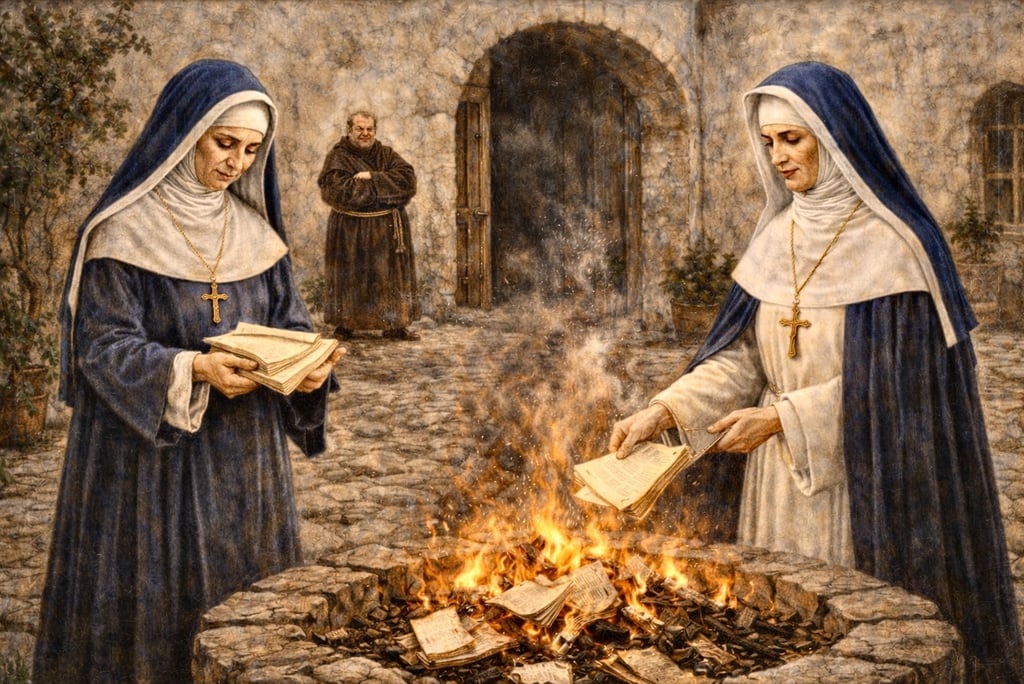
Sister Maria confessed to investigators that she had bilocated nearly 600 times to preach to the Indians in North America, sometimes as often as four times a day. During one examination, having just been bled with leeches to reduce her fever, Maria was made to kneel precariously on a rail for ten days, 6 hours each day, while Padre Inquisitor Antonio del Moral and his Spanish scribes sat comfortably questioning her.
Official tribunes were conducted on multiple occasions into her behavior and testimonies and these records survive today as well as other correspondence relating to the great mystery of the Jumano Indians and the Lady in Blue.
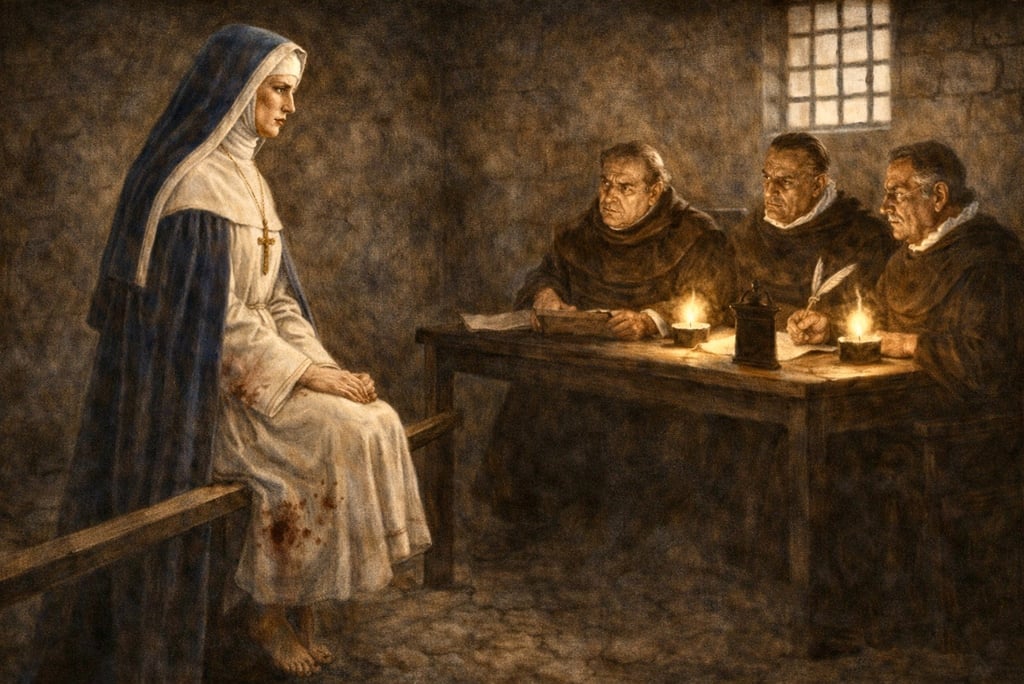
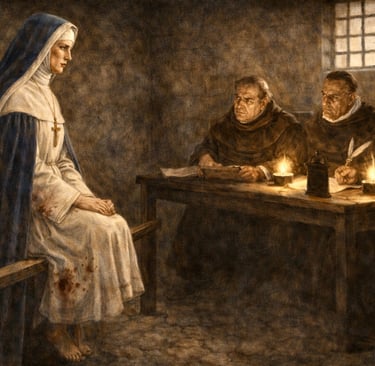
(A few days later)
“But Maria, I do not understand. Why must you burn everything—your diaries and your manuscripts? Didn’t Father Andres encourage you to write?”
“I’m sorry, Sister Candida. The Lord is now calling me to be obedient. My writings are a distraction. We must all be obedient just as our Lord obeys His Heavenly Father.”
Sor Maria de Jesus was assigned several priests during her lifetime to give her both guidance and counsel. Father Andres del la Torre encouraged her—while quite the opposite could be said of a much older confessor who took a much sterner approach to Sister Maria and woman in general.
Always a humble soul but at times in turmoil, Maria endeavored to be obedient to those in charge of her, even if it brought her enormous pain. Perhaps due to the wisdom of his old age, perhaps the old Confessor had been right to chastise her—but in retrospect, historians and theologians can only shudder. By the age of 42, Sor Maria had been ordered by him to burn close to 5000 pages of priceless writings, including her journal describing her experiences with the American Indians. Her original, 2700 page, 8 volume, Mystical City of God—the biography of Mary, the Mother of Jesus—was among the writings she was forced to destroy. Thankfully, unknown to her, a copy had been secretly made and survives today. However, her journals documenting what happened when she suddenly appeared within the midst of the Jumano Indians, whose dwellings were scattered on both sides of the Rio Concho River, are forever lost.
Chapter 46 – Secrets
Table of Contents
Reader's Review (coming soon)
The next day on Elephant Mountain started out unusually hot considering the time of year but Nickolas understood his mountain better than anyone and suggested that they all meet at the beautiful glen after a late lunch. Nick knew that the afternoon temperature would cool down by then. In the meantime everyone went to explore a large waterfall that the monks wanted to show their guest. It was a place with a lot of fine mist blowing in the air and a great way to beat the heat.
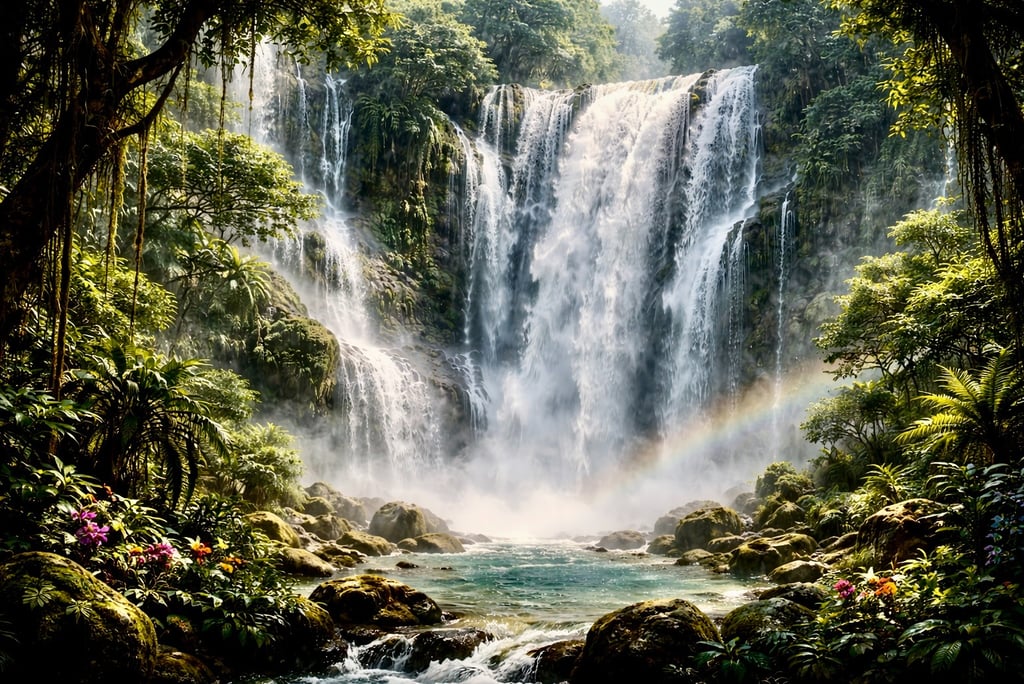

After everyone had eaten and were comfortably sitting back down in the glen, they all knew that Maria had more questions that she wanted to ask Rama—continuing with what Fr. Mark had told him about his visit to Agreda. She was so intrigued with what Rama had already said that she was almost begging to hear more. Now that he understood Maria’s keen interest in architecture, Rama turned toward her and began to speak.
“As far as the convent’s that Maria de Jesus had constructed, I don’t believe that Father Mark had anything else to say except that he did notice quite a few books covering the history of it in a gift shop nearby. Perhaps one day you will visit Agreda, yourself.”
This idea intrigued Maria, thanking Rama with a big smile.
“Mostly I remember that whenever Father Mark talked about Sister Maria, his excitement became contagious. Yes, it was obvious that he found her life very interesting. No—more than interesting because he was definitely trying to sort something out that involved her, but I don’t believe that even he knew where his final thoughts were going to take him. Although he had come to Vrindavan to discover the truth about the Vedas and the books that his father has been reading over the years, it’s also true that we spent a lot of time talking about this most unusual nun.
“However, there is one thing he told me that I know you’ll find interesting. Its about a secret that Sister Maria had been desperate to hide from the world. Mark told me that in 1765, long after her death in 1665, inside the same convent where she had lived, the lock on a very old box was opened so that certain papers she had hidden a hundred years could be read for the very first time. About a dozen people had gathered around as the contents were laid out on a table."
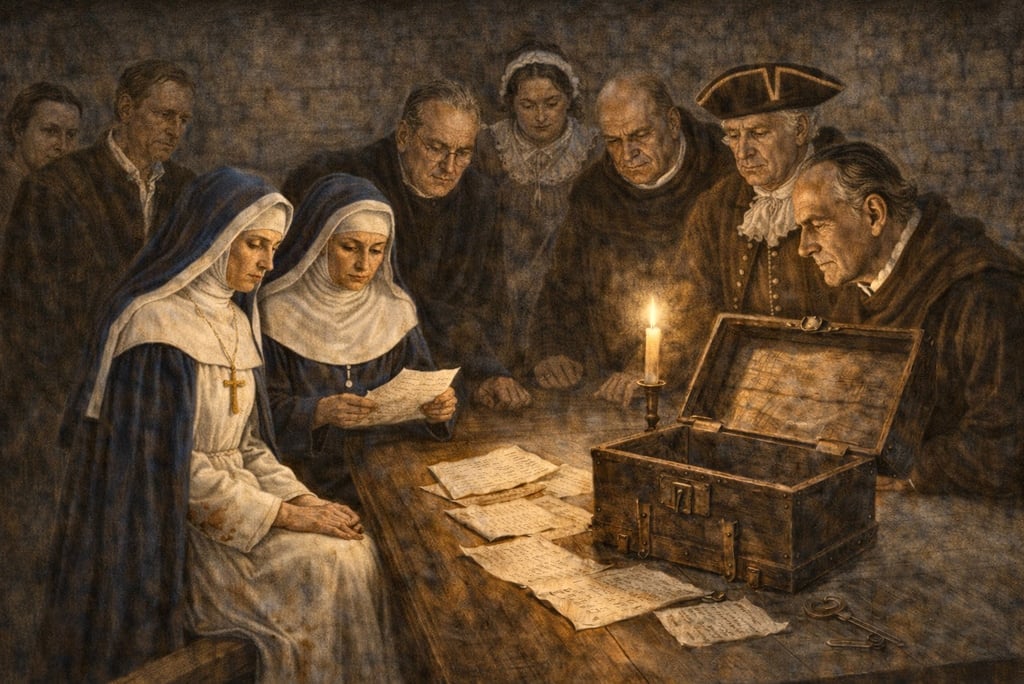
Rama continued, with Maria listening with rapt attention. “While church officials and guests listened as the documents were being read, they realized that Maria had sworn certain people to a vow of silence regarding an incident that had taken place in the convent’s church—a secret that involved her brother, Francisco Coronel. By reading what had been locked away, the story was gradually pieced together. A bundle of letters had been tied together and each contained the sworn statements from over a dozen eyewitnesses; describing what they had each seen, exactly one hundred years ago.”
Rama took another sip of water as he began to tell the story that Father Mark had told him, part of the official records now safeguarded within the stone walls of the convent.
With his exceptional memory and a gift for retelling what he had heard, remembering his conversation with Fr. Mark, Rama continued. “One morning during the Sister’s twilight years, she was praying inside the church when she began to hear a distressed voice calling out in the distance. Upon investigating she noticed that a coffin had been recently placed just inside the doorway. As she strained to listen, gradually she could tell that the voice was coming from inside the casket. Nuns from the convent were also present, but only Maria could hear the voice. Standing next to the coffin, she told them that it contained a tormented soul."
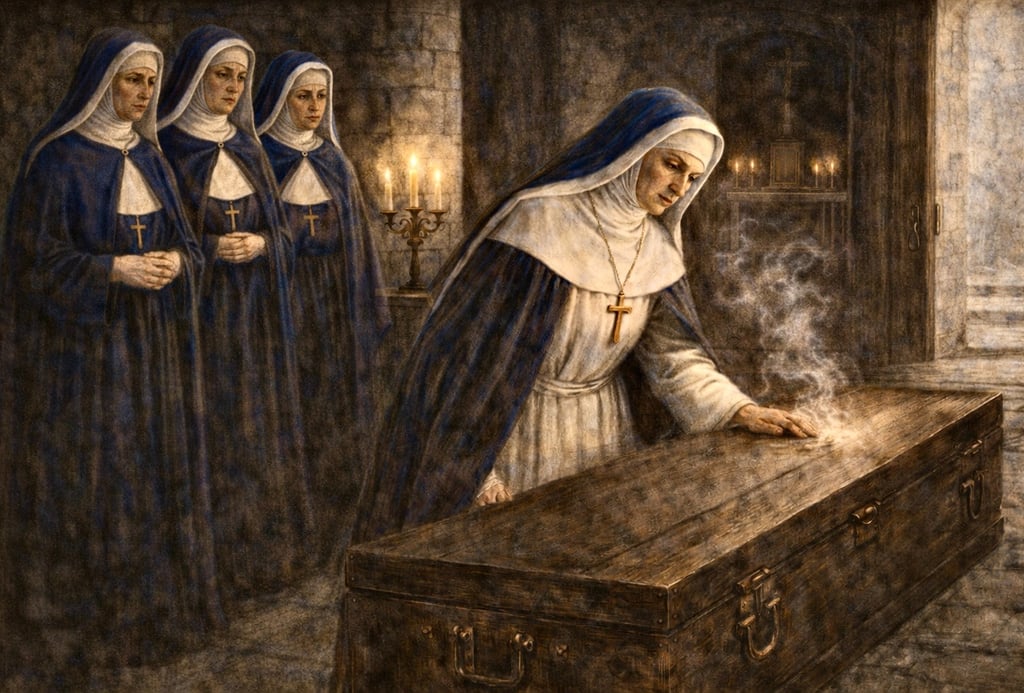
“Father Mark told me that when a soul dies without awakening its love for God and is damned by a lack of remorse, a great agony consumes it. Knowing this, and with great compassion, Sister Maria asked God to bring the body back to life. Only then, she reasoned, might the unfortunate soul repent and received God’s grace.
“It was also during this time that she discovered another shocking truth. When two workmen entered the church to open the coffin, she was told that the deceased person was none other than her own brother! Although at one time Francisco had been a priest, because of his lack of humility and pridefulness, he had become very bitter toward God, giving up his last breath a broken man, both physically and spiritually.
“With great faith, Maria called for a priest to come at once, to hear her brother’s confession. Perhaps remembering Jesus, as He had once prayed to His Heavenly Father to raise His dear friend, Lazareth, Maria closed her eyes, asking for the same favor. The nuns also prayed with her. While the priest and others stood watching, all at once her dead brother sat up and climbed out of the coffin. Immediately he prostrated himself in front of the Lord’s altar. He then approached the astonished priest and confessed everything, setting his soul ablaze with love of God."
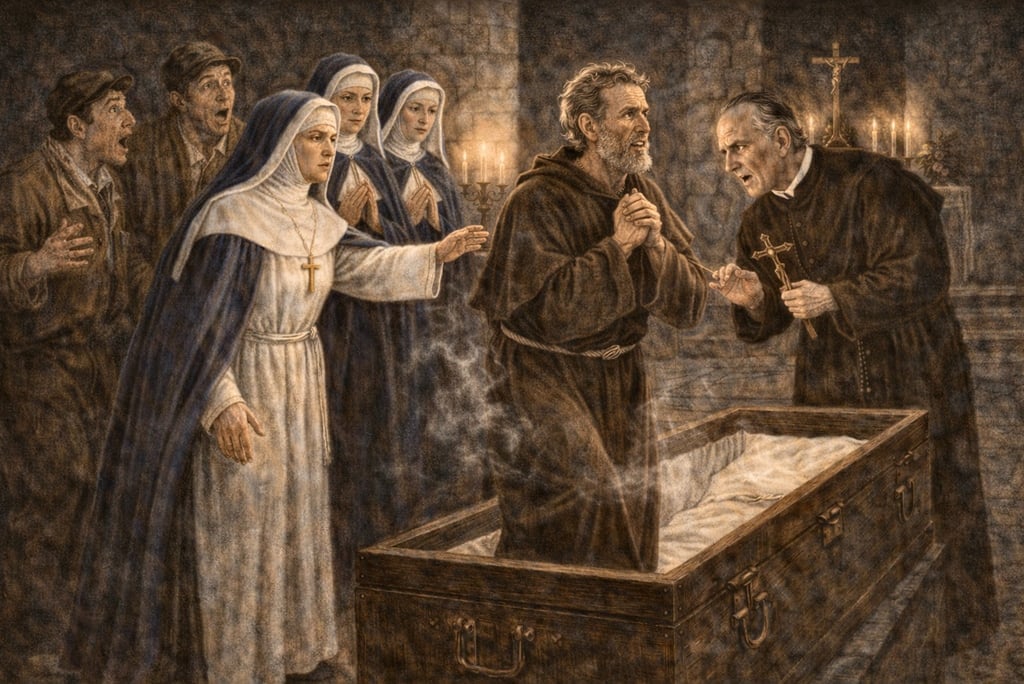
“To everyone’s amazement, Maria’s brother stepped back inside the coffin. He then turned toward his beloved sister, Sor Maria de Jesus, gesturing with his raised hand an expression of eternal gratitude.
“Francisco Coronel then reclined and the casket was removed for burial.
“Father Mark told me that these old documents were written, dated, and signed by a multitude of people; all who witnessed the amazing events that had taken place in the church during the previous century. Mark told me that he was allowed to look at the old box and its contents when he visited the convent.”
Rama then stopped speaking, having reached the end of what Fr. Mark had told him. It was then that Nick began to speak, breaking the silence as everyone was trying to grasp what had just been said.
“Rama, hearing what you’ve shared about Sister Maria—and the mysteries surrounding her—I feel compelled to speak. Let me just say… I, too, have lived with mysteries of my own. What you told us—about her brother rising from his coffin—has convinced me of something. It feels as though God is now calling me to reveal what I have, for so long, kept hidden.
"What I am about to tell you happened many years ago, yet I have carried it in silence ever since. Not a day has passed that it has not returned to my thoughts, and still, I have told no one, except Suryavarman.
“What happened, Daddy—something during the war?”
Nick took his daughter’s hand and looked at her. “That is a difficult question to answer. Yes, it happened over here and obviously it was because of the Vietnam War that I was here in the first place. But in my heart I know that the reason I survived, and what happened to me, is something far more meaningful than simply saying it was because of the war.”
Noticing the obvious concern on his daughter’s face, Nick continued.
“We just heard about Maria’s brother, Francisco, coming back from the dead. The first thing that came to mind is why did she want to hide what had happened? Perhaps she was just worn out after having to explain herself over and over again to the all those investigators who were determined to discover if she was telling the truth. But I don’t think this is why, because she was very forthright in revealing everything that she was doing. No, whatever her motives were, we’ll never know for sure, but because there were so many witnesses, it’s possible she was simply trying protect them from the same ridicule that she had been forced to endure, or even worse.
“As I recall, the Spanish Inquisition was brutal and something to avoid at all cost. Witchcraft and black magic were rampant in many parts of Europe, and Spain had its own problems—often inside her own convents.”
“I mean, just imagine if all those witness were allowed to tell people far and wide about a dead man coming back to life—and what would have happened if the wrong people heard that? Wouldn’t spreading that story sound a lot like black magic? Especially coming right after her own trial—accused of being involved in what can only be described as witchcraft—flying to America using her supernatural powers. No, in this instance, out of her love for everyone, I think she was simply trying to protect them, while on the other hand making sure that eventually the entire truth would be revealed.”
At this moment, everyone was a bit confused. Rama then said, “Nickolas, we don’t understand. What is the secret? What happened to you?”
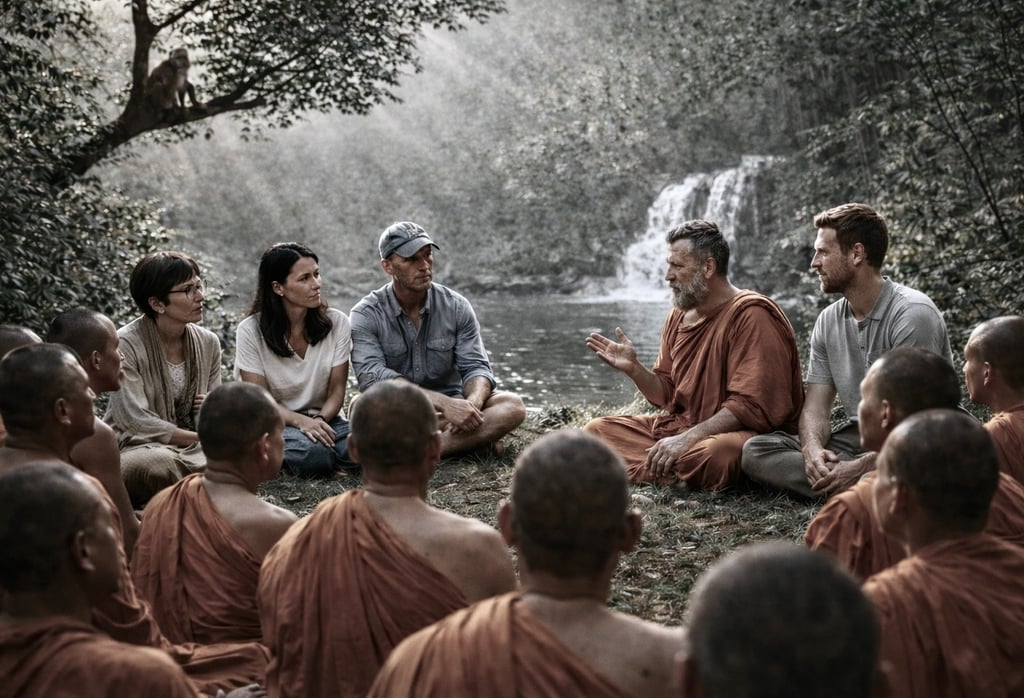
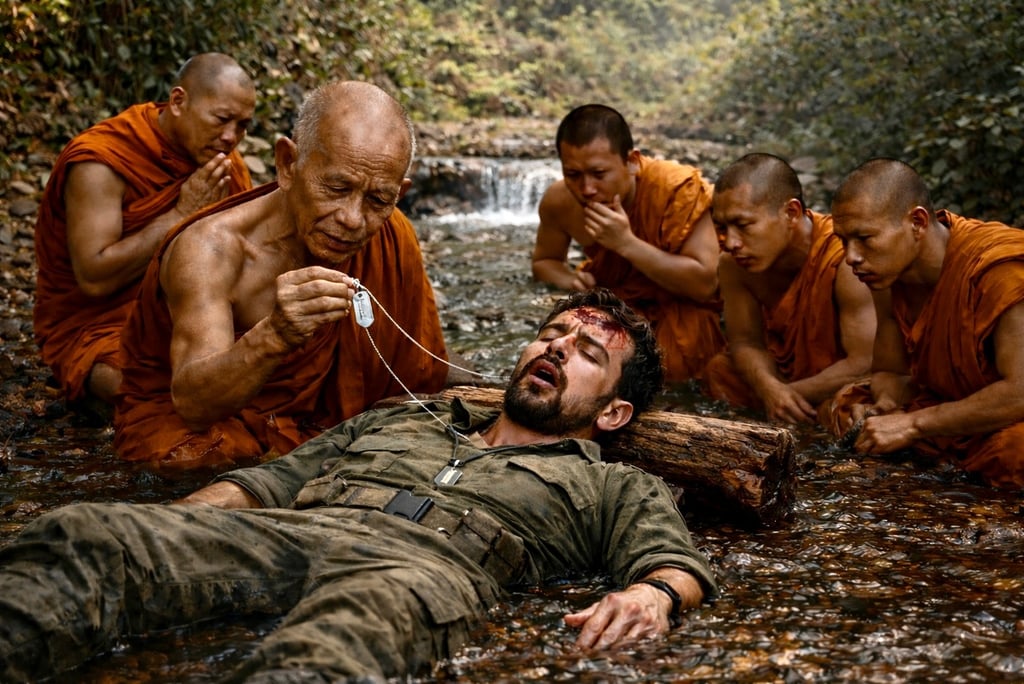
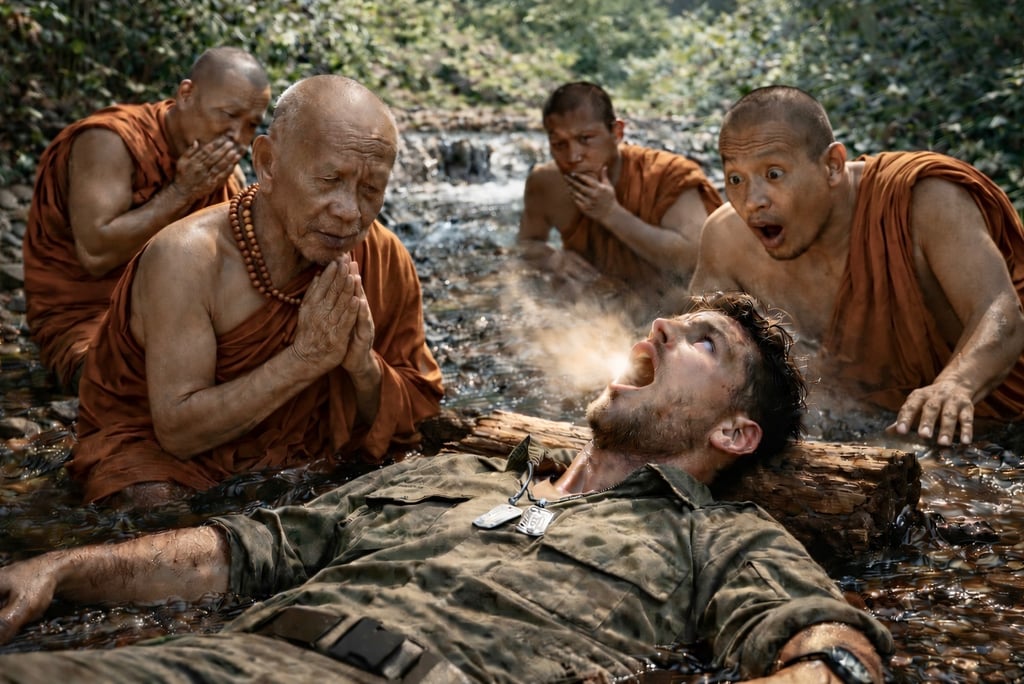
Hearing this, some of the monks said that—yes—they remembered how that frightened everyone. A couple of the men even started to run away.
Laughing at what they just said, Nick smiled and returned to what had happened to him. “But honestly , If Rama had never mentioned Francisco and how he came back to life, Maria, there’s a very good chance that I may have simply kept my secret to myself. But then again, nothing in my life has happened the way I thought it would. I certainly never thought that my old boss would find the letter I buried over 20 years ago and now this—having you all here—you & Major Sutton, and of course, Blake and Judy—and even Rama who I haven’t seen for a couple of years! Therefore, having this conversation seems as unlikely as having survived in the first place—and yet I did and here we are.”
Nick smiled but everyone could see the tears in his eyes as he continued.
“Maria, please understand that I was trying to get back home to you and your mother. The war, the army—why we were abandoned—nothing made sense anymore, except that you and your mother meant everything in the world to me. This is why I kept pushing myself further and further, but then after awhile all I could do was crawl. For several days I hadn’t eaten because I think some of the water I had tried to drink had made me sick. Basically I was finished but by the grace of God—my final resting spot was actually the most auspicious place I could have ever imagined.
“As i said, I remember being on the edge of a cliff when I slipped and fell. Either on the way down or when I landed, I hit my forehead on a rock. So this is how I died, but the thing is, I didn’t die. You can all see the scar on my forehead, but then in the blink of an eye I was alive again. There was never any darkness or pain. I was never unconscious. I was just there and then I was somewhere else.”
“But Daddy, you didn’t die because you are here. I don’t understand.”
“Yes, I know what you are saying, but something very strange happened. Plus it happened so fast I can’t even say when it happened. I was alive and then I died—and then instantly I was live again—but not alive like I am now. Instead of it being dark, like you would think death would be, somehow I saw a small fish swimming next to a strange body that was partly in the water—and then I was under the water, too, and I was swimming along side it. Then I saw hundreds of small fish darting about—curious about the odd object in the water.
"Also, the colors were extraordinarily vivid and many of the colors I had never seen before. How is that possible? I used to like to paint and I’m very familiar with all the colors and I even know how to make them, and yet, I saw colors that I cannot even describe.
"Then I began to notice the grains of sand beneath the body. There were millions—everywhere—and the body was just another object among them, no more important than the rest. I could see each grain… all at the same time.
“For some reason I looked at the soldier again. He must have been one of the solider who was part of my team. That had to be it. He must have fallen down the same cliff. Then I saw he was wearing a watch, and suddenly I knew that the watch was mine. Your mother had given it to me for my birthday. That’s when I knew that the body lying in the water was me."
Nickolas had shut his eyes but was still talking. "I also remember a tree and somehow I was looking at one of its leaves. The color was a shade of green that I never imagined possible. I was simply enthralled by its beauty and I could see all these little veins inside it and something like liquid light moving through them.
“So it was in these incredible moments that I suddenly realized that I had died, and yet, in the blink of an eye I never felt more alive. I had been in this 3-dimensional realm trying not to fall, but in a split second I was in a totally different realm. Everything was so different. I didn’t have a body like I used to, but I didn’t need one, either, because I could still see and think and I was still me. I was feeling ecstatic and from that moment onward, that sensation of euphoria has never left me.”
“Oh my goodness, Daddy, what happened next. Do you remember?”
“Yes, Maria. I remember everything just like it happened a few minutes ago. As I said, I had told Suryavarman what had happened, but finding the right words were very difficult. I told him about a golden light that I found myself surround by, and that my father was there. I told Surya how I could even see in every direction at the same time.”
Maria held her father’s hand. “Do you mean you could see your father in heaven?”
“No, not like I am seeing you but again, it is so hard to describe because I could definitely see him—but he was more like a shimmering outline made of golden light—and I was also the light. I knew it was him, as certain as I know that you are sitting here next to me. Instead of speech, it was more like telepathy—which simply ended up with me being in a state of absolute knowingness regarding whatever my father wanted me to know. In fact, our telepathy was so much better than talking because I always knew exactly what was being said.
“He told me to follow him into a room and suddenly I was there. However, it wasn’t like I had to walk in order to move. In the room there was a large table with a book on it. I could sense that the room and the table and the book were all made out of same light, but not like the sunlight here.
"Rather, the light that I saw was conscious and emanating the most amazing love I have ever felt. It was alive and it was love—all at the same time—and when I looked at the table, the book came in focus. It was like turning on the defrost fan while driving a car when the windshield is all fogged over. When you turn it on you notice the fog disappear and suddenly you can see perfectly. In a similar kind of way the pages in the book became crystal clear.”
Having heard that, Blake said, “What was the book about?”
“Well, Blake, it was about me. My entire life was on both pages but I didn’t have to turn them because it was more like looking at a movie.
“I saw different moments when I was kind to people. My grandmother was looking at all the snow outside and she was so worried. It was very deep and I told her that I would shovel it off the porch roof so that it wouldn’t collapse—and I could feel her love for me.
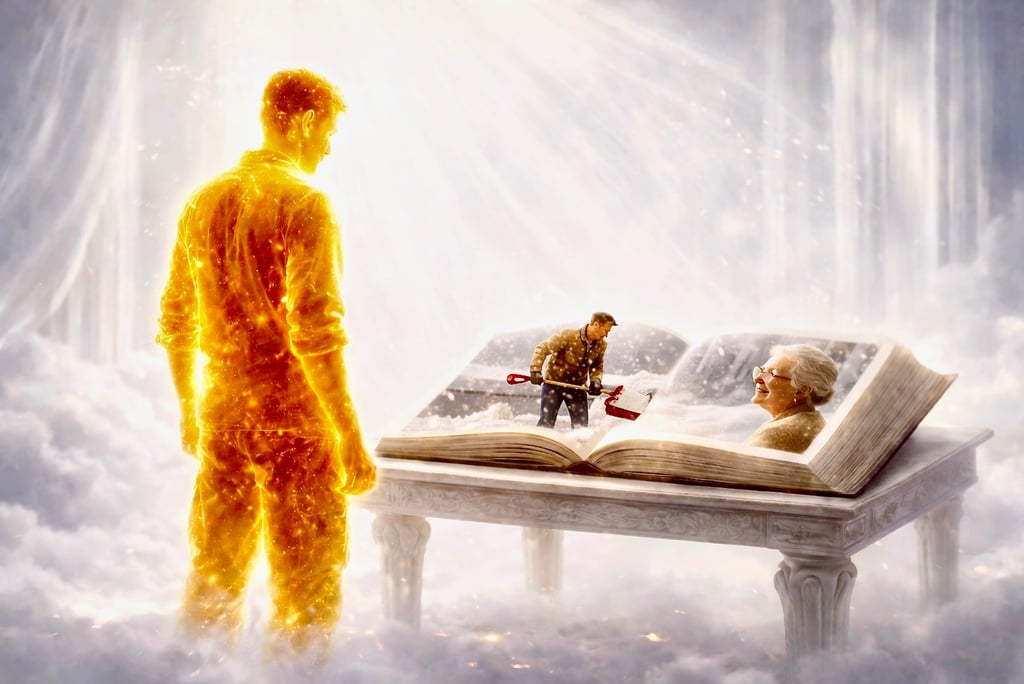
“But then there was a young boy. I also felt his love and I saw him look at me. He was with the Vietcong who were attacking our base. I was firing back and I could see the same boy in the book. He was terrified and threw down his rife. As I looked, I was able to know exactly what he was thinking. He wanted to stop fighting. He wanted to be with his family. I saw him throw down his rife... but I thought he was reaching for another weapon, so I shot him."
Nick wiped his eyes and continued... "But in the book I knew that instead of a weapon, he was reaching for a cloth to wave above his head and surrender to me. I could feel how much he wanted to live and how he was trusting me by throwing his rifle down. As I looked I could see that the boy was also surrounded by the same golden light and I knew everything instantly—his love for his family and even his love for me as he surrender and placed his life in my hands.”
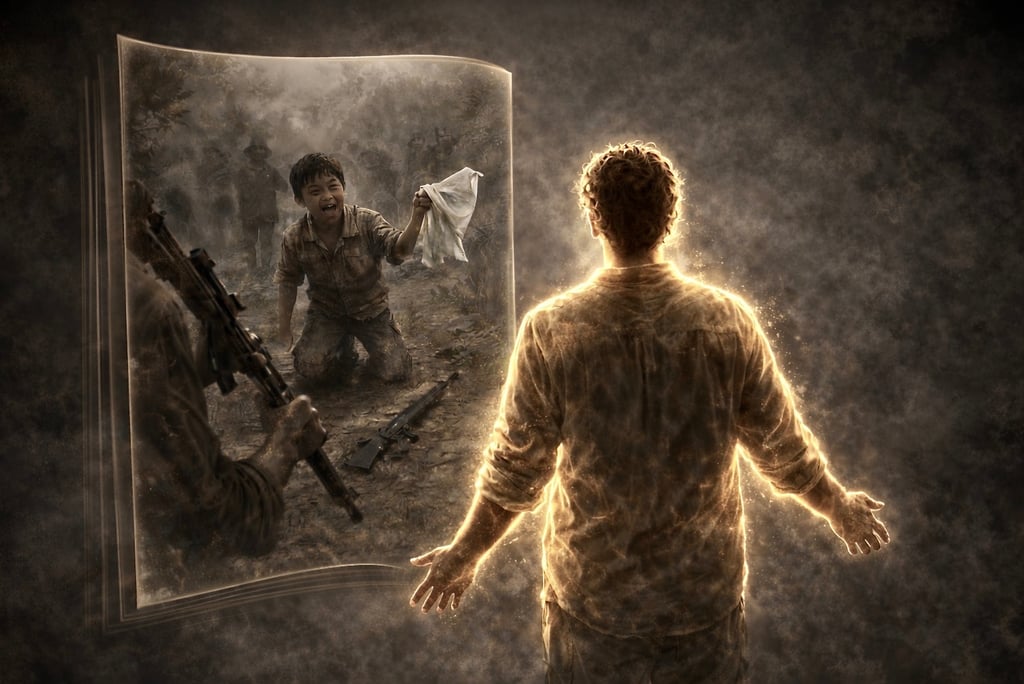
"Maria, like I said, time didn't seem to exist at all. I was there in that room for what seemed like an eternity when suddenly I was aware of an enormous jungle that was engulfed in an even brighter light.
“It was the brightest light I have ever seen. Even brighter than the sun but when I looked into its brilliance, the light didn’t bother me. Instead its love for me seemed to grow even greater.
"Then I noticed my lifeless body with the same light and shadows dancing all over it.”
“I heard voices and I saw monks walking toward me, and I saw Suryavarman. I could see that the light favored him because unlike the other monks, I could perceive how he was glowing—but not as strong as my father’s body of light, but still, there was a beautiful light surrounding him. Then I felt this pulling sensation. I became aware of my body as I entered it, and it felt horrible and cold and full of pain. My eyes opened for a second and I could see Suryavarman kneeling next to me—but immediately the light turned into darkness.
"The next thing I remember is that I heard a little bell ringing and I wasn’t lying on the sand anymore. Even though the golden light had disappeared, I felt more alive than ever. I had no idea where I was but I knew I was no longer where I had come from.
*** ** ***
Everyone knew that the evening’s remaining light could be measured in minutes as the shadows cast by the peaks that surrounded the beautiful glen blocked the sunlight. Nick and Rama gave each other a warm embrace. Maria took her Father’s hand; so many questions racing through her mind. In fact, everyone had questions to ask Nickolas and as soon as they got back to the monastery, Nickolas made sure that everyone was given refreshments and that all their questions were answered. All he knew is that his life had been saved. He was foolish to have left when he did and the very man who had saved him the first time, had saved him again by sending Rama to follow him.
After that he could feel himself become one of Suryavarman’s many sons—just like the other monk’s felt. The connection between Surya and Nickolas was undeniably part of the light. Nick could never stop thinking that caring for Surya was why he was sent back. This is what the light wanted him to do and to the very end, Nickolas dedicated his life to taking care of Surya, as all the monks did.
Although no formal ceremony ever marked the moment, Nick came to accept Suryavarman as his spiritual master. Few saints could guide a soul in such a way—allowing him to worship both Jesus and Krishna without conflict, but in harmony.
Nick could never fully explain what bound them together, only that their connection felt ancient—far older than memory. And wherever that place of origin was, he knew one thing with certainty: it existed beyond the reach of time, itself.
*** ** ***
Yes, there was still more to be sorted out. Judy and Sutton both understood that Nick would soon have to make a major decision. Everyone knew that walking downhill, back to where Judy’s helicopter was going pick them up, was going to be a lot easier, but still ,decisions had to be made quickly. Whatever Nick decided, Rama was going to continue telling everyone about his trip to India, something that everyone was looking forward to.
Chapter 47 - Father Mark in India
Table of Contents
Reader's Review (coming soon)
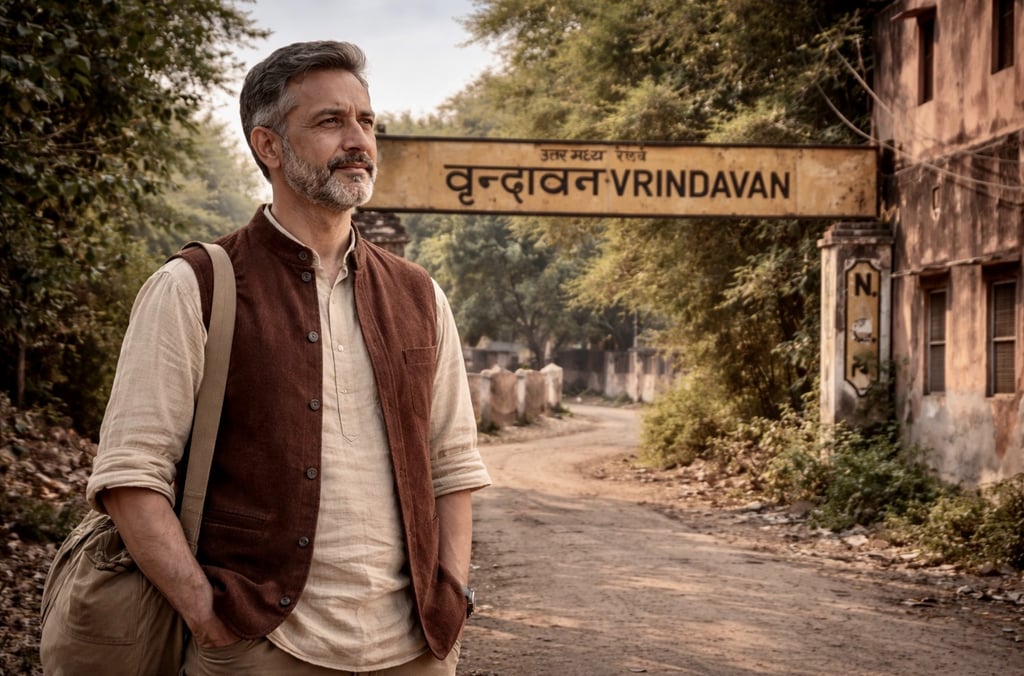
"Father Mark, Hare Krishna, good to see you this morning.“
“Hare Krishna, Jitendria. Nice to see you, my friend.”
“Yes, and such a nice morning. Thank you very much. Oh, Father, I would like you to meet my old friend Rohini-suta, but we just call him Rohini . He’s also from Texas.”
“It’s very nice to meet you, Father Mark. I didn’t know that you were from Texas. What part?”
“San Angelo—have you been there?”
“I’m sorry, I’m not even sure where that is. I’m afraid when Jitendria said that I’m from Texas—well, actually I am from New York. In truth I have only lived in Dallas for a few years.”
The piercing shrill of peacocks calling back and forth suddenly set off the chatter from a group of wild monkeys, filling the entire area with excitement. A man nearby struggled to keep his pet from jumping off his shoulder. Father Mark raised his camera.
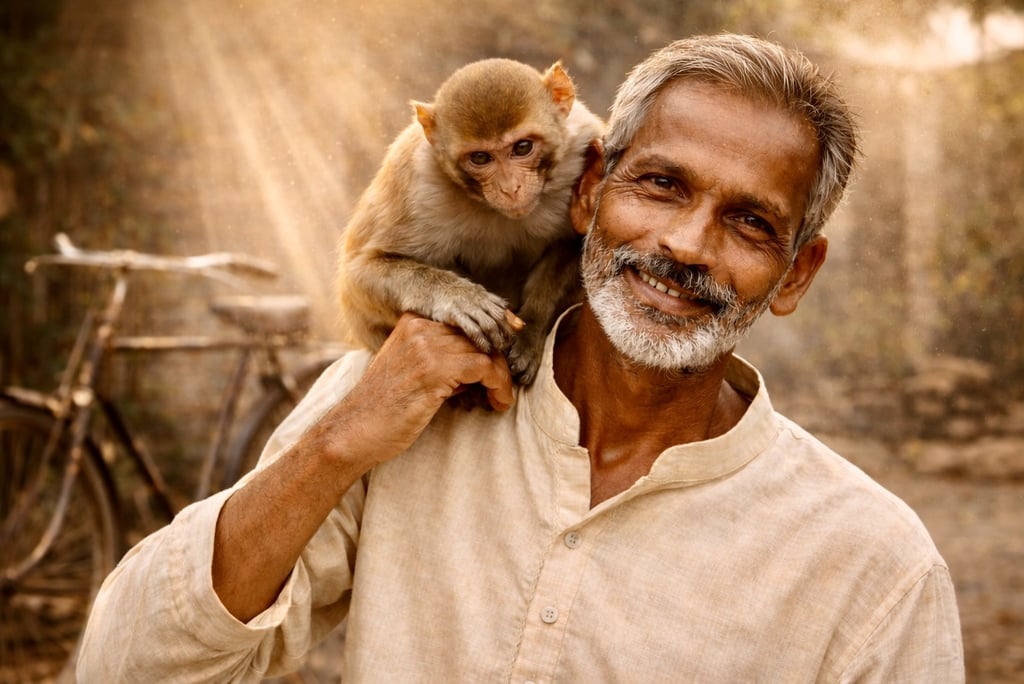
Jitendria laughed; “It seems like we’re not the only ones who are enjoying this morning. By the way I can’t stay long—it’s my turn to cook the lunch offering and I have to get ready. I’ll catch up with you this evening. I heard that Aindra is going to lead the kirtan tonight.”
Father Mark and Rohini said goodbye, agreeing to meet later that evening. Another volley of peacock shrills erupted. Watching as Rohini placed his prayer beads inside a cloth bag, Fr. Mark said, “Rohini , I was wondering if you’re busy today? Questions seem to be building up inside me.”
“No, I’m totally free. The only thing we’ll want to do later is go to the kirtan, but that’s not until this evening. Since it’s going to be such a beautiful day we can take a long walk. I was thinking of going down by the Yamuna river for starters, then we’ll just go wherever the Lord takes us.”
“Sounds great, to me. And kirtan—isn’t that like a devotional concert?”
“Yes, and it’s going to be a lot of fun and you’ll get to meet him.”
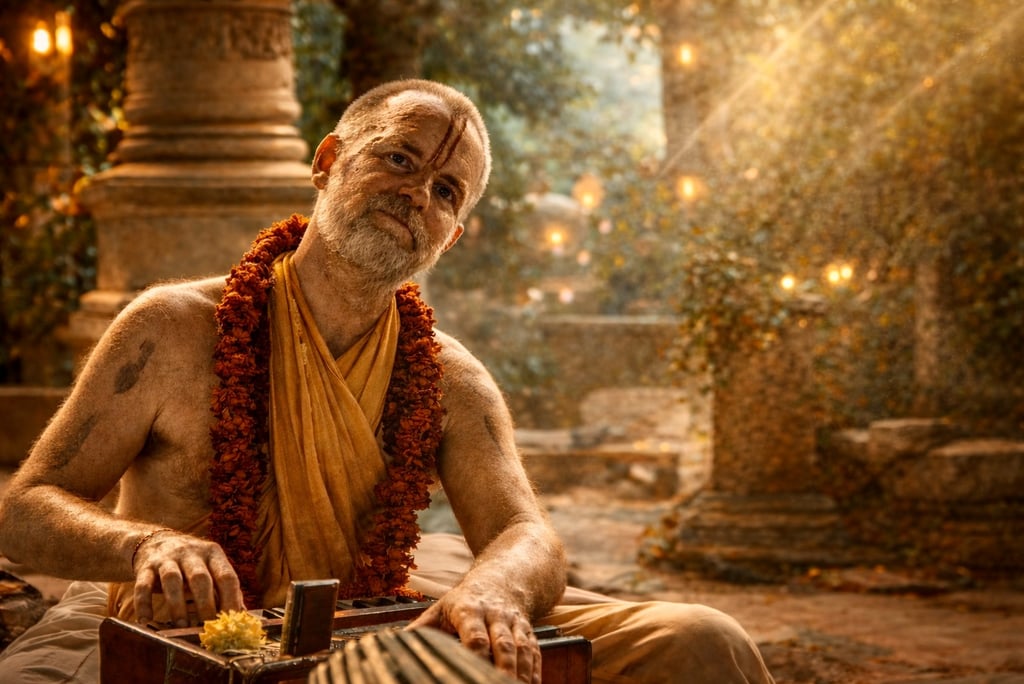
Before starting on their walk, Father Mark and Rohini ate breakfast at the Krishna-Balarama Temple: kitri, chapatis, mango-buttermilk lassi, and fried nuts served under a beautiful veranda.
Smiling at Fr. Mark, Rohini began to speak. “Last night Jitendria was telling me how he met you when you first arrived here. He also told us everything you had mentioned about Sor Maria de Jesus... With God all things are possible.”
“So you are familiar with Matthew 19:26?”
“Oh yes, that is one of my favorite verses. Sometimes I think people tend to forget about it.”
“I guess I’m a bit surprised that a devotee of Lord Krishna would so easily quote the Bible.”
“You shouldn’t be, Father. I think as you get to know us you’ll find that many of the devotees here come from Christian backgrounds. There are devotees here, right now, who are from Mexico, Russia and even South America. Naturally we are all good friends... and at one time many were devout Christians—I mean, they still are. If you inquire you will find how all the major religions have played a significant role in their lives."
“Please Rohini , I don’t mean to sound rude. I’m just trying to understand.”
“Father, you are with friends. Please feel free to ask us anything and I think you will be pleasantly surprised.”
“Alright, then—you just mentioned all those different Christian sects, including Catholicism. I’m sorry, but from my standpoint, instead it seems like a mass defection from the Christian faith.”
Rohini smiled and pointed to a place where they could get some water. Just as he had promised his dad, Mark’s camera was always ready for a good shot—pictures that one day he would show to all his friends.
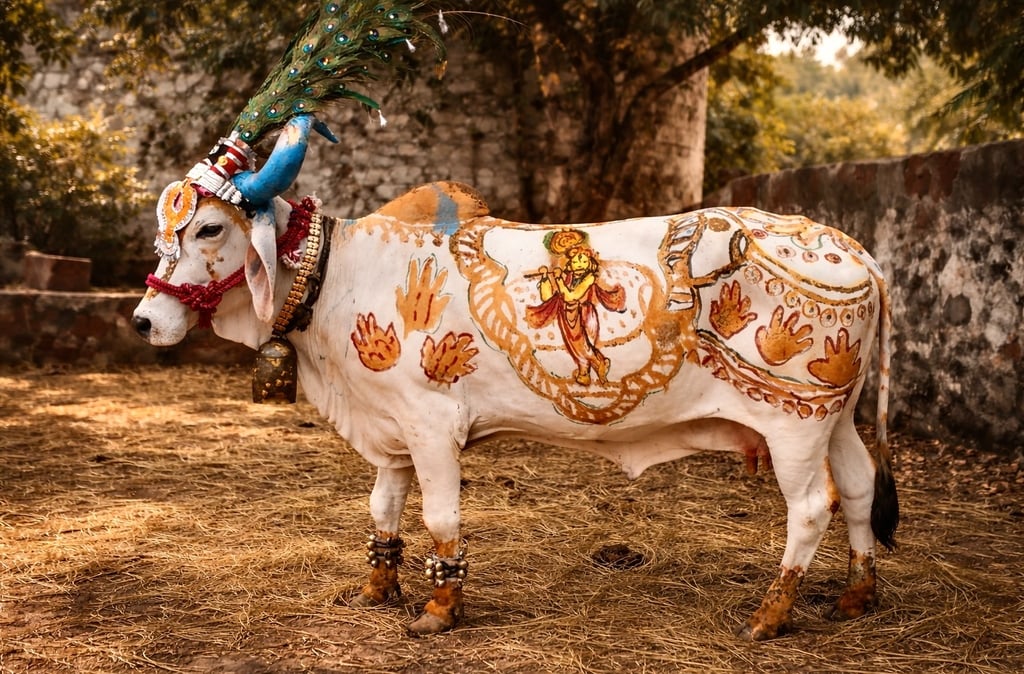
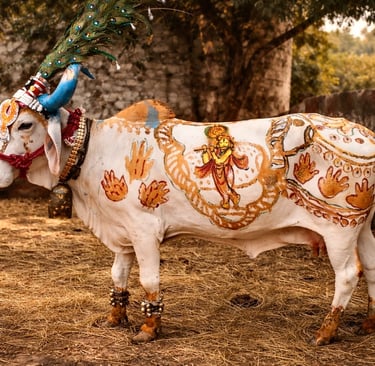
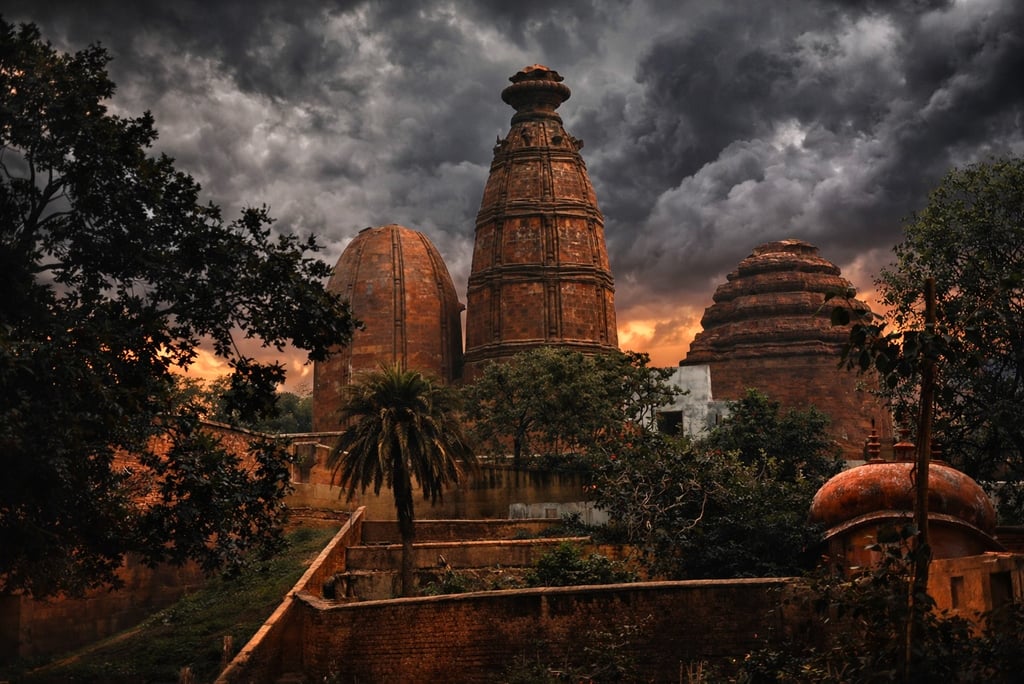
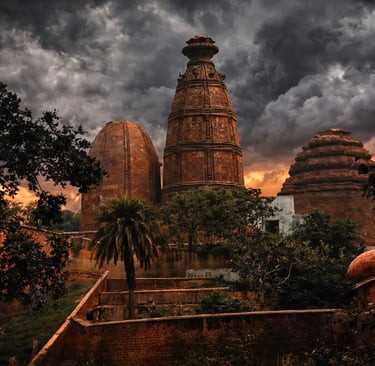
After watching Father Mark take his pictures, Rohini returned to Mark’s comment as the two men settled down on a bench. “I’m sorry Father, but I would have to say that just the opposite is true. I don’t know anyone who has forsaken Lord Jesus Christ. To describe it as a mass defection is just not correct.”
“Rohini, you seem to know your Bible. It teaches that the only way to God is through His Son, Jesus. Since you just quoted Matthew, I am sure you know Matthew 6:24: no one can serve two masters. I’m sorry, but I don’t see Jesus or Mary on your altars. Now granted, what I see is very beautiful but still, I do not see Jesus. So how can you tell me that you haven’t turned away from Him?”
“Believe me Father; I understand the sincerity of your questions. As for myself, I grew up in a family that never went to church, so for me it was never a question of leaving. Neither of my parents talked to me about God and my dad worshiped the golf ball more than anything else.”
Father Mark laughed and then said, “I think I have met a few from that cult myself, but I must say, you seem to know the Bible pretty well.”
“Not perfectly, but sure, I would be a fool not to have read it. Father, I am nearest fifty, and I guess over my lifetime, so far I have read the Holy Bible around three times. I think I started out with a copy of the Reader‘s Digest Bible that they published years ago for slow learners.”
Again both men sat laughing.
“Then, back in the 80’s I sat at my kitchen table and studied the Bible, extensively. That took well over a year, and thrown into the mix I have probably read close to 40 books, all penned by different Christians. As a matter of fact, one of my favorite books is one that you might even know of. Have you ever heard of the Catholic mystic and healer, Alan Ames?”
“What a nice surprise—sure I have. Last year he came to speak in San Antonio and I had the pleasure of meeting him.”
“Good, then perhaps you have read, "Through the Eyes of Jesus?" It is one of my favorite books... I've read it a couple of times.”
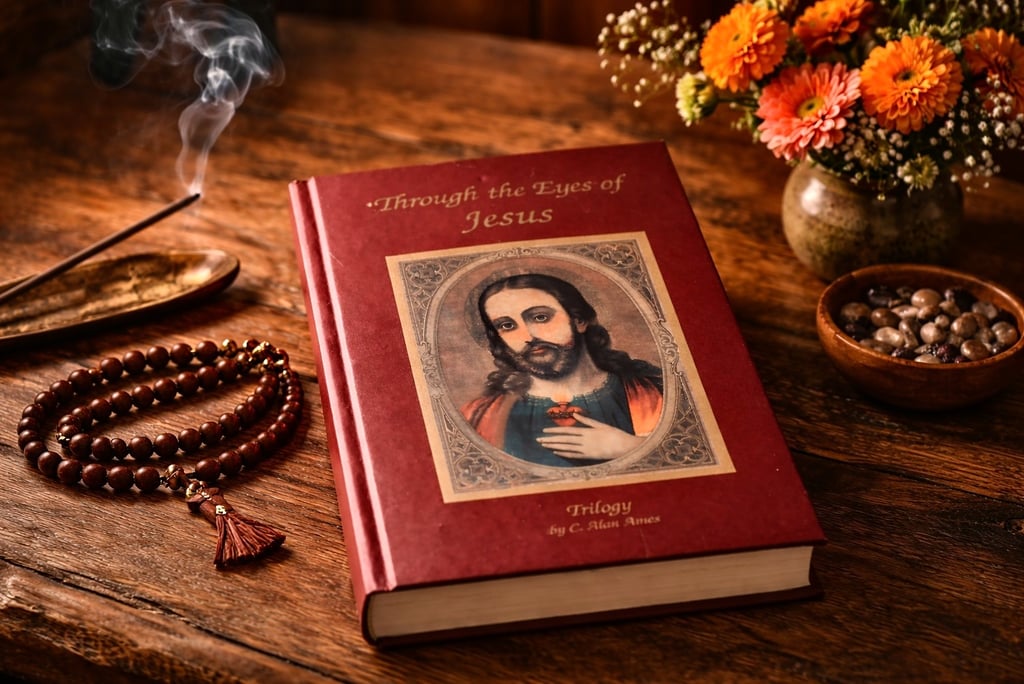
“My goodness, that’s quite impressive—yes, I have also read it, but only once.”
Father Mark paused for a moment to gather his thoughts and then continued.
“It doesn’t surprise me that you liked it so much—but then again it kind of does. I mean—I guess I wouldn’t expect a devotee of Lord Krishna to read a book penned by a Catholic mystic.”
Rohini laughed as the two men started walking again toward the Yamuna.
“I’m actually looking forward to reading it again. Another of my all-time favorites is, "The Way of a Pilgrim." You may not know about it because it falls more in line with the Eastern Orthodox camp. I can’t tell you how many copies I’ve read and ordered over the years. I keep giving them all away.”
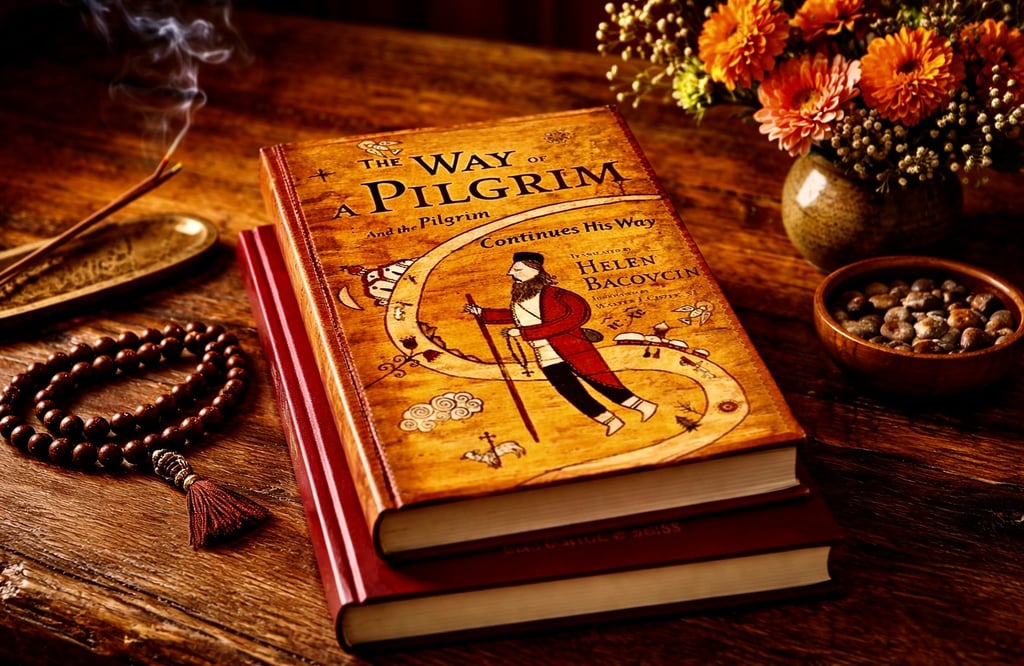
Father Mark again laughed. “No, I’m afraid I haven’t heard of that book. As I’m sure you know, as Catholics we do not normally read outside our faith. Why did you find that book so interesting?"
“Well, the book follows the life of a Russian pilgrim in his search to understand, Thessalonians, 5:17.”
“Yes,” Father Mark said, “the verse that commands us to pray without ceasing.”
“That’s correct and as I was saying, the book follows this peasant in his quest to understand the practical meaning of that verse. You should read it—it’s an adventure full of all the amazing things that happened to him as he wanders across old Russia, asking everyone, how do you pray without ceasing?
“And then as you read it, the book’s focus becomes more and more intense as it magnifies the glories of chanting the Holy Name of Jesus Christ. To be sure, there are many Pentecostal books that also address the spiritual value of the Lord’s Holy Name but for me, none of them can match "The Way of the Pilgrim" for its spiritual excitement and importance. It’s beautifully written.
“So you have read books all across the spiritual spectrum.”
“Oh no, Father, I wouldn’t use such a wide paintbrush to describe what I’ve read. One book did cover world religions but I’ve mostly read Christian books— Pentecostal, Catholic and Eastern Orthodox. But of course I have concentrated mostly on the books written by my spiritual master, A.C. Bhaktivedanta, but we just call him Shrila Prabhupada.
Fr. Mark then spoke. “I can see from your prayer beads that chanting is a big part of your faith. In fact, all around me people are chanting the Names of God.”
“Yes, and this is why I have read so many books about the Christian tradition of the Jesus Prayer. You would be amazed at the common ground our two religions share.
“Jitendria mentioned that after your father had read some of Prabhupada’s books, he asked you to come here. I hope your journey is proving to be worthwhile.”
“Thank you very much. Yes, this is all very intriguing but honestly, at times a little difficult for me to see past my prejudices.”
Rohini smiled. “That’s quite understandable—after all, one of the cornerstones of Christian faith is that it, and it alone, has the most authentic knowledge of the one true God and that the way to the Father lies uniquely through the Son. He alone knows the Father and, no man cometh unto the Father but by the Son.” (John 14:6)
“Very well said, Rohini.”
“Thank you, Father, but as I see it...as I said, not having religious parents in my life has actually been a blessing. It has given me certain latitude that I don’t see in a lot of other believers. I mean, for many Americans it almost sounds patriotic to say, ‘We Christians have the most authentic knowledge.’ But then I can turn to the same book and it tells me in First Corinthians: that we can see and understand only a little about God now, as if we were peering at His reflection in a poor mirror. Now all I know is hazy and blurred. And doesn’t John 16 tell me that there is so much more to know?
“This is what I mean, Father—that my upbringing let me be free. So many Christians are unable to see beyond the stone walls where they worship. Not only are they unwilling, they are even afraid of looking outside their faith—as if a curse will befall them if they were to even walk into one of our temples. Honestly, this just saddens me to no end.
“Father, I meet Christians all the time and honestly, I see that they are missing out on so much. For example, how many Methodist know about Maria de Jesus, or Bernadette Soubirous—or John Traynor.”
“Who is John Traynor? Wasn’t he Lutheran... or am I thinking of someone else?”
Rohini smiled. “Oh no, John Traynor was 100% Catholic, but in a way it doesn’t surprise me that you haven’t heard of him. So you can just imagine how many non-Catholics have never heard of him, either.
“That’s interesting. I see what you mean.”
“Father, because you are a Catholic priest, I know you’ve heard about Bernadette Soubirous.”
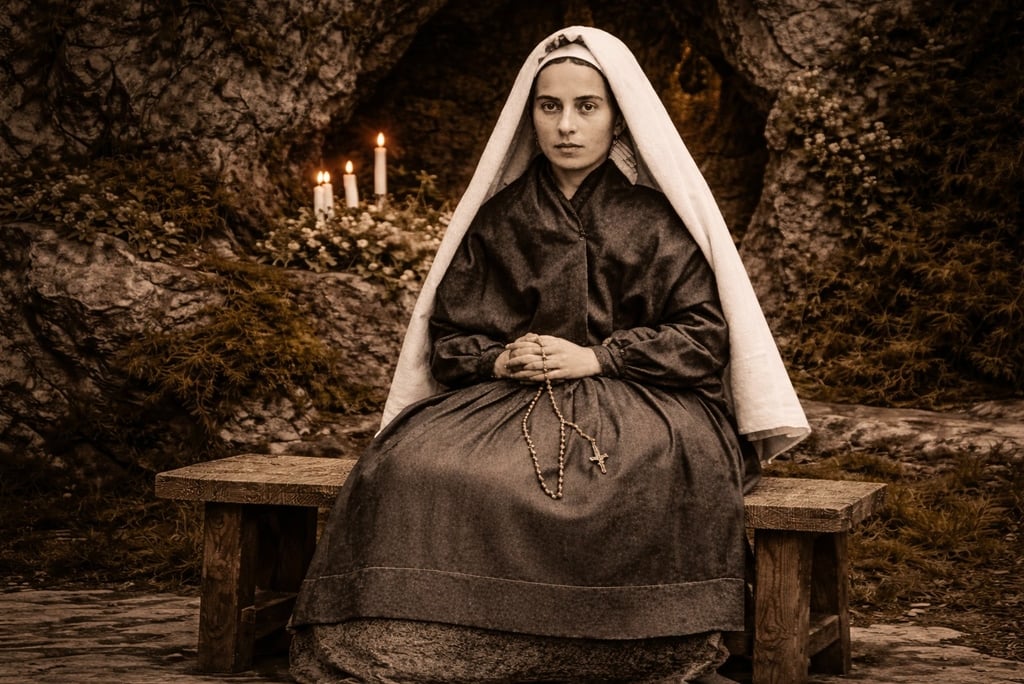
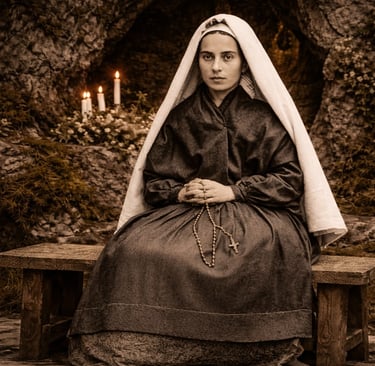
“Oh yes, she is one of our greatest Catholic Saints. Later I will have to tell you about my adventures in Lourdes when I visited France a few years ago.”
Rohini smiled and said, “Yes, I’d like that very much. Father, I wish everyone could read about her. What the heck, last year I even bought the movie.”
“Again, I’m a bit surprised that a person like you, so dedicated to Krishna, would take the time to learn about a saint from a totally different religion.”
“Totally different? Perhaps on the surface but I don’t see it that way at all. But you’re right, I am dedicated to God. Not only is the story of John Traynor very much connected to her legacy, it also places a greater magnification on the glory of God—and that simply makes me feel good inside.”
Smiling, Father Mark then said, “Well, once again I’m striking out. Who is he?”
“I will, but before I tell you, would you please say a few words about Bernadette to kind of set the stage.”
“Yes, thank you Rohini, I would be glad to. First of all, when I think of Bernadette and Lourdes, there are a few things that really stick with me. And, of course, I have watched that movie, too. I mean—first you have this young girl who comes from the poorest family in her village. She is in bad health, uneducated, dressed in hand-me-downs, but in spite of all of that she is blessed. As you saw in the movie, hundreds of people followed her to see what she would do next, and I am sure that many were hoping to see what she was seeing—but in fact, all they ever saw was an empty cave located next to their village dump with a little girl inside it, staring up at its walls and sometime speaking to herself.”
“Rohini, do you remember—on her ninth visit to the Grotto, when Bernadette entered into a spiritual trance? It is then that the Virgin Mary told Bernadette to drink a little water and eat the plants that are at her feet. Bernadette is talking to Mary but no one else can see Her. Suddenly everyone watches as this uneducated girl in her plain village dress gets down on her hands and knees and begins scratching at the ground with her fingernails."
Fr. Mark continued, obviously happy to tell her story again. “Everyone knew that there wasn‘t any water in the cave but still she claws at the earth and slowly finds something wet. With great difficulty she tries to collect a little bit of water in the palm of her hand but it’s mostly mud. Wanting to obey, Bernadette keeps trying to take a sip of water. Eventually she manages to wet her tongue but all that anyone can see is a young girl with mud all over her face.
“And what’s worse—when Bernadette obeys Mary’s instructions to eat the plants—to everyone’s amazement she uproots some weeds and places them in her mouth, as well. As I said, hundreds of people are watching her every move.”
“On another occasion while she was in a trance looking at the Virgin Mary, an old lady pulled out a long needle and poked Bernadette hard, wanting to prove that everything was a hoax—with enough force to actually pierce her skin, but Bernadette never flinched and her trance never broke. Another woman lit a candle and placed the flame under Bernadette’s hand, but again there was no reaction. Bernadette may have passed those test but to everyone watching, the poor girl often looked liked she had gone totally mad. As I said, on her 9th visit to the grotto, on February 25th, 1858, her mouth and cheeks were smeared with mud and she was chewing on weeds—crawling on her hands and knees—all the while talking to an invisible person. For the unfaithful the scene became disgusting and many started to sneer and called her names.
“Since you’ve read about her, Rohini, you know that these events are true. However, over the next couple of days where Bernadette had been scratching in the dirt, water began flowing and from that day on, the fame of Bernadette and the healing waters of Lourdes has drawn millions of people from all around the world to visit this sacred place.”
Rohini then said, “Thank you Father Mark, what a beautiful story. I never get tired hearing it.”
“Yes, Bernadette is certainly one of my favorite Saints. I was even privileged to give an outdoor mass at the grotto several years ago. So please continue with what you were telling me. What was that person’s name, again?”
“Thank you Father. One day I would also like to visit the grotto, myself... and as far as John Traynor, I read about him after looking in the library for more information on Bernadette. Of course there are many books about her, and that‘s when I accidentally found the article about John Traynor. I forget who wrote it but it was written by a priest who had something to do with China.”
Nearly two hours had gone by. Walking on a footpath along the river, Rohini then began to tell Fr. Mark what he had read. Mark motioned to an old bench and both men sat down. From their vantage point they could see various men talking, some even stretched out sleeping in the morning sun.
“Like I said, I forget the priest’s name who wrote the story, but he mentioned that those who saw Mr. Traynor when he visited Lourdes in 1923—that instead of a young man in his prime, rather they saw a cripple with obviously very few days left to live. His suffering was enormous. Besides being partially paralyzed, his afflictions included daily seizures, a limp right arm, open wounds, and a gaping hole in his skull.”
As Rohini continued, Father Mark looked a bit pained as he listened carefully.
“What happened is that during a battle in World War I, a piece of shrapnel had struck him in his head while he was carrying a wounded officer off the battlefield. Although he was unconscious for five weeks, he eventually recovered—enough so that he was able to fire a rifle again. The war was still raging and every able-body man was desperately needed. This time Traynor was sent to fight in the bloody battle at Gallipoli where the Turkish Empire squared off against the British in 1915.
“Using steamships to transport the troops, the British soldiers stormed the Turkish positions and Traynor was part of the first wave. Just about everyone around him was killed including a Catholic Chaplin. Although he somehow escaped unscathed, his luck ran out four days later when he was sprayed with machine gun fire from above. He was hit in several places, including in his upper arm. Although he wasn’t outright killed, this time he would never walk or use his arm again."
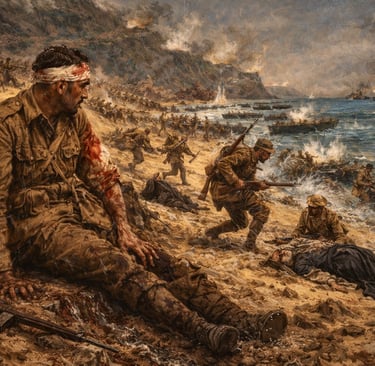
"Grievously wounded, he was then taken to Egypt where the best surgeons available worked on him but after four operations he was left an epileptic ghost. The doctors insisted that they needed to amputate his useless arm but John refused to consent. Because his seizures continued, once again his military doctors operated, this time to remove more shrapnel from his brain. However, this only left John with a hole in his skull that never went away. To protect the exposed brain tissue the doctors covered it with a silver plate.”
Rohini continued: “Sadly, none of the operations helped John and he was having as many as three seizures a day. Finally discharged from the army with a full pension, he arrived back in Liverpool to be cared for by his wife and children. His legs were partly paralyzed and he was unable to stand or walk. He had three open wounds on his body and his right arm was completely useless. Finally, arrangements were made to send him to a special hospital for incurable patients.”
“So this is how John Traynor was injured. The article also mentioned his religious beliefs, starting with his devout mother. Although she died when John was a young boy, her short life was completely devoted to the Virgin Mary—going to Mass and taking Holy Communion. She would go to church every day while few others were so committed. Influenced by his mother, John also grew up with an unflinching love for Mary—one of the few things about John that wasn’t shattered by the war.
“By 1923 the famous healing waters at Lourdes had become known throughout England and one day a friend told John how their local parish was planning a trip to the Holy Grotto.
“Selling a gold coin for the down payment and later, even his wife’s jewelry, John was insistent opon going, although both his priest and doctor repeatedly discouraged him. They both felt he would die on the way, and this wasn’t far from the truth. On three different occasions doctors wanted to remove him from the train and take him directly to a hospital, such was his worsening condition. The only reason they didn’t was that there were no hospitals along the route that the train took.
“On July 22, 1923 John finally arrived in Lourdes and was immediately transferred to a small hospital near the famous grotto. The Virgin Mary must have been watching over him because there was a young woman there from Liverpool who recognized him and immediately changed his week-old bandages.
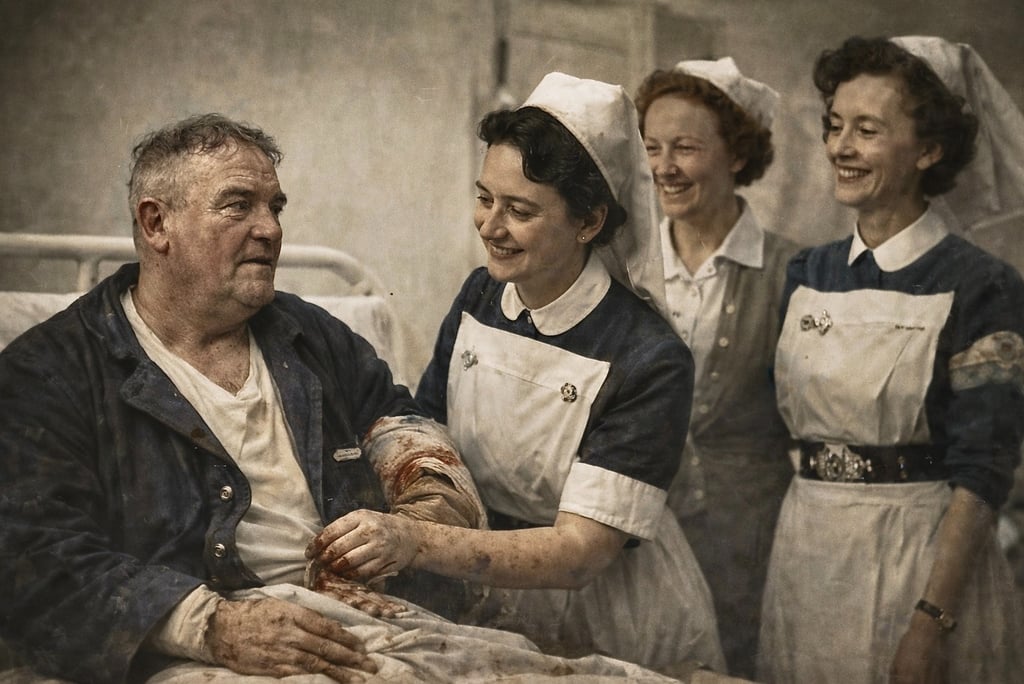
“While this was comforting, John’s condition continued to deteriorate at an alarming rate and no amount of nursing was going to save him. At times he was bleeding from his mouth; biting down on his own tongue as he suffered one seizure after another. One of the ladies from Liverpool even wrote to his wife, telling her that there was no hope for John and that he would never leave France alive.
“However, with unflinching faith in the Virgin Mary and the holy spring that she had revealed to her beloved Bernadette, John kept insisting that his wounds be submerged in the healing waters.
“On his ninth visit to the sacred springs, yet another seizure took hold of him and the men in charge wanted to remove him from the bath. Refusing to go, John applied the break on his wheelchair with his good hand, forcing the attendants to leave him in. Later, John said that actually, that was the last time he ever had an epileptic fit."
As Rohini told the story, Fr. Mark found himself glued to his every word. “Even so, with only two days remaining before returning to Liverpool, John was still suffering from his other conditions. Thinking of his wife, he took his last coins to buy her a souvenir before taking his final bath in the holy water. This time, however, something very unusual happened, but the men in charge figured that his violent agitation was simply another seizure. They forcibly took him out of the water, but John knew that this time things were different. The agitation was coming from his paralyzed legs—not from another fit.
“By now John was much too weak to resist the strong men who forcefully placed him in his wheelchair. Needing to do something with him, it was thought best to take him to where the Holy Sacrament was being given.
“Stopping in front of each wheelchair, when the Archbishop saw John sitting there, he stopped and blessed him, at which time Traynor could tell that another dramatic change had taken place—this time with his withered arm. For the first time in years John was free from the pain that had been his constant companion."
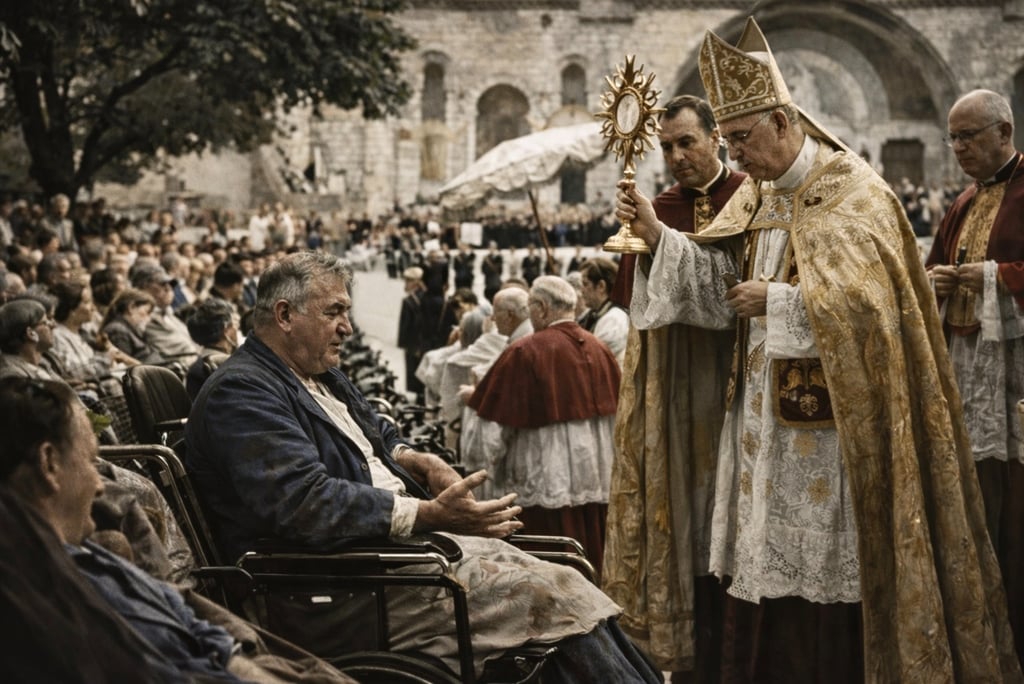
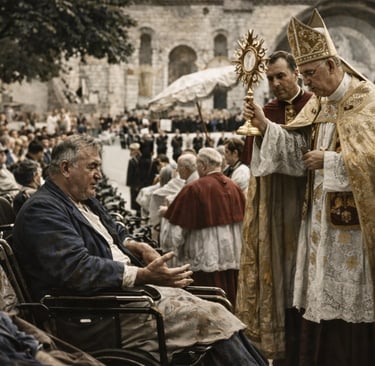
“Because of John’s history of frequent seizures, when he suddenly tried to get out of his wheelchair, the men who were assigned to watch him quickly subdued his efforts. Thinking that he was about to be hysterical, they knocked him out with a powerful injection. Later that day more hypodermics were administered, but by the next morning the effects had worn off. For the first time in years, John effortlessly stood up and after shaving, began praying on his rosary.
“Inspired to visit the grotto, John not only walked, he ran. At first he ran from the men who had been ordered to guard against his sudden outburst, and then he ran toward the grotto to thank Mary, the Mother of Christ. This was a distance of nearly 300 yards. In hot pursuit were several strong guards but even though John was running barefoot over a gravel road, he easily outran the two men chasing him. By the time they finally caught up to him, John was lost in prayer before the beautiful statue of Mary and for twenty minutes he prayed in silence.
“Since his mother had taught John from an early age to show gratitude for God’s blessings, kneeling in front of Mary and without a dime to his name, all he could think of was to promise that from that day forth, he would give up smoking cigarettes.
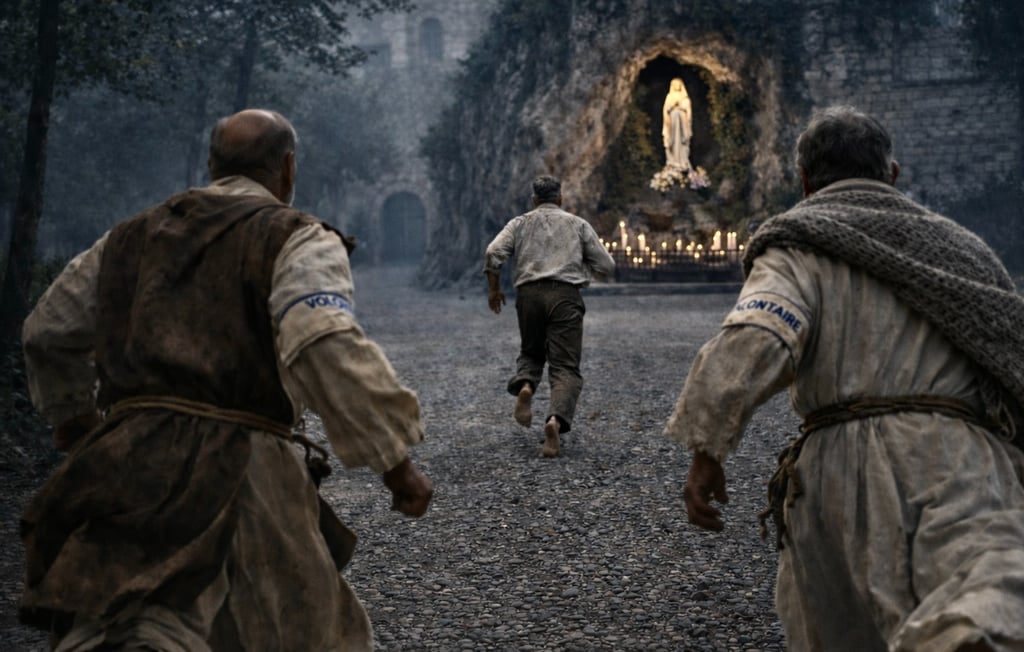
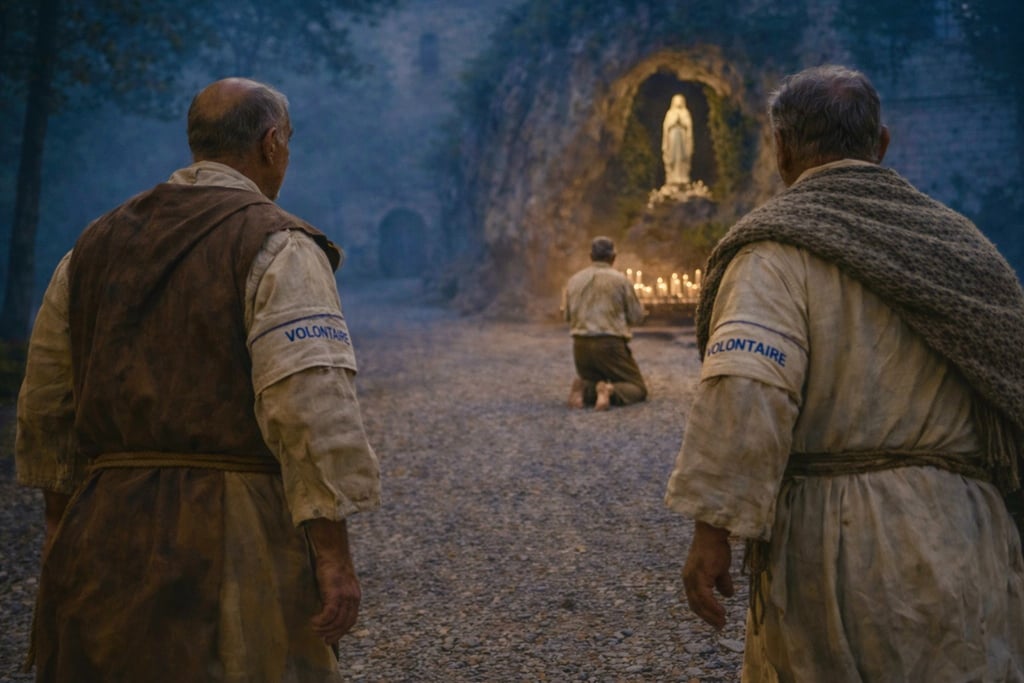
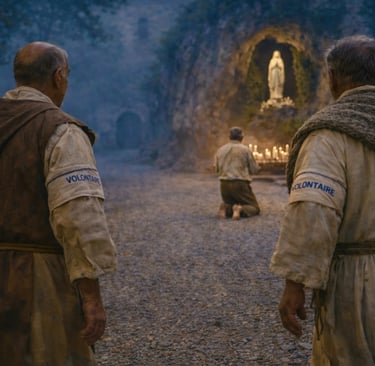
“Later he was summoned by the same priest who back in Liverpool had so strongly resisted him making the trip in the first place. When the priest saw John, he started to cry.
“Early the next morning before boarding the train back to England, three doctors testified to the fact that unlike when he had arrived, John could walk perfectly normal. He had recovered the use and function of his right arm; had normal sensation in his legs; the hole in his skull had nearly closed; all his ulcers had healed; and he was completely free from the epileptic fits that had tortured him for years.
“After his return to England, John began his own business of hauling and delivering heavy sacks of coal all across Liverpool. Eventually he employed a dozen men working with four trucks. Although the military refused to stop his full pension, there was not a job in his company that he could not do. John and his wife ended up having three more children—the girl they named, Bernadette.
“Three years later Traynor returned to Lourdes to be examined again by the Medical Bureau, consisting of 6 doctors. Several of the doctors had examined John before his cure in 1923 and once again they found no trace of epilepsy, paralysis, or atrophy in his right arm. Both his pectoral and shoulder muscles were fully restored and his badly injured right arm was able to function nearly perfect. As for the hole in his skull, all that remained was a slight indentation in the bone that the doctors could feel with their fingers.
“Finally the Medical Bureau declared that John Traynor had in fact experienced a miracle of the highest order. His military records clearly stated that the nerves in his right arm had been severed. Yet, on that monumental day in Lourdes when John was blessed by the Virgin Mary, his arm was completely healed.”
Turning to his new friend, Rohini then said, “Well, Father, again I am reminded that when God wills it, the most remarkable things can occur.”
“Rohini, thank you for telling me about him. Hearing this story makes my memories of Lourdes and my faith in Mary all that more meaningful. I’m curious, what helped you the most along your spiritual path?”
“Well, Father, besides the freedom to explore God on my own, I sincerely believe that what is required is a special measure of God’s grace. I honestly believe that being blessed by God is paramount. As far as my life, in my heart I just know that long ago someone prayed for me. And I mean someone very dear to Jesus. This is what made all the difference in my life. God is bound by the love of His devotees—those who are devoted to Him. Seriously, I was never qualified in any way, except for a one-way ticket to hell.
“Secondly, I was instantly attracted to the beautiful sound of God’s Holy Name: Krishna. Now and then I think back to 1967. I had no idea who Krishna was, except that He had something to do with the ancient history of India.
“Of all the things I experienced back then…” Rohini paused for a few moments while closing his eyes.
“Father, I had been living in Southern California during the birth of the hippie movement and was very much a part of it—and yet, it was only this strange name that I took with me when I finally left. The very instant that I heard, Krishna, I was stunned by its beauty. The sound entered my heart and has never left; shaping my destiny in so many ways.
After resuming their morning walk, the wide expanse of Yamuna river stretched off to their left. Children were playing in the water and dozens of boats were neatly lined up. Just past a temple that was ahead of them, both men were struck by the obvious devotion of an old man as he stood in the holy river praying to Lord Krishna.
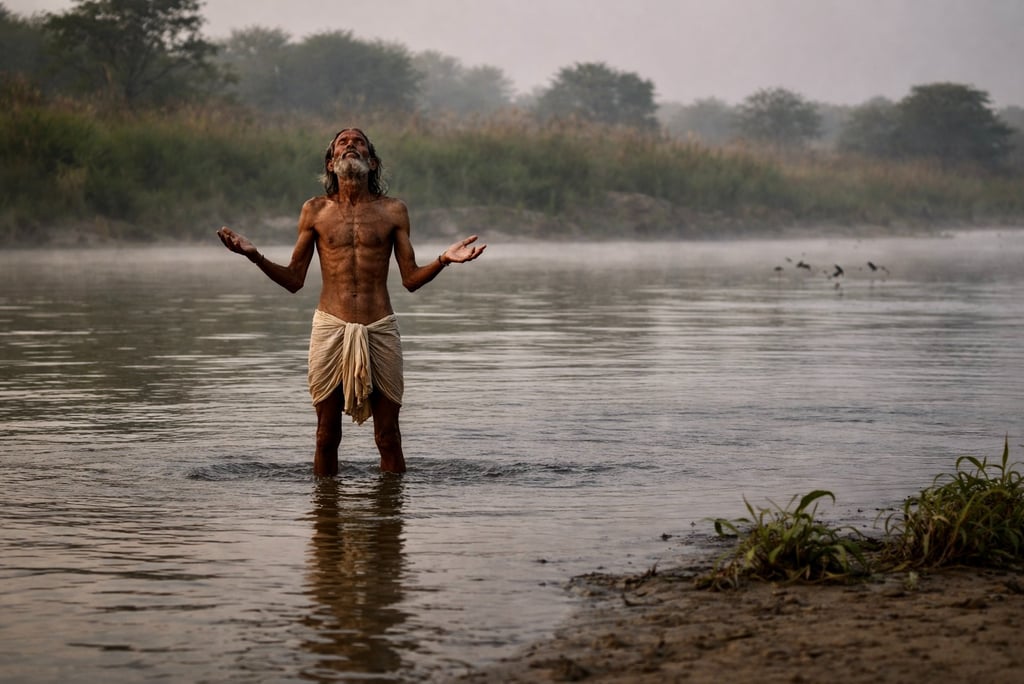
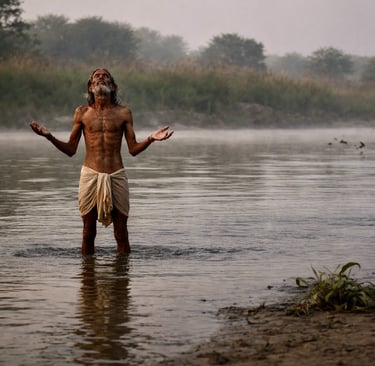
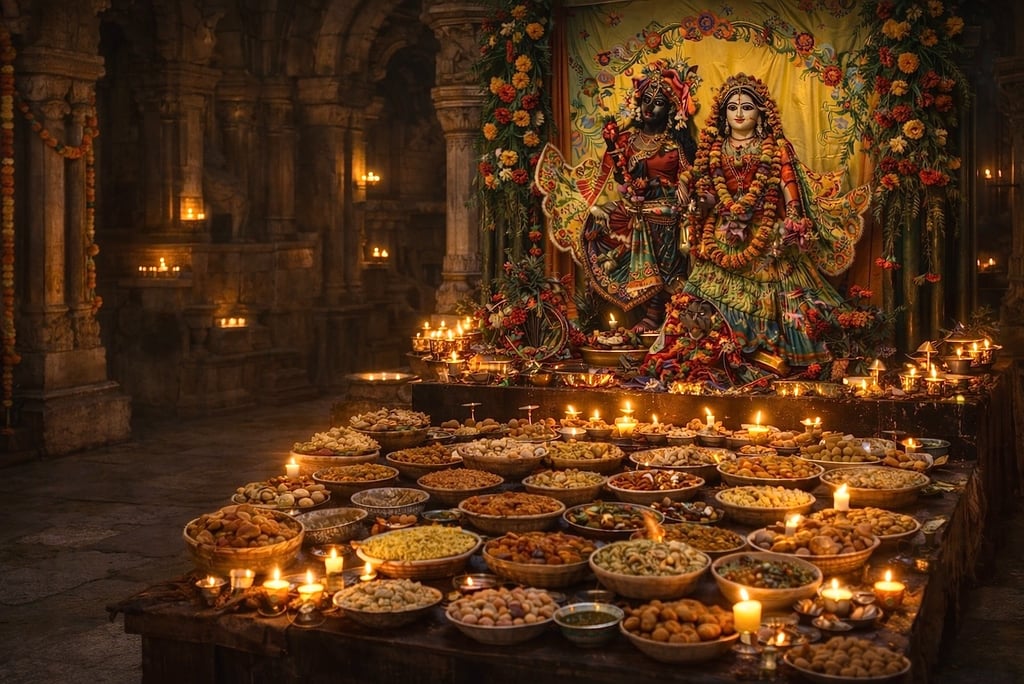
Rohini chuckled. “I’m sorry Father, but is it really that much different?”
“Well, from my perspective the differences seem enormous. But I came to Vrindavan to learn and besides, I promised my father that I’d keep an open mind. Rohini, I’m sorry—hearing all these bells is simply reminding me of how different we truly are. It’s difficult enough to even count how many different statues, sacred rocks and pictures are on your altars—and right now as we speak, plate after plate of food is being placed before them. I guess I’m wondering why so much effort is being put into all this cooking. Again, I’m sorry—the only thing that remotely comes to mind when seeing this is idol worshiping.”
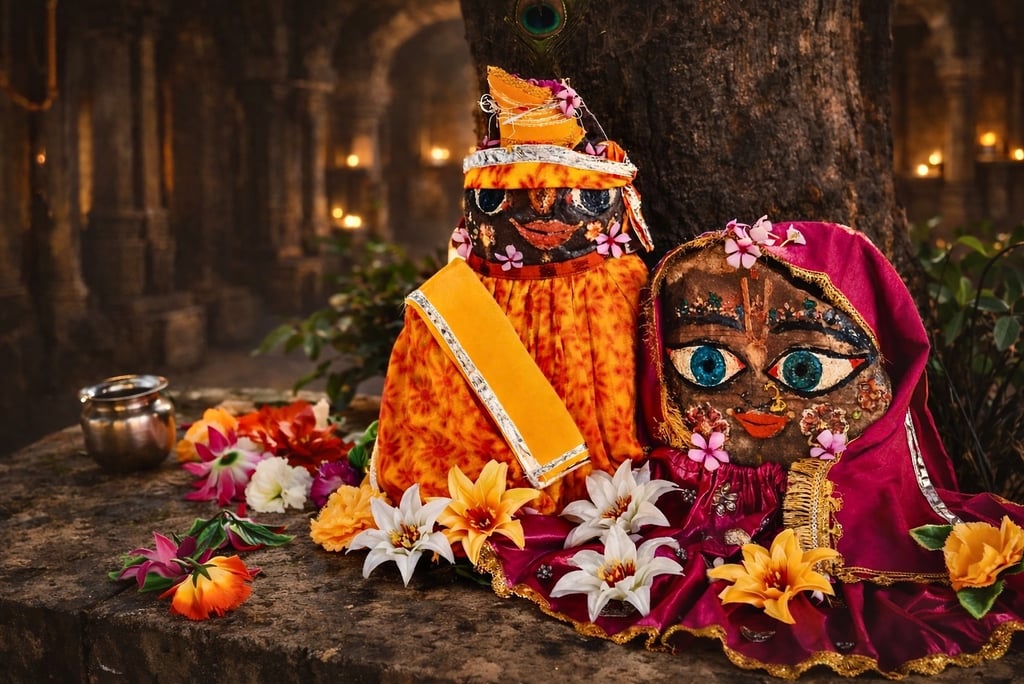
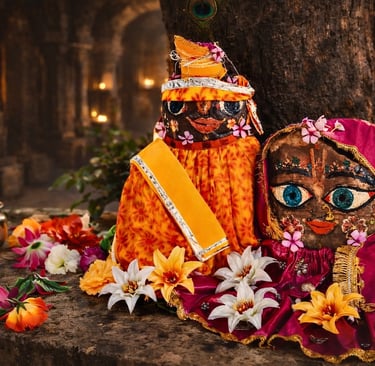
Rohini unscrewed the cap on his bottle and took a drink. Looking at Fr. Mark he began to speak. “Father, what you are saying reminds me of something in First Corinthians, 8:4. I think that’s where it is. Doesn’t that say, Concerning the eating of food offered to idols: we know that no idol is real in this world and that there is only one God?”
“Yes, that’s right: 8:4.”
“Okay, then—the Holy Bible is saying that there is only one true God and that idols are just dead objects, void of spirit.”
“That’s absolutely true.”
“Alright Father, we both agree. Who in their right mind wants to worship a lump of cement, so to speak? Nobody does. Instead we both want to worship the one true God.”
“OK, I follow you so far.”
Rohini smiled and said, “First let me say that I’m a bit surprised that as a Catholic you find the Deity worship, here, so foreign. If you were a Baptist minister I think I would probably expect a strong objection—but with your own history of icons, statues, and pictures, I am a bit confused.
“In fact, I even remember the time I visited the San Luis Rey Mission in Oceanside, California and saw several women carrying little statues of baby Jesus in pouches around their necks. I remember thinking what a wonderful way to focus their love.”
Looking a bit uncomfortable, Father Mark then laughed. “Well, God bless the Baptist but I’m not one of them.”
Again the two men were laughing. “But at least I am willing to hear your perspective on this. Needless to say I am very curious about this whole matter.”
“Thank you Father. Although I don’t live in California any more, I was out there last year visiting my sister and had the chance to listen to a lecture given by Father Hieromonk Ireni at the Saint Barnabas Orthodox Church in Costa Mesa. True, he’s not Catholic, but I remember how he spoke for about an hour, and one of the things he talked about was the story of Jesus healing the blind man, in John 9:6.”
“Yes, Rohini—that is a dramatic story and actually starts with the first verse:
"As He went along He saw a man blind from birth. His disciples asked him, 'Rabbi, who sinned, this man or his parents…that he was born blind?'
“Neither this man nor his parents sinned,” said Jesus, “but this happened so that the works of God might be displayed in him. As long as it is day, we must do the works of Him who sent me…”
"After saying this, He then spit on the ground, made some mud with the saliva, and put it on the man’s eyes. 'Go,' Jesus told him, 'wash in the Pool of Siloam.' So the man went and washed, and came home seeing."
“Yes, that’s the verse.”
Rohini then continued. “I remember how Father Ireni then asked, "why didn’t Jesus just clap his hands or simply say, you are healed? Why the spit and the mud? Why all the drama?"
“Of course, Father Ireni answered the question himself and said that Jesus wanted to show how gross matter could be transformed into a spiritual substance.
“For example, Mary of Egypt prayed to an icon of the Virgin Mary. Someone might say that the painting was simply a common piece of wood with some pigments on it... however, as a result of her faith in the icon, her entire life was transformed from an insatiable nymphomaniac to a Saint of the highest order. For some 40 years she lived alone in the desert on the far side of the Jordan River. We know about her life because one day she met Saint Zosimas who was the most advanced Christian ascetic at the time. He mentions how when he looked up at her while they were both was praying, to his amazement... "she was lifted off the ground." Did she receive this grace from mere paint and wood? Was it only mud and spit that Jesus rubbed on the eyes of the blind man? No, from what I’ve read, history just doesn’t point in that direction."
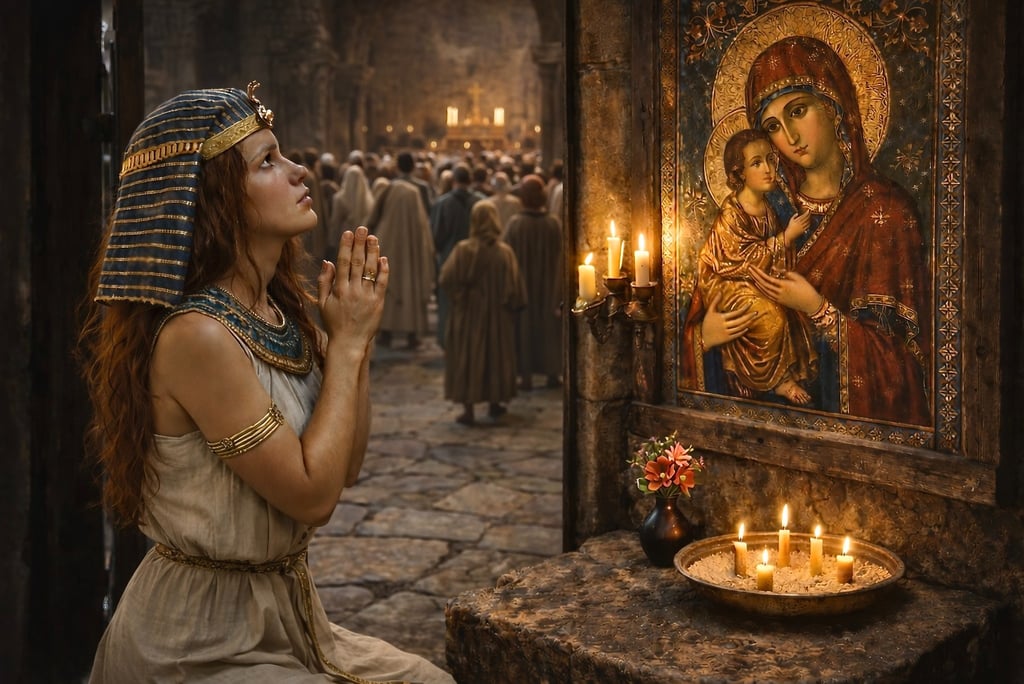
By now, Rohini and Mark had left the river to explore the streets of Vrindavan where they stopped to watch a boy loading ice on a cart.
Vrindavan is a village of unparalleled beauty. Father Mark was more than pleased at what he saw and his decision to bring along a dozen rolls of film gave him the freedom to take as many photographs as he wanted. Every street they walked down was rich in color, smiling children, art, and history.
Although it would have been easy to become sidetracked by this charming village, both men were equally interested in their conversation. Sitting on a bench across from an ancient temple, Rohini continued.
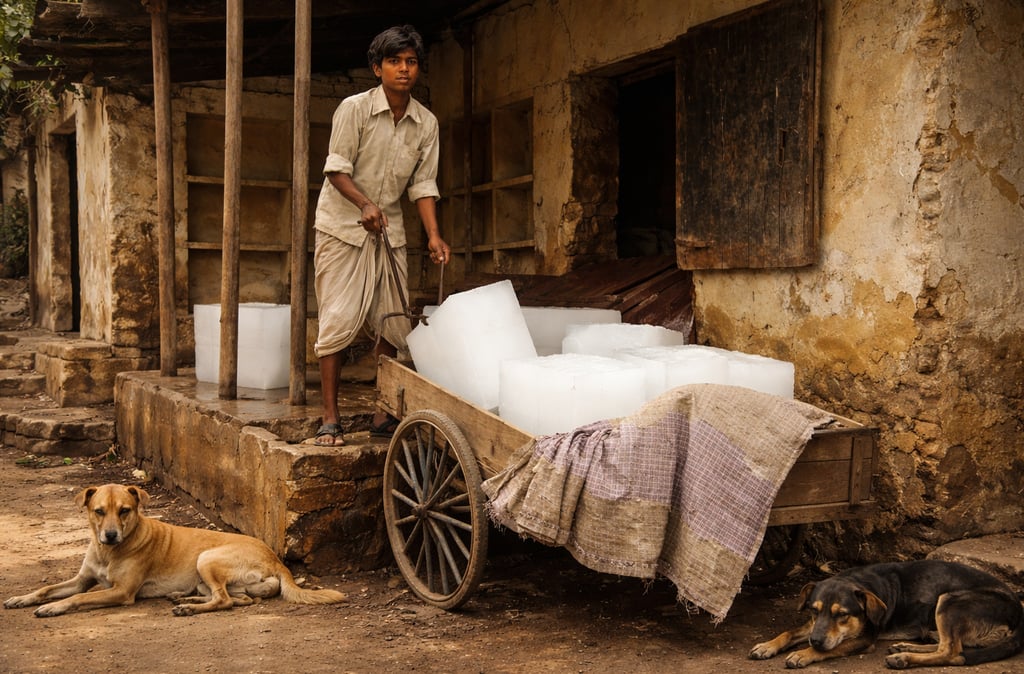
“Father, I hope you are getting my point. And as far as all the food that you saw on our altars, how is that any different from the Catholic practice that millions of Catholics celebrate every day? And of course, by this I mean the Holy Eucharist. Doesn’t the priest transform the ordinary bread and common wine from purely mundane elements into something extraordinary and holy: the body of Christ? And then, much in the same way that we are seeing today, do not Catholics come forward and consume these offerings?
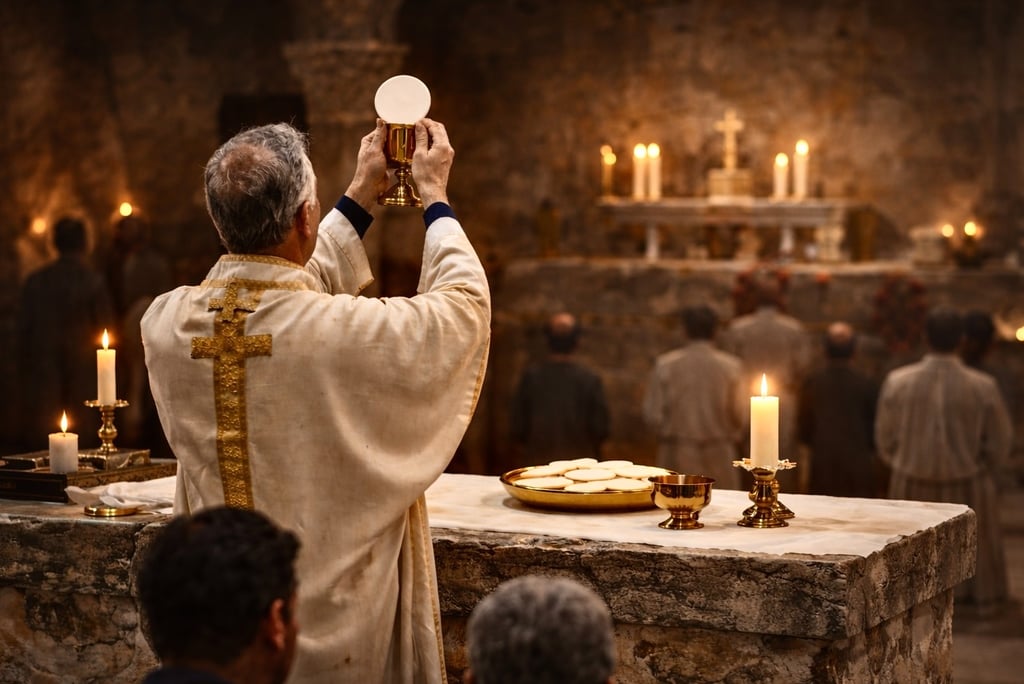
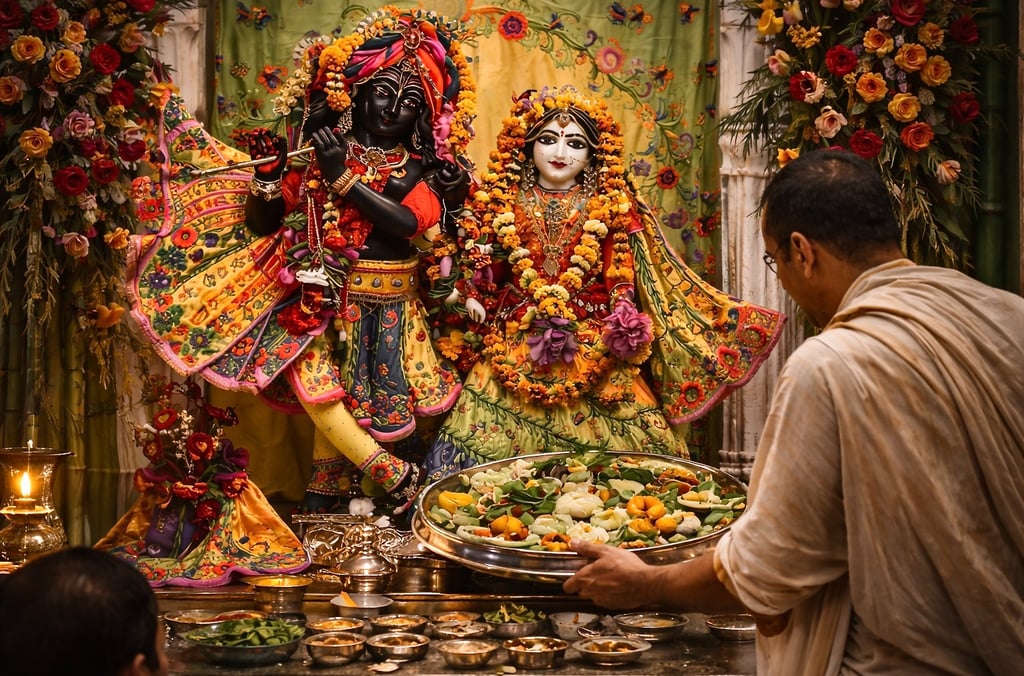
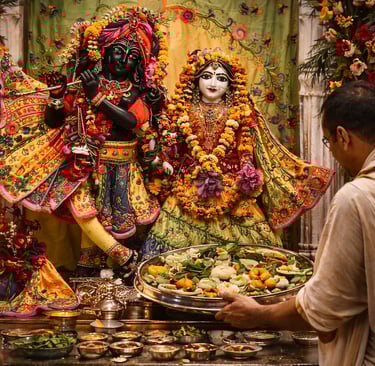
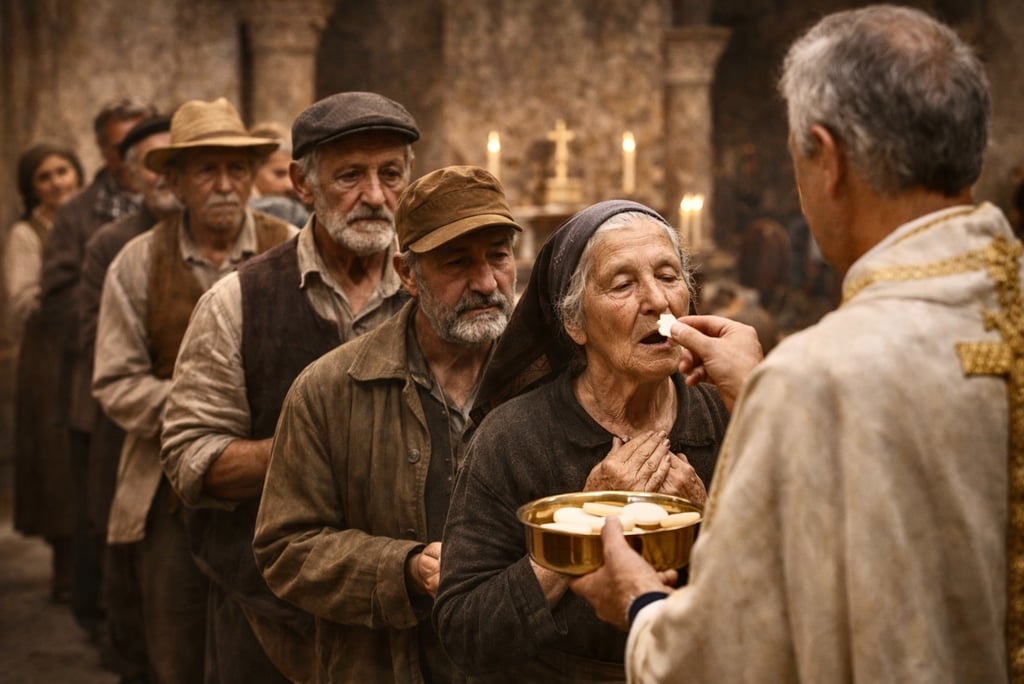
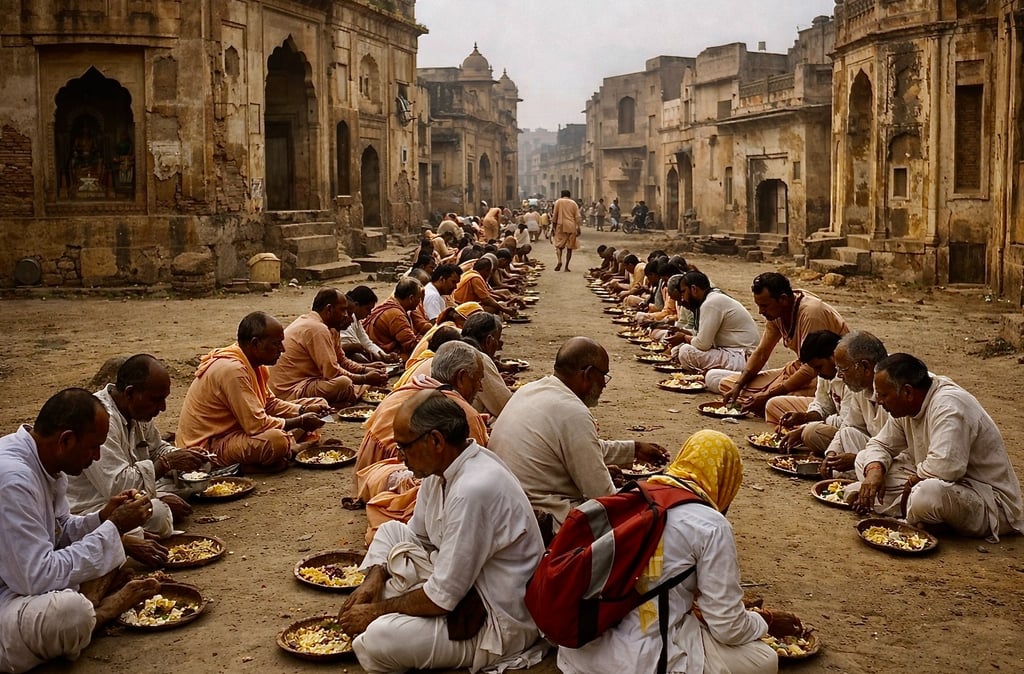
Father Mark then began to smile. “I see. But here, instead of a tiny wafer, an entire feast is cooked and then transformed into the Lord’s mercy.”
“That’s exactly right, Father. In fact, we do not eat anything that has not been first prepared for the Lord’s enjoyment. So what you are seeing here is an entire way of life. Whole families are eating what you see on these altars as their only food, but as we both know, not anyone can initiate the transformation of the Eucharist. Are there not specific prayers that must be uttered by a legitimate priest?”
Listening intently, Fr. Mark said, “Yes, of course, only the priest can do this.”
“Then good—this is where we agree. In the same way—all the statues and food you see on our altars start out in the form of raw materials.
“Only after a proper and authorized ceremony is the raw marble, stone, wood and brass—or all the food that you mentioned—transformed from matter into spirit. Much the same way as your Catholic bread and wine is transformed into the Holy Body of Christ. Once the bread and wine are transformed into spirit, it takes on a whole new dimension. The wine and the bread become worthy of veneration and non-different from God—and the people step forward and consume it.”
“Well, Rohini, you seem to have done your homework and I must say that I am seeing the logic in what you are saying. When I am performing this rite, I hold Eucharist like this and say the words, ‘this is my body.’ Then I hold the wine up and say, ‘this is my blood’ and absolutely—everyone in the church is faithful that the transubstantiation of the bread and wine has taken place.”
“Thank you, Father. Here in Vrindavan our priests also call out, much in the same way. But on the other hand, there are differences.
“Please Father, if I may for a moment... I just want you to understand. Earlier you mentioned your concerns that many of us have defected from Christ and are now worshiping idols. Perhaps it is only human nature to look at such a change from your perspective, but instead, try to see Vrindavan as the spiritual center of an ancient religion that worships God on a very personal level.
“Just as Christians have their holy books, we have ours. For example, the "Brahma-samhita" tells us what God looks like. These prayers are held sacred by us and I have a couple of them memorized:”
“Krishna, Who is known as Govinda, is the Supreme Personality of Godhead. He has an eternal, blissful spiritual body. He is the Origin of all. He has no other origin and He is the Prime Cause of all causes…Who is adept in playing on His flute, with blooming eyes like lotus petals, with head bedecked with peacock’s feather, with the figure of beauty tinged with the hue of blue clouds, and His unique loveliness charming millions of cupids.”
Pausing for a moment, Rohini smiled and then said, “In all the Holy Scriptures that we study, God is described... perfectly matching the prayers of the Brahma-samhita. Then our Scriptures tell us how this very same God, only 500 years ago, once again walked upon the earth. He was known by many names—Nimai as a child and later as Lord Chaitanya. Now comes the real excitement. This is the faith and the passion that we all share. Father, we should never forget Matthew 19:26. Remember earlier this morning when we both agreed: With God all things are possible?”
Rohini and Fr. Mark spent the day walking throughout Vrindavan talking about God. Fr. Mark had so many questions. Later that evening they found Jitendria and listened to a devotional concert performed in a candle-lit courtyard near the Krishna-Balarama Temple. The things they talked about, Fr. Mark would think long and hard about over the many years to come.
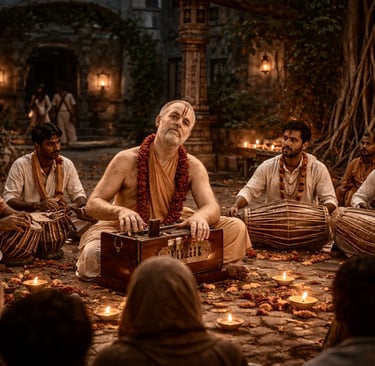
Chapter 48 - Lord Shiva
Table of Contents
Reader's Comment (coming soon)
Father Mark and his dad, Mr. Penrose, had just passed the San Angelo city limit sign. In the back of his father’s 1989 Isuzu Trooper were 12 bags of cement for the monks at the Mount Carmel Hermitage. This would be used as mortar to help complete what seemed like an endless number of projects that the monks were working on.
“How long have I been back from India, dad? A few months, right?”
“More like six.”
“My goodness, has it been that long? Well, I have certainly been lost in my thoughts this past year.”
“That’s interesting because I’ve also noticed a change in you, son.”
“For the better, I hope.”
Mark’s father laughed, “Yes, for the better. You just seem a lot calmer than you were before you left. I sense something very deep has been at work—such as, inside your soul.”
Again the two men laughed, happy to be with each other and pleased to be delivering their cargo to the monks. Funds for the 12 bags were donated by the children where Mark taught school—a special piggy-bank drive that only took 4 months to reach their goal. Of course, a bag of mortar mix is not that expensive and the rocks, the monks found those free for the picking. That’s one thing Texas has plenty of.
“Mark, it’s pretty obvious that your trip to India has had a strong impact on you. But you did stop in Spain first. Did something happen there—or in India? Now you’re even a vegetarian! That bilocation stuff can really do a number on your head.”
Again the laughter between the two men was enormous.
“Actually dad, I had a great time in Spain but as you know I’m a big believer that nothing happens without God’s hand in it. Besides, I had been studying the life of Sister María de Jesus for nearly a year before you had asked me to go to India. No, Dad—visiting Agreda and talking to the nuns at the convent was great. Rather, I think the tipping point came when I went to Vrindavan.”
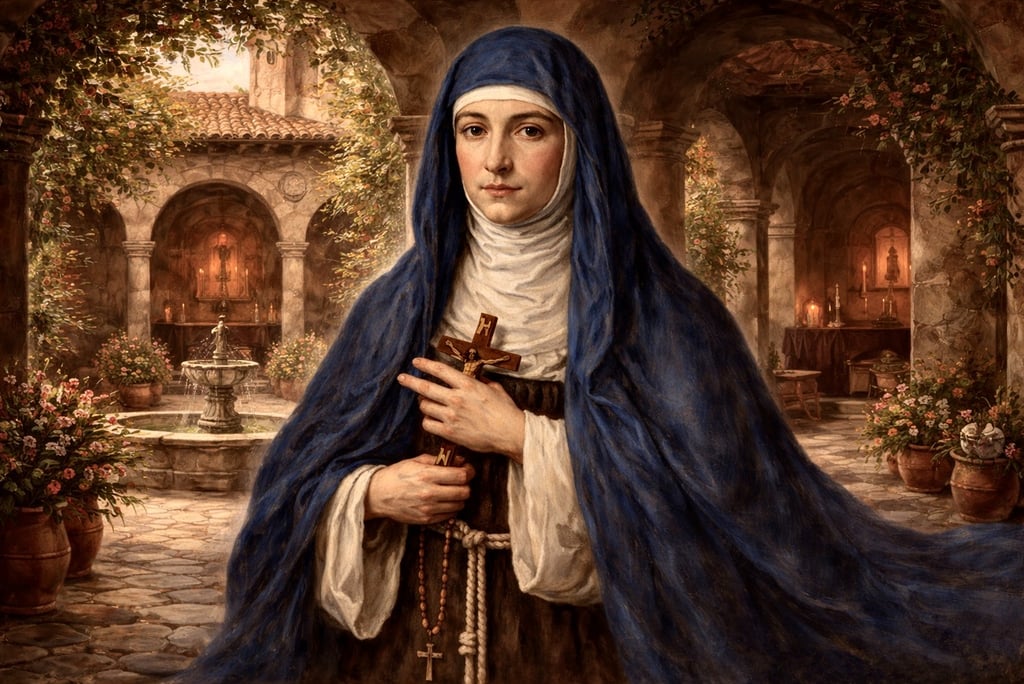
Fr. Mark paused for a moment to gather his thoughts. “I mean, before I left for India, any connection between Sister Maria and Lord Krishna was not even a remote possibility. At least not in my mind. You know, two totally different religions. After I had left Agreda—sure I was still intrigued with what had happened to her but my focus moved onto the real reason I was going half way around the world... but just like you told me before I left, India can be full of surprises.
“Dad, the more I think about everything, it’s as if God wanted to first show me the deepest recesses of my Catholic faith and then open a whole new set of windows for me to look out—and to even show me how they’re all connected. But then I had to ask myself, why? Before long I found that leaving Agreda and Sister Maria behind wasn’t as easy as I thought it would be. Since our drive out to the hermitage is going to take awhile, would you like to hear what I’ve been thinking about these past few months?”
Turning toward his son, “Yes, very much.”
“OK, you asked for it. Now, as far as Sister Maria, I must say that the more I think about what happened to her when the Indians killed her, the more I wonder what really happened to Jesus. I have to admit that there is the real possibility that the Jesus who the Roman soldiers thought they had crucified—was in fact NOT the real Jesus, at all. No dad, like I said, things don’t happen by chance and I guess all that calmness you mentioned is just my attempt to hold still and listen to what is being said to me.”
“So exactly what are you hearing? I’ve always admired your deep devotion to God.”
“Well, that’s just it. Along with dedication there has to be truthfulness. Look dad, besides God, you know me better than anyone else in this entire world.”
“Absolutely Mark, and I don’t think you’re interested in just going to the half-way point.”
“Well, trying to fill in the blanks has been one heck of a ride. When I was in India I met a lot of people who instead of rejecting Jesus, have simply embraced what they feel is a better way to worship Him. Not a different God—but certainly they feel that they have a better picture of Him. This, they say, makes understanding and worshiping the Lord so much easier and is exactly what they always wanted from religion in the first place.
“Why do they say a better picture?”
“Well, dad, I understand their point, although I’m still wrestling with what it has to do with me. What I mean is that, of course it’s through the Holy Scriptures that we learn of Godly matters—and it’s also true that in their scriptures, God is wonderfully described... and in fact, all over Vrindavan there thousands of people who worship Him. And as you know, they call God, Krishna and Govinda. In fact, Vrindavan is what Rome is to us, or Meca to the Muslims. Yes, it’s smaller in size but when it comes to color and the people’s devotional energy—well, I kind of miss that.
Mark reached over and put his left hand on the Bible that was sitting on the console next to him. Looking out the window, endless fields of cotton went whizzing by, some with large bales ready to be taken to the gin for processing. The price for cotton on the world market had just broken all records.


Mr. Penrose flipped on his left turn signal to pass a slow moving truck. Mark turned to his father and began to say a few more words.
“Dad, when I was in Vrindavan I remember talking to this nice devotee who lives in Mexico. His friends all call him Jai and he told me how he had recently spoken to a Catholic priest in Mexico City. The priest admitted that there was so much more to know about God—however, he also told Jai that when the world was ready for this knowledge, that it could only come through the Roman Catholic Church. Therefore, anything new, but outside Catholicism, would have to be rejected as impure. Well, even though Jai told me that he had been raised a Catholic, he said that he just couldn’t accept such a closed-minded position.
“You know Dad, it’s very tempting to think that we Catholics have all the answers and that the truth ultimately rests with us. After all, don’t we already have everything we need in Christ? You know, from the cradle to the grave...and, then beyond. The most beautiful churches... we have. Saints... we have. Miracles... we have. God’s favor... we have. But then you sent me to India!”
“Now wait just a darn minute. Don’t blame me.” Both men began to laugh out loud.
Taking his eye off the road for just a moment to look at his son, “I’m curious, Mark, did going to India somehow disturb that ideal picture you just described?”
Smiling, Fr. Mark said, “Let’s just say that whenever a new vista is unveiled—especially when we’re talking about the inconceivable landscape of the Almighty—what you’re suddenly blessed to see can have a profound effect on your soul. Even turn a person into a vegetarian!”
Again both men began laughing.
“Mark, you know that movie you took me to that we both liked so much?”
“Oh, you mean, Avatar?”
“Yes. I think that’s why I liked it so much because it put all these new ideas and images in front of me. Inconceivable vistas if you want—like those floating mountains. I just really like it when my reality gets a little jolt.”
“Absolutely Dad, and what a great movie! But of course the entire content of Avatar came straight out of the highly imaginative mind of James Cameron, but yes, kind of like that. Thank you, this will help me explain some things to you.”
“Well, Mark, maybe there was a reason why I bugged you so much to go see it with me.”
Again the two men found themselves lost in laughter, very much enjoying the trip to the hermitage. The weather was decent although it was supposed to start raining during the night. Taking a long breath, Mark continued. “Yes, India was kind of like that—but it wasn’t science fiction. OK, sure—in the beginning I didn’t know what to think and maybe that’s it—I’m still wondering. At first it was actually a bit overwhelming for a simple priest from West Texas and now I’m struggling with a lot of other questions.”
“So I take it you’re talking about something fairly major?”
“Yes. Now granted, there was a cultural shock, but what I’m talking about are spiritual windows that I never knew even existed. Yeah, kind of like the movie, Avatar.
“You know, right from the start I was so fortunate. Not only did I arrive safely—but almost immediately I met these spiritual guides that led me right to the heart of what you wanted me to discover. That part was almost like magic.”
“So what you are kind of saying, son, is that just like Jake Sully who had to enter that machine in order to connect with the consciousness of his avatar—that you had to enter Vrindavan before your vision expanded.”
“Yes, that’s exactly right.”
“Wow! That sounds pretty exciting, son. I mean, your spiritual guides—I can only guess what they must have looked like: matted hair, living in caves, chanting Sanskrit mantras. Did you take any pictures of them?
Mark began to laugh again. “No dad—they didn’t look like that and I must say that ever since you went to see Avatar your imagination has grown by leaps and bounds. But don’t let me disappoint you entirely because I did stumble upon some of your holy men while I was there. There’s no telling what they would have said to me if I could have spoken their language.”
Again the two men were laughing as they gradually approached their destination.
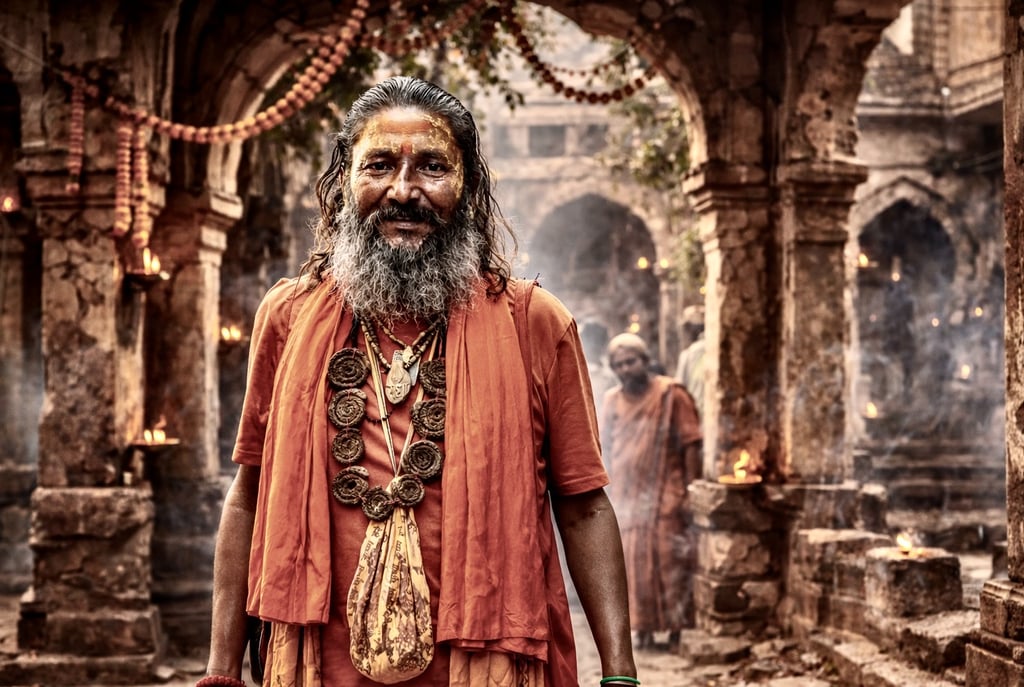
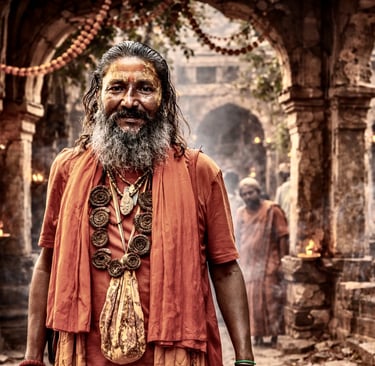
Now it was Mr. Penrose who was speaking. “Well then, just who were they?”
“They were Christians.”
“Christians? I’m sorry son—you’re going to have to explain that one to me. I thought you said you went to India!”
The mood was merry in Mr. Penrose’s old Isuzu Trooper. Although he had bought it used from a rancher in a small town outside of San Angelo, it seemed to perfectly match his character and lifestyle.
“As you know dad, I didn’t fly all the way to India to just take a fast, five-day tour and come back home. I stayed way beyond that. And like you said, I can now see that this is why I got so much from my trip. Otherwise, I would have taken a couple of guided tours—placed the whole experience in a few neat boxes; arranged my photos; labeled everything, and told my friends about all the idols I’d seen.”
Again laughing, Mr. Penrose said, “But that happen, didn’t it?”
Smiling, Mark continued. “Dad, all those books you got at the airports over the years—as you know they were all published by the Hare Krishna’s—and as I said, Vrindavan is their Mecca; their Rome; their spiritual center. The place is obviously sacred, and has a history going back well over 5000 years—immortalized in both ancient and modern scriptures.
“As we both know, Dad, holy words are spiritual windows and I spent a lot of time looking out those windows. All I can say is, unbelievable!”
“But I don’t hear you saying that in a derogatory way.”
“Oh no, just the opposite—and as I was saying, almost as soon as I arrived I just started meeting all these really nice Christians. They had not abandoned Jesus, at all, but had decided that in these ancient scriptures there is a more precise picture of God.
“But Dad—still, what I experienced is not that easy to accept. I guess this is what you have been noticing in me—this struggle. I keep reliving things in my mind and trying to decide what to do.”
“Well, I never felt that you were not up to the challenge. You’re always so happy.”
“Thanks, but I want to be really happy. But I can now see why they say: Be careful what you wish for."
“How’s that?”
“Well, all my life I’ve just known that God is far greater than I could ever imagine.”
“You mean, inconceivable?”
“Precisely—and I’ve always wanted to experience as much of that as I could. But we both know, I’m not a saint. You certainly won’t find me floating off the ground like Sister María did in Agreda, or Saint Joseph of Cupertino."
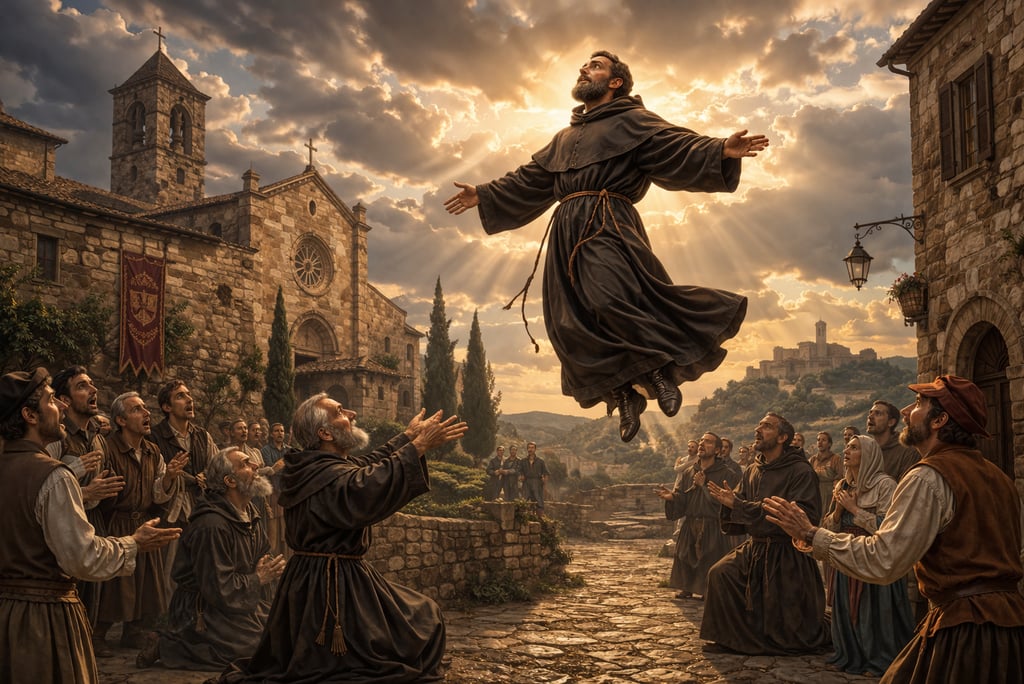
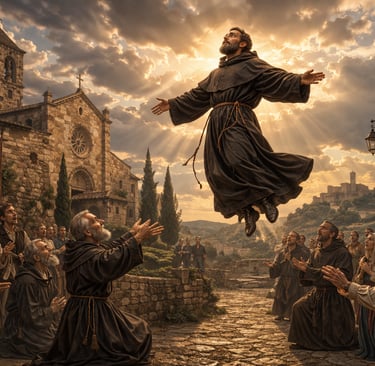
But sincerity is there—and in my heart I’ve always known that God exists in the most marvelous way. However, I never expected a spiritual bomb to go off in my lap.”
“My goodness, son, those are some pretty strong words. I guess I’m not sure what you mean.”
“Well—spiritual things have a way of snowballing. Take Jesus for example. If you worship Jesus, then you must also accept whatever Jesus deemed worthy and true. For example, Jesus accepted Shadrach, Meshach, and Abednego. We have no record of Jesus rejecting this story as false—in fact, just the opposite is true.
"All three of them were thrown into a raging furnace because they had refused to worship King Nebuchadnezzar’s golden idols. But when the King looked, instead of seeing three figures inside the furnace he saw four—the fourth person being an angel of God who was protecting them from instant death."
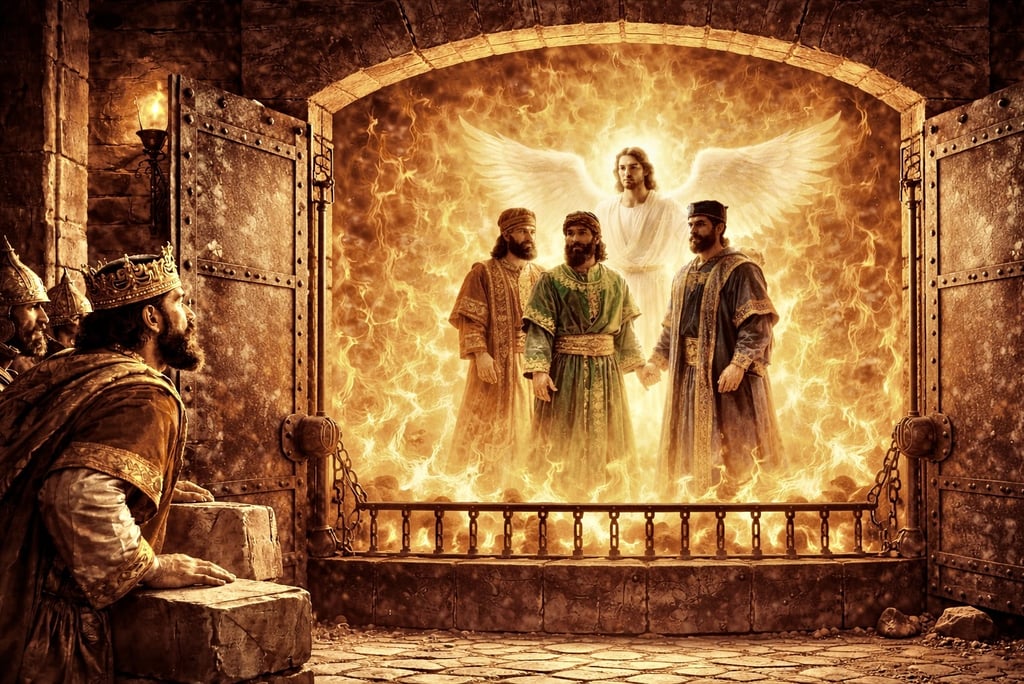
“So, this is the kind of thing I have been thinking about. Belief in the Almighty has pushed me with almost lightening speed right into the realm of ever increasing faith. As Christians, when we reach out to people and ask them to have faith in His Son—in a round-about way we are simultaneously asking them to have faith in so much more. In a moment you will see the enormous consequences of this.”
Just outside of Christoval, Mr. Penrose slowed down as he turned onto Allen Road that quickly delivered them to the Mount Carmel Hermitage. On their right a beautiful icon smiled down upon them.
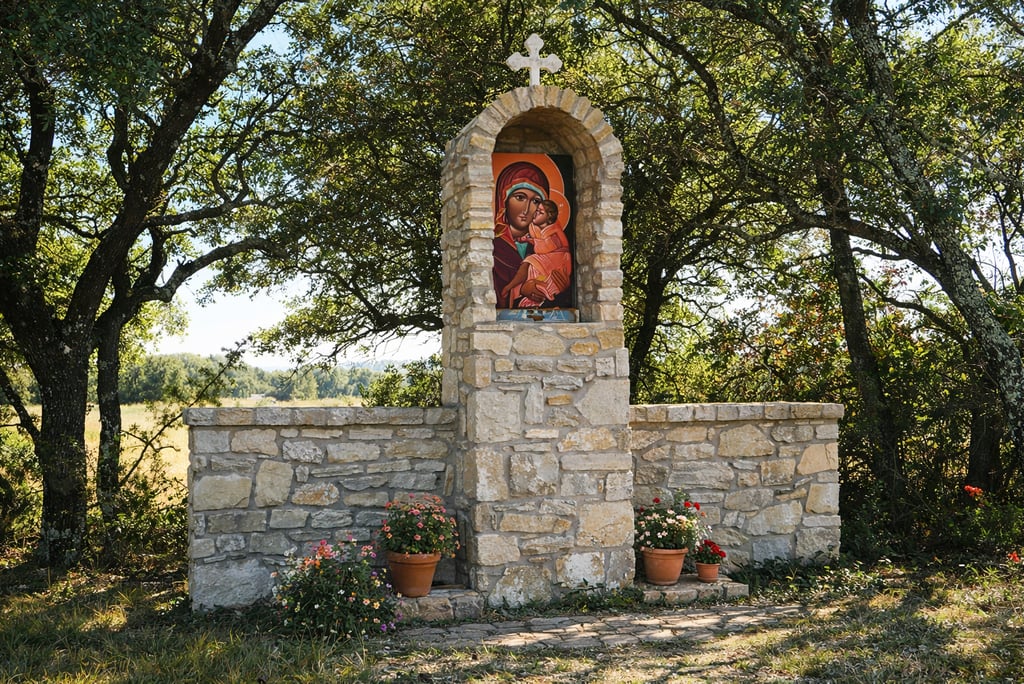
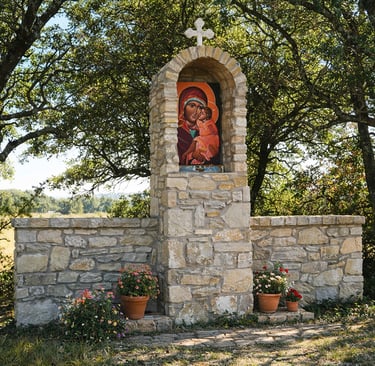
The cement was graciously received by the monks and they were treated to some hot vegetable soup, homemade bread and apple pie. Because Christmas was fast approaching, most of the monks were busy tending to the needs of about a dozen visitors. Their beautiful gift shop was full of Christmas shoppers. Understanding, Fr. Mark thought it best not to take too much of anyone’s time, although they were encouraged to stay longer. Within minutes two more cars drove up and taking that as a sign, Mr. Penrose pulled the keys out of his pocket.
“Please Father, come back again when things are more peaceful and of course, don’t forget to thank the children for the cement. We will keep them in our prayers. And Mr. Penrose, it is so nice to see you again—thank you so much. God be with you.”
“Oh, you’re most welcome. The peace and beauty you have created out here is such a welcome for an old man like me. God be with you.”
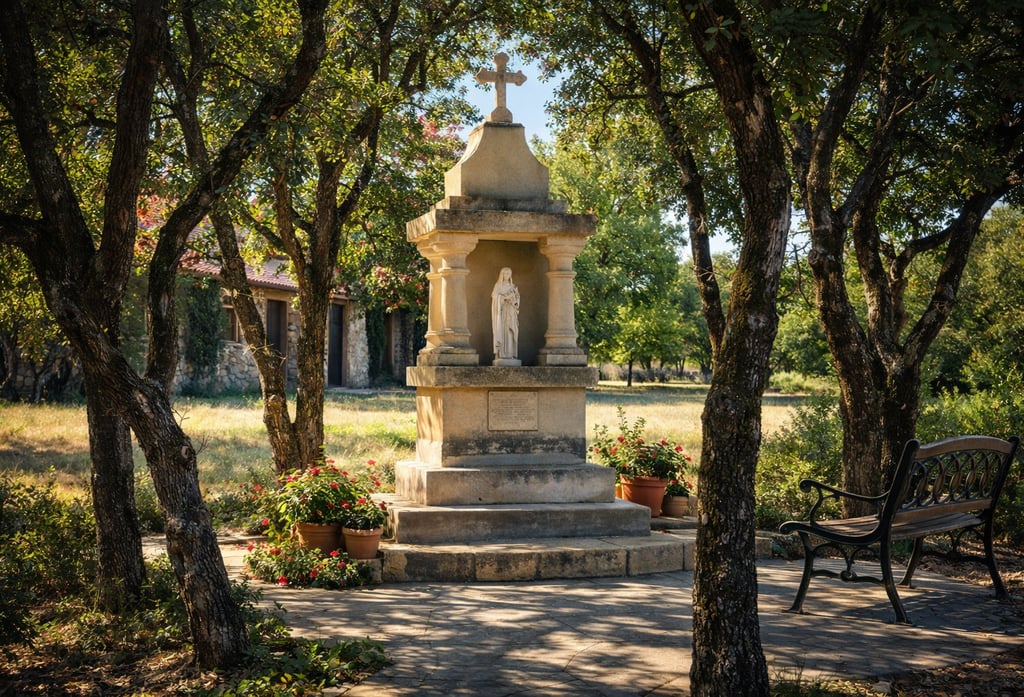
It was just past two in the afternoon as Mr. Penrose and Fr. Mark resumed their journey, this time headed back to San Angelo.
Before starting the engine, Mr. Penrose wanted to remain parked in the shade where it was quiet and talk to his son. Again, Fr. Mark turned towards his father. “Dad, I want to show you a picture that I bought in Vrindavan. I guess it sums up what I’ve been trying to tell you.”
Thumbing through his Bible, Fr. Mark found the small picture that was tucked between two pages and handed it to his father.
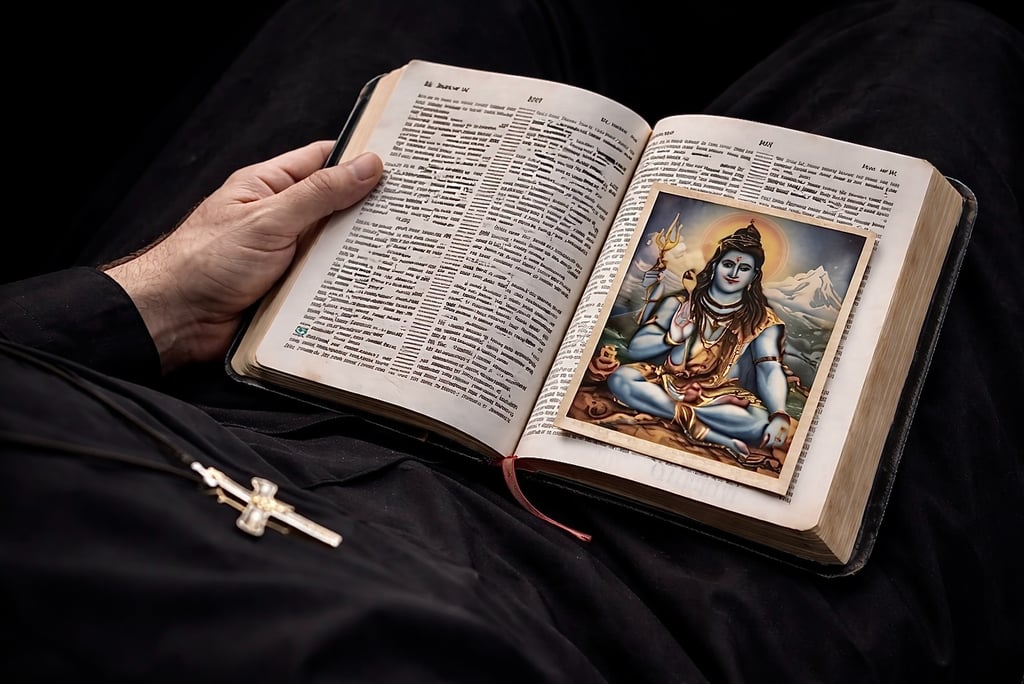
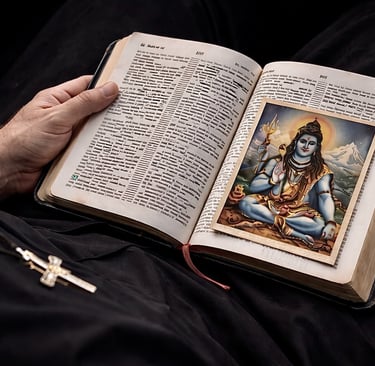
Mr. Penrose adjusted his glasses and stared at the picture. It was a picture of Lord Shiva who is worshiped by millions of people—his followers stretching far beyond the shores of India.
“I must say Mark that your taste in art is also changing.” That comment brought reels of laughter from both men. Finally settling down, Fr. Mark began to speak.
“Seriously Dad, can you just imagine what the other priests would say if they saw me with this? What would the Bishop think? What would His Holiness say? I wonder what judgment Jesus Christ would render upon this picture? And yet, on the other hand, just listen to these short verses from the "Chaitanya-Bhagavata." The person speaking here is Lord Chaitanya. Remember, we were talking about him last week."
Fr. Mark then pulled out a piece of paper that he had written some notes on. “Dad, Lord Chaitanya was once asked a question by a priest who was concerned about one of the Lord’s most intimate follower. His name was Nityananda. Lord Chaitanya said that Nityananda was none other than His older brother and spiritually, non-different from Himself.
“Here’s what I copied: “O brahmana (priest), know that Shri Krishna is eternally within Nityananda. However, if any person tries to imitate Nityananda, then he will suffer terrible consequences and incur heavy sinful reactions. If anyone other than Lord Shiva tries to drink deadly poison then he will surely die.” Antya-khanda 6:7
“Dad, the deadly poison is in references to an Ocean of Milk that was being churned by the demons and the demigods. As it was being churned, different things were being produced, including a deadly poison. Lord Shiva drank the poison so that the churning could then continue.
“Dad, the point is that Lord Chaitanya is acknowledging the existence of both Shiva and the Ocean of Milk. Okay—and here are a couple of more references.” Mr. Penrose again looked at the picture of Lord Shiva.
Fr. Mark looked at his notes and began to read again: “Lord Chaitanya soon arrived in Jalesvara. He went directly to the temple of Lord Shiva, the main Deity of that village…”
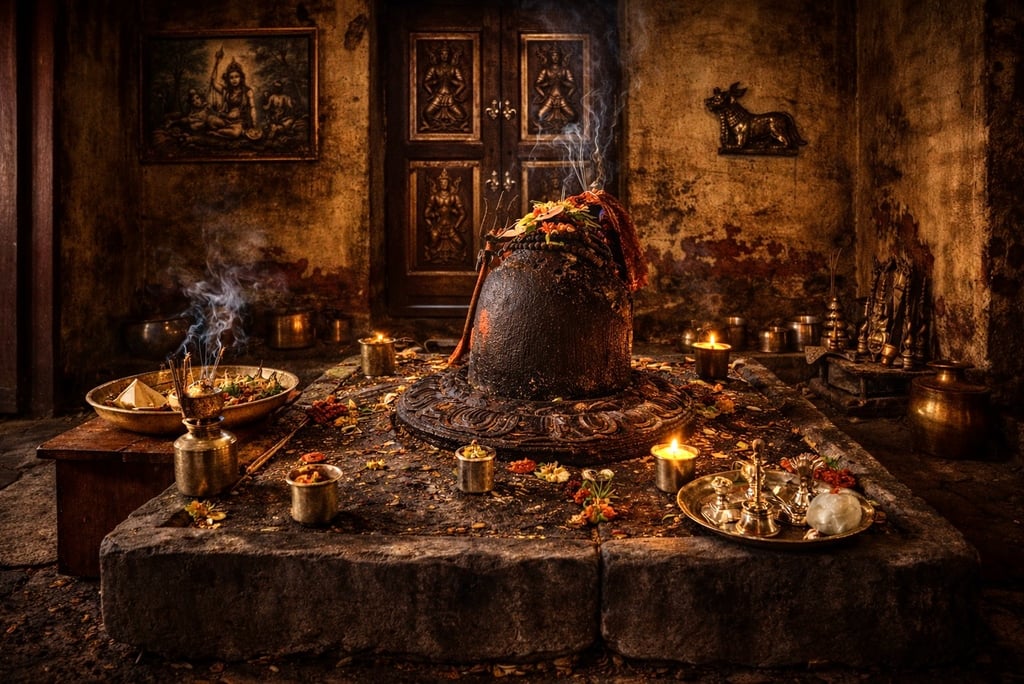
“The Shiva-linga Deity was well looked after by the local brahmana priest. Enlivened by the opulence and influence in the temple of His dear devotee—Lord Shiva—Shri Chaitanya began to dance very happily. Lord Chaitanya knows the glorious character of Lord Shiva, for he is a favorite amongst His devotees."
Okay, dad here is the important part: "If anyone disrespects Lord Shiva, not following the example of Lord Chaitanya, then all his spiritual advancement is annulled.” Antya-khanda 2:57
"Dad, I also copied this down: "The Lord was very pleased with the words of Lord Shiva and He embraced him firmly saying, ‘Hear Me, O Shiva. You are as precious to Me as My own body. One who is dear to you is even dearer to Me. I reside always within you, of this there is no doubt.” Antya-khanda 2:85
“So there you have it in a nutshell. While I was in Vrindavan I read the entire Chaitanya-Bhagavata and Lord Chaitanya’s deep love for Lord Shiva is mentioned so many times.”
“Dad, now do you see my predicament? How do I explain Lord Shiva to my Catholic friends? Do I keep His picture hidden in my Bible or under my bed? What am I to do? I just read that Lord Chaitanya has warned that whoever rejects Lord Shiva is finished, spiritually.”
“But son, do you really think that this applies to you? Granted, Lord Shiva has a place in India but this is America. But yes, of course... I understand your dilemma. Honestly, I had never thought this whole thing out like you have. Actually, you’ve made a really good point and you’re 100% right when you say that having faith in Lord Chaitanya—or Jesus—involves an ever-increasing faith in so many ways. I definitely see that now. It’s no wonder you’ve had so much to think about, Mark.”
“Dad, I know we have already covered a lot of material this afternoon, but earlier you had asked me if bilocation was what was bothering me. No, I think, “intrigued” is a better word. Like I was telling you earlier, the tipping point was when I got to Vrindavan and then one day, suddenly it was right there in front of me—the connection between Krishna and Sister Maria.
“To be honest, the stories of Sister Maria and the other Catholic Saints that we have been talking about are nectar to my ears—and so you can imagine my surprise when I discovered that there is a special forest in Vrindavan called, Seva Kunj... where 5000 years ago, Lord Krishna expanded Himself dozens of time to dance with all the young maidens—Radharani, being the topmost dancer. She is called a “gopi” ...or a young village girl."
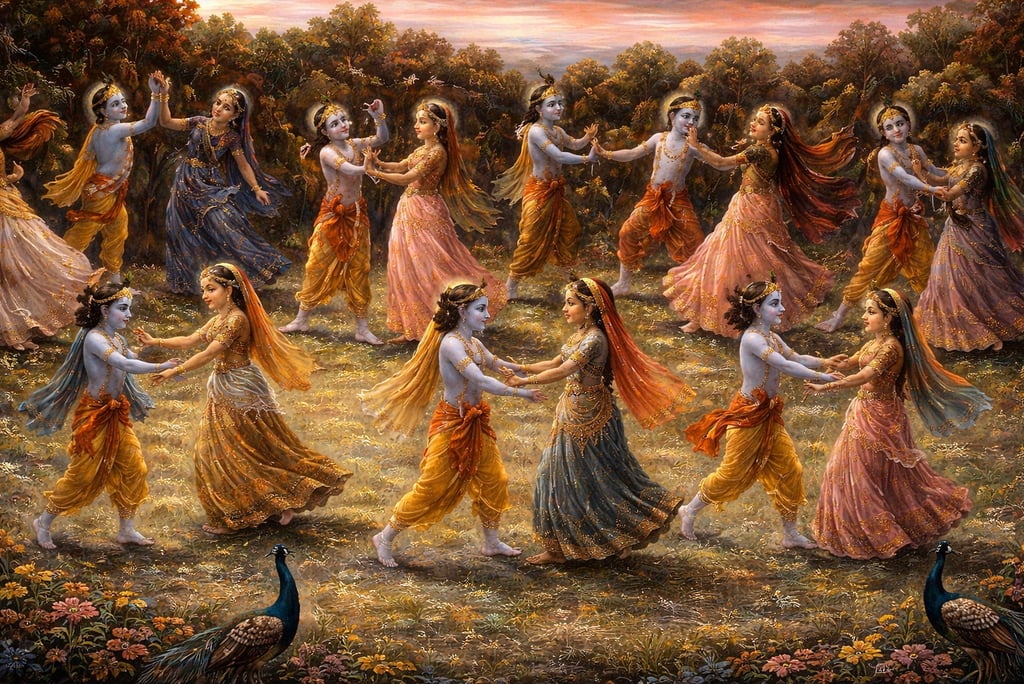
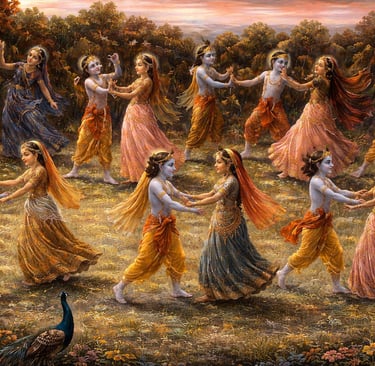
Later that day, back at the Manor, Father Mark and his dad continued their conversation: “My God, Mark, you know, you’re onto something. Let me get a book off the shelf.”
Mr. Penrose quickly sat back down with the book in his hand. “Here it is. This is the first book I got at the Airport. Alright, let me see if I can find this.”
About a minute later, “Good, I found it. I must say that it’s equally amazing how much you forget when you turn 84—I had totally forgotten about this. Okay, this is the first chapter. This book also has explanations in it and…”
“What book is that, dad?”
“It’s called the Shrimad-Bhagavatam. OK, son, listen to this: “As mentioned above, the Lord entered His palaces, occupied by 16,108 queens. This means that the Lord at once expanded Himself in as many plenary expansions as there were queens and palaces and entered into each and every one of them simultaneously and separately.”
Mark felt stunned. “So instead of the word, “bilocation,” the Vedas call a second body a plenary expansion. I’m not real familiar with that word. What does plenary mean, Dad?”
“Plenary means complete in all respects—unlimited or full. No wonder Sister Maria was so real to the Indians.”
What else does it say?”
“This is called the transcendental potency of the Lord. Ordinarily, a yogi or mystic is able to expand himself at utmost to tenfold expansions of his body, but the Lord can do so, to the extent of many thousands, or infinitely, as He likes.”
Closing the book, Mr. Penrose looked at his son. “Remember when you asked me who is greater, the disciple or the master... and we both agreed that the master is greater? I think this has just been confirmed beyond a shadow of a doubt by Shrila Prabhupada.”
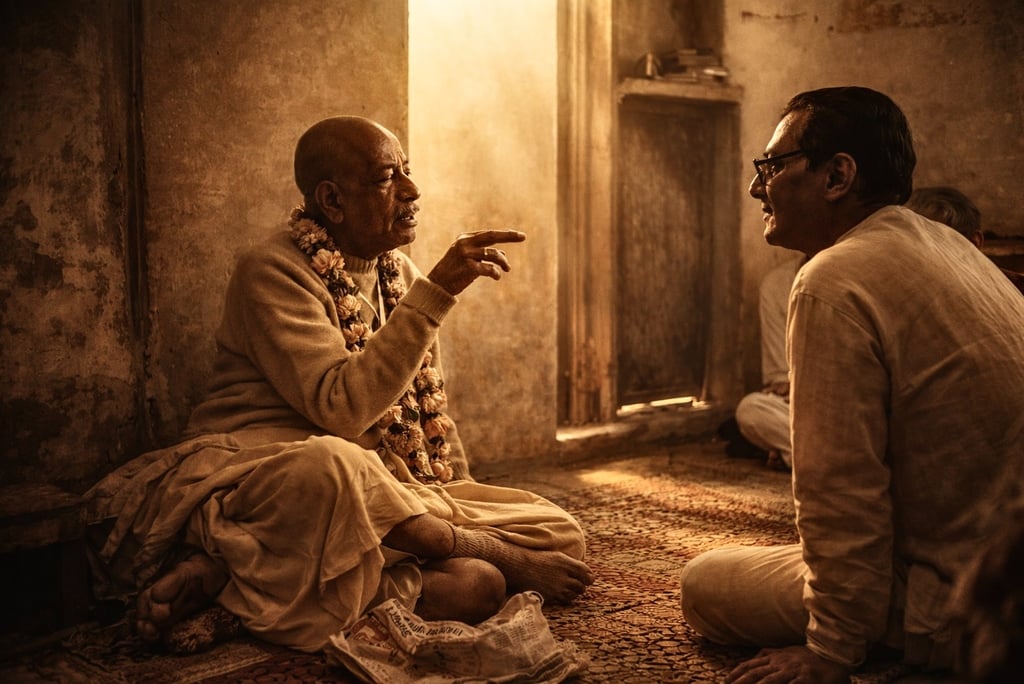
“It certainly has—more pieces to the puzzle of Sister Maria’s bilocation, bringing Jesus Christ to the American Indians. Dad, who would have ever imagined I’d uncover something like this in India?”
“Well, I’ve asked it once and I guess I’ll keep asking myself: Just as the Indians were able to touch, capture, torture and kill Sister Maria’s body while all along she was safe and sound in her room in Spain – who did the Roman soldiers actually touch, capture, torture and kill on the day of the crucifixion?
“You know, Dad, the more I think about this whole matter, the more I don’t believe that the real Jesus was ever in harms way.”
Chapter 49 – The Reunion
Table of Contents
Reader's Review (coming soon)
“Dad, it’s for you.”
Nick was in the backyard watering his garden when Maria’s voice rang out. Knowing that her father wouldn’t come in with wet shoes, Maria brought him the cordless phone.
“Thank you Sweetie. Hello, Nick here.”
“Nickolas, it’s Rama. My flight will be arriving right on time.”
“Rama—wonderful to hear your voice. Yes, that’s right, I’ll pick you up at seven. Blake and Maria will be there, too.”
“What about our other friends?”
“They’re all on their way. Rohini and Jitendria are already here. Father Mark is due in later tonight.”
“What about Major Sutton and Judy?”
“Oh, don’t worry, after they got delayed in New York they caught another flight and they’ll be landing right behind you. Everything is ready—I’ve reserved a nice house and thanks to Maria we’ll have plenty to eat.”


The next day turned out to be sunny and clear. It’s hard to ask more from Mother Nature when there’s not a cloud in the sky and a steady 74 degrees with only a slight breeze. By ten o’clock everyone had arrived. Greetings were heartfelt and those who had arrived early had enjoyed a morning walk down by the lake. Lunch was going to be served at one. Maria and her friends had cooked the previous day and everyone was treated to another delicious meal that she had become famous for. The vegetarian lasagna and Italian bread was a huge hit—her pumpkin pie and homemade vanilla ice cream a close second, everything made without eggs.
Inside the house a small fire was gently warming the living room that had retained a slight chill from the early morning. Finally everyone was sitting comfortable, smelling the fragrant aroma of the burning logs.
Smiling, Nick began to speak, addressing his first comment to Fr. Mark.
“Father, it is so nice to see you again but first let me say that all of us are extremely sad to hear about your dad.”
“Thank you, Nick. Yes, thank you so much—all of you. My father lived for almost 87 years and was the best friend I ever had. And as you know, he’s the reason that I was able to meet everyone here in the first place. For a while we thought he had his pneumonia licked, but his heart just suddenly gave out. At least he didn’t suffer and went quickly.”
One by one everyone echoed Nick’s sympathies. Mark had brought a photo of his dad sitting outside the Manor that had been taken about ten years before he died and everyone took turns looking at it.
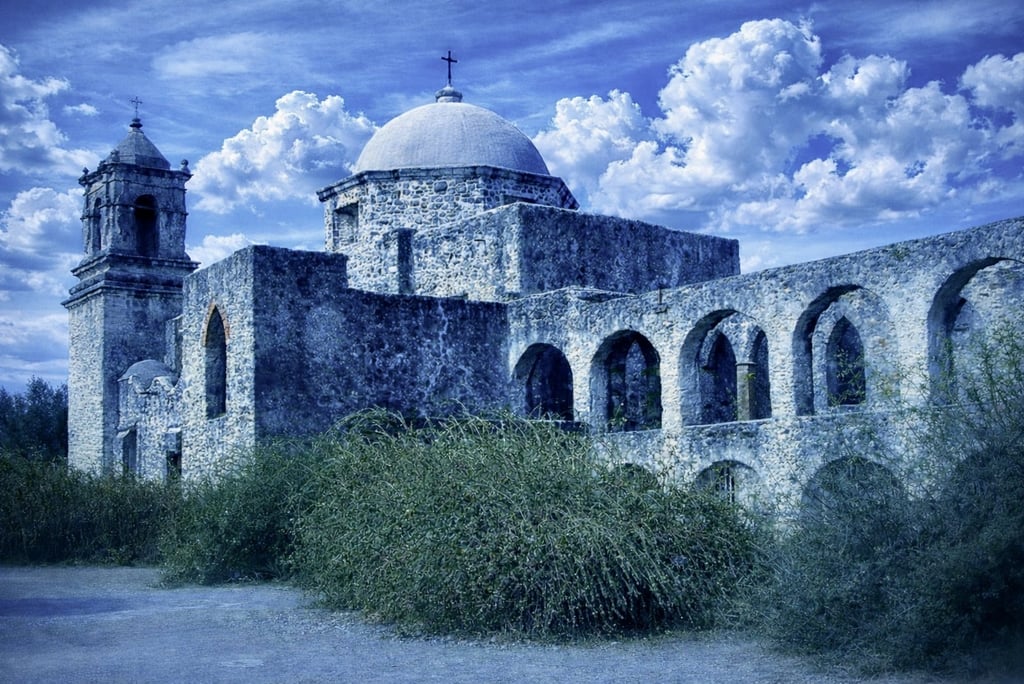
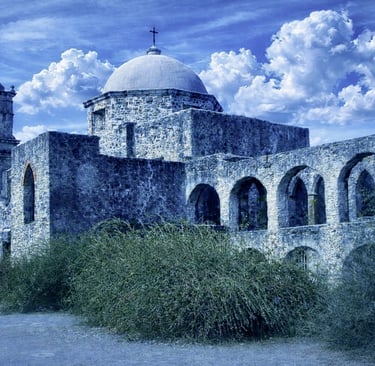
Fr. Mark would be the first to tell you that indeed, it is possible to love both Jesus and Krishna at the same time. In the years that followed, Nickolas returned to Elephant Mountain on two separate occasions to be with the very people who had saved his life and whom he loved very much. Maria, once again enjoyed cooking kitri for the children at the Judy's Lotus Orphanage.
As far as Blake, he could never forget about the Near Death Experience that had happened to Nickolas on that fateful day when he had fallen off that cliff. Everyone could understand the great loss that Blake had experienced when his fiancée was killed. Later, a friend placed Dr. Raymond Moody’s "Life After Life" into his hands. As Blake read it, and reflected on what had happened to his fiancée, something within him finally eased. At last, he was able to gently lay to rest the memories of his first true love.
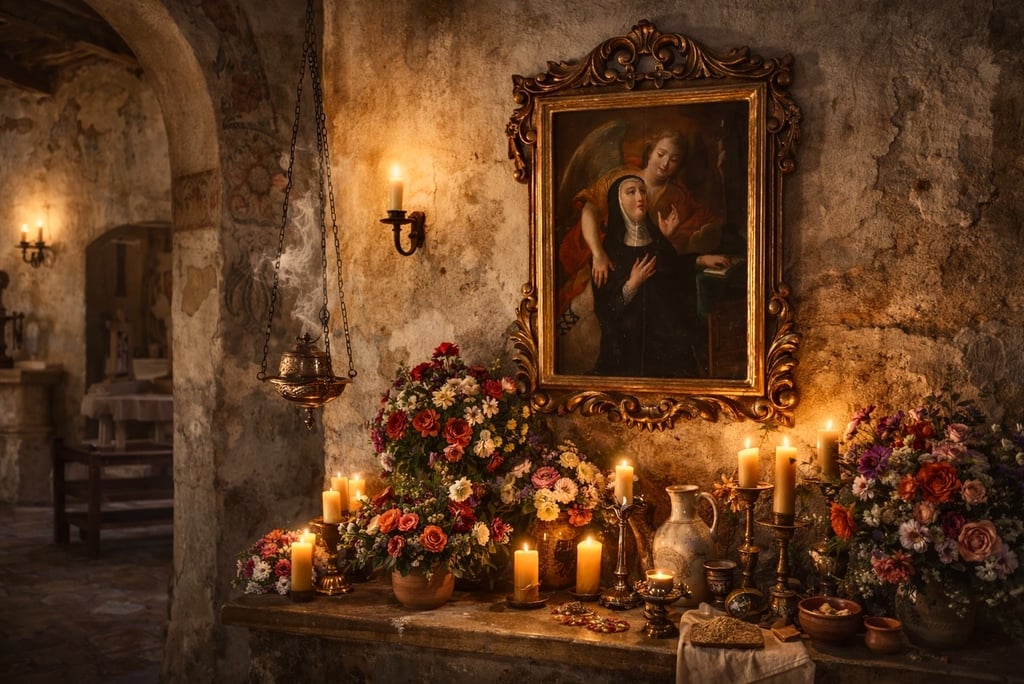
As you’ve discovered, I spent quite some time sharing the story of the Lady in Blue. Now, I thought you might enjoy hearing a few words directly from her. I happen to own the book she wrote—"Mystical City of God"—and it is there that I came across one of the most beautiful passages I have ever read.
One day, while my soul sweetly lingered about that holy place, I have come to adore, I heard the voice of my Lord, calling out to me:
‘My beloved spouse, I desire that you immediately open your eyes. Arouse, and quickly come, so that I may enjoy the fervent love you possess for Me. My dearest soul, make your life more angelic than human, and pay no attention the world, with all its concerns and distractions. Come to Me now. Consider My unlimited greatness, and your smallness. Because I love you, I have l rescued you from the dust and the dunghills. My dearest soul, I am calling out your name. From the depths of your humility, knowing very well the unrelenting fear and suffering from where you come – wake yourself.
Come closer now, and let your sweet order linger near me. This makes me happy. Listen to Me. You must be convinced that you only deserve suffering. But do not worry because you are My beloved servant. Come to Me. Never forget My greatness. Be comforted in your smallness – knowing that I am a just and holy God. With My heartfelt compassion I bathe you with My mercy and set aside the chastisement you deserve. Strive to build upon this foundation: your sincere humility, and My favors.
Embrace the other virtues. Draw them near. Decorate yourself with them, and thus, fulfill My command. My Mother will protect, teach, correct, and guide you. She will help awaken your Love for Me, and She will keep you company, in all ways, in all places, and in all times.
Both of my e-books are shared freely and in their entirety. Krishna and the Art of Bicycle Maintenance has now been published in both versions: a beautifully illustrated e-book on the website and now available as a paperback on Amazon. All proceeds from books sold on Amazon are donated to Krishna Disaster Relief, who is kindly sharing their website for my two books.
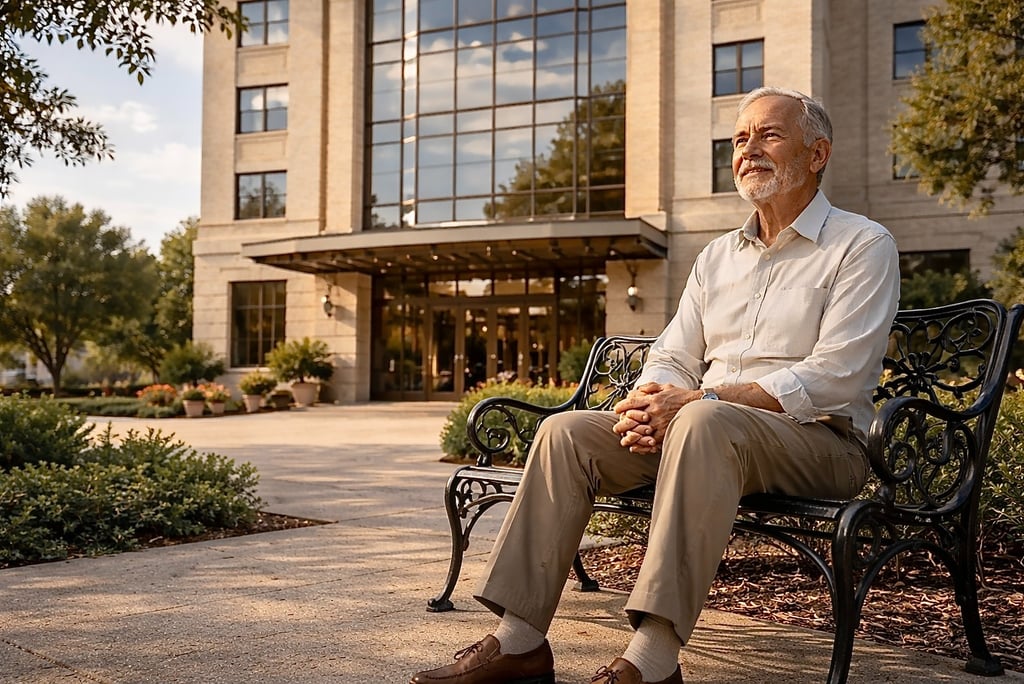
Years earlier Rama had written down Mark’s phone number when by chance they had made friends in India, and had given it to Maria when he first met her on Elephant Mountain. As for Nick, after pondering the sudden turn of events of being found by his daughter and the others, he decided to return on the helicopter when Judy said it was time to leave—just one of many trips he made to get back home—eventually even meeting the President of the United States during a special ceremony at the White House to honor him as the only American soldier to have survived the Vietnam War on his own.
Not long after returning to America, Maria & Blake said their marriage vows during a outdoor wedding ceremony in Lake George, and shortly after that, exactly as Nickolas had promised—he made a phone call to San Angelo, Texas and spoke to Father Mark, who immediately remembered his friend Rama with great affection. He was very happy to hear that Rama had made it back to Elephant Mountain, safe and sound. Even more profound was the realization that he was speaking to the very man that Rama had told him so much about.
Wanting to meet each other, Nick took a flight to San Antonio where Fr. Mark was visiting on church business. Nick always remembered the beautiful mission where they spent the entire day talking about the incredible events that both men had experienced.
– Final Comments from the author, Ronald E. Boutelle –
"Abandoned" has now reached the end. "Thank you for letting me share it with you." I’ve actually been working on this since 1993—a very sincere attempt on my part to bring you a book worthy of your time—always trying to improve it. The connection between the ancient history of India and the construction of Angkor Wat—interwoven with the tragedy of the Vietnam war—has provided me with a fascinating backdrop for my book.
The very first quote you read, as you clicked on Chapter 1, was spoken by the 7th century Christian monk, Saint Sophronius, whose famous words struck a deep cord within me. He famously wrote, Actually, not to keep the secret of a king is perilous and a terrible risk, but to be silent about the works of God is a great loss for the soul. Now that you've read "Abandoned" and have discovered the "works of God" that I wanted to tell you about, you can understand why I began my book the way I did.
Sheltered first in a hidden cave deep within the jungles of Laos, and later on the summit of Elephant Mountain, Nickolas and his band of monks lived in peace. Unlike their remote refuge atop Elephant Mountain—nearly impossible to reach—there exists another kind of mountain altogether. Here, however, I am speaking of something beyond the physical world—a mountain of divine grace.
I came upon this mountain only after a long and intense journey that began in Southern California at the age of fourteen and has now brought me to the Texas Hill Country at the ripe old age of eighty. As I made my ascent, I found myself guided by God, held securely by the ropes of the Lord's mercy and nourished by the sound of his Holy Names. Yet these are more than mere names. As Suryavarman described them to Nickolas, they are a spiritual lifeboat—containing everything we truly need as we sail into eternity. In this way, they are best understood as a most precious gift from our loving Creator.
There are many ways to describe this gift but none have captured my imagination more than the words of A.C. Bhaktivedanta who called this gift an elevator. The loving bright light that Nickolas and countless other Near Death Survivors tell us about is nearly impossible to penetrate. So much so that people have no idea what lies on the other side of this great light. But as Shrila Prabhupada has explained, these Holy Names—if we just attach ourselves to them—will act like an elevator and immediately take us to a divine mountain. It is an eternal world where nothing is unwanted; inhabited by eternal souls who are dedicated to serving God and who welcome all. The realm where this diving mountain exist, with its holy fountains, rivers, flowers, slopes and butterflies is eternally expanding—reflecting the ever evolving nature of its creator, Lord Krishna. After spending most of my life searching for this place I am simply stunned by what I see—but by no means have I seen everything and I doubt that I ever will.
I would also like to acknowledge one of the greatest breakthroughs that has allowed me to enhance this book with images more beautiful than I ever imagined possible. Of course, I am referring to ChatGPT and the artificial intelligence that has enabled me to give form to images that once existed only in my mind.
The example below says it best. With only a small photograph of the Lady in Blue, I attached it to a prompt and simply described what I hoped to see. What emerged is what you see here.
Simply amazing.